Key facts
- President Donald Trump is pushing to confirm federal judges before the November midterm elections.
- Trump nominated 13 new judges in August.
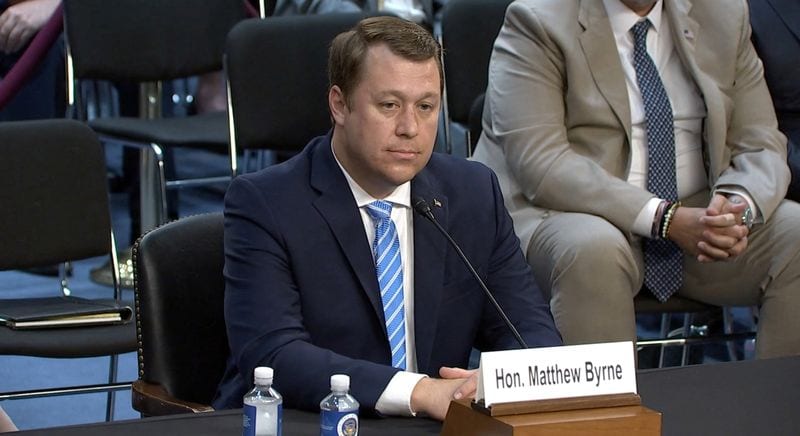
- Six nominees will appear before the Senate Judiciary Committee on Wednesday.
- If Democrats win control of the Senate in the midterms, Trump's ability to confirm nominees could be limited.
- Trump has appointed nearly one-third of the federal judiciary across his terms.
- Three of Trump's appointees are on the U.S. Supreme Court's conservative majority.
President Donald Trump's administration is intensifying efforts to confirm a significant number of federal judges before the upcoming November midterm elections, as the Republican party's control of the U.S. Senate is uncertain. The White House announced nominations for 13 new judges in August, with six of them scheduled for review by the Senate Judiciary Committee this Wednesday. Five additional nominees are already awaiting a vote from the full Senate.
Experts suggest that if Democrats secure a majority in the Senate during the midterms, Trump's capacity to appoint further judges could be severely limited once the new legislative session begins next year. Robert Luther, a George Mason University law professor and former White House official, noted that this period represents one of Trump's final major opportunities to shape the federal judiciary, as the number of available vacancies and potential judicial retirements is decreasing.
Trump's presidency has already led to a significant shift in the federal judiciary, with nearly a third of federal judges appointed during his terms. His three Supreme Court appointees are part of the current 6-3 conservative majority, which has influenced major rulings on issues such as abortion access, affirmative action, and gun rights. However, some of Trump's appointees have not always ruled in his favor, as seen in a recent Supreme Court decision against a U.S. Postal Service rule.
Among the nominees facing scrutiny are Zach West, recognized by conservative legal activists for his work defending abortion restrictions, and U.S. District Judge Lee Rudofsky, whose past ruling weakened a voting rights law. Rudofsky's potential elevation to the 8th U.S. Circuit Court of Appeals would create a majority of Trump appointees on that court.
Senate Democrats have voiced concerns that Trump's recent nominees exhibit an emphasis on loyalty, pointing to their responses during hearings where they typically stated Joe Biden was "certified" the victor of the 2020 election rather than directly acknowledging Trump's loss. The White House, however, maintains that its nominees are highly qualified and have undergone a rigorous vetting process, with a commitment to the Constitution and the rule of law.