Key facts
- Rural Thai communities are deliberately flooded to protect Bangkok and other business hubs.
- Flooding in some villages north of Bangkok now exceeds previous levels, submerging homes.
- Climate change is making heavy rains and floods more frequent and severe in Thailand.
- Infrastructure built after 2011 floods largely protects commercial centers but leaves other areas vulnerable.
- Raising homes can cost between 100,000 and one million baht ($3,000-$30,000).
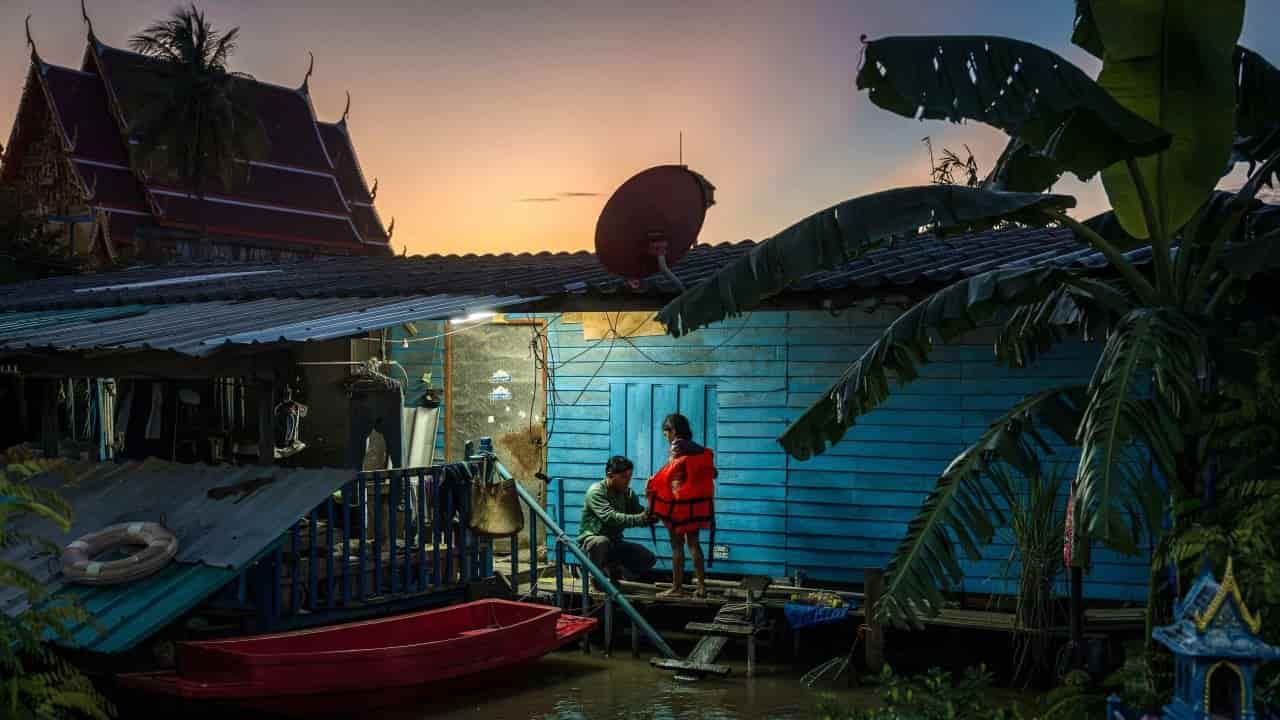
Rural communities in Thailand are bearing the brunt of severe flooding as authorities deliberately divert excess water away from the capital, Bangkok, and other key economic areas. Stilt houses in villages north of Bangkok, including in Ayutthaya province, are no longer high enough to stay dry, forcing residents to adapt to prolonged inundation.
Kamonchanok Sathaphonamonwut, a 34-year-old office worker, described how her family sleeps on makeshift platforms in their home, which is raised more than three meters (10 feet) above the ground, as the lower levels are waterlogged. Her village has experienced flooding for six consecutive years, prompting some residents to relocate while others have invested heavily in raising their homes further. "Our area simply cannot cope with this much water anymore," she told AFP, adding that authorities neglect these residential communities while prioritizing commercial centers.
Scientists attribute the increased frequency and severity of heavy rains and floods to human-made climate change. Following devastating floods in 2011, the Thai government enhanced embankments and water management systems to protect Bangkok, Ayutthaya, and industrial zones along the Chao Phraya River. While these defenses have largely succeeded in keeping commercial areas safe, residents in other regions are left to manage the consequences.
Residents in areas around Ayutthaya, a UNESCO heritage site, report that floods which once reached knee-level now submerge entire homes, taking months to recede. Kamonchanok has resorted to using a boat for her commute and hoisting belongings above the waterline. "All we can do is deal with the consequences," she stated.
Thanet Somboon, a spokesman for the Thai irrigation department, cited climate change, the region's low-lying geography, and embankments that have altered the Chao Phraya River's natural flow as factors contributing to the intensified flooding downstream. He acknowledged that even with water released at previous rates, the impact is greater, leaving authorities with "no choice but to discharge the remaining water downstream" when channels are full. Thanet also conceded that infrastructure may need review to "ensure floodwater can be kept within the intended limits."
Environmental conservationist Sasin Chalermlarp praised the government's flood management in central plains but described its approach to affected communities as "cruel." He noted that floodwater, which once spread across much of Ayutthaya, is now concentrated in a smaller area, leading to more severe inundation in those specific districts. Many residents have paid to elevate their homes, with costs ranging from 100,000 to one million baht ($3,000-$30,000). Some families have raised their homes twice in a few years, depleting savings and incurring debt. Sawong Raksri, 87, expressed resignation, stating, "It floods like this every year recently. What's the point of complaining?"