Key facts
- South Korea recalled its ambassador from Kyiv on Oct. 8 amid a dispute over North Korean prisoners of war.
- The rift began Sept. 23 when Ukraine transferred two North Korean POWs fighting for Russia to Seoul.
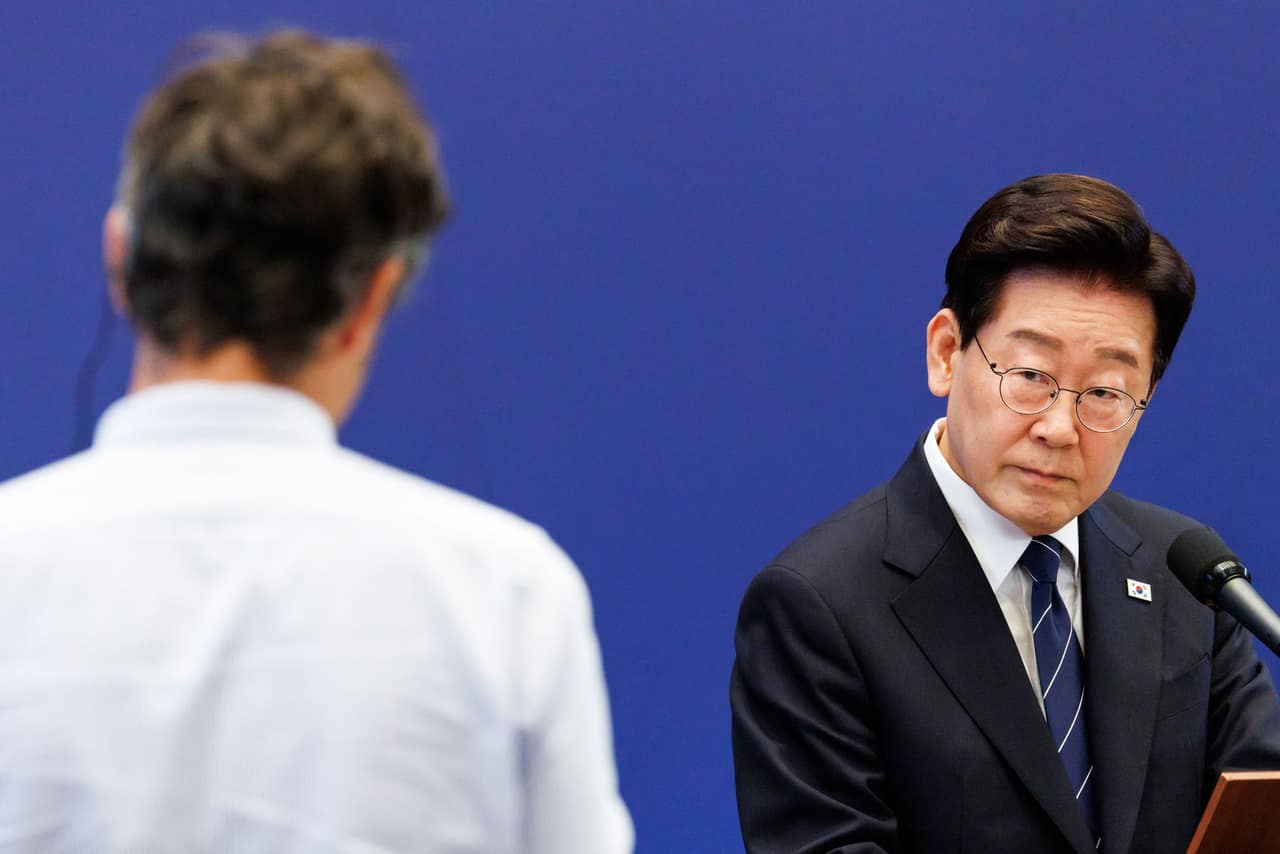
- South Korean President Lee Jae Myung accused Ukraine of violating a confidentiality agreement.
- Ukraine's Foreign Ministry stated that a senior official expressed regret over the escalation of the situation.
- Experts believe the dispute is driven by South Korea's domestic politics and geopolitical challenges, rather than impacting strategic relations.
Seoul's diplomatic spat with Kyiv has deepened following South Korea's announcement on October 8 to recall its ambassador from Kyiv amid a dispute over North Korean prisoners of war (POWs). The rift began on September 23 when Ukrainian President Volodymyr Zelensky informed the U.N. General Assembly that Kyiv had transferred two North Korean POWs, who were captured while fighting for Russia, to Seoul.
President Lee Jae Myung of South Korea reacted angrily, accusing Ukraine of violating a confidentiality agreement. Ukraine initially denied the existence of such a deal, with Foreign Minister Andrii Sybiha later characterizing the situation as a "diplomatic misunderstanding." The exchange of words continued, with South Korean Foreign Minister Cho Hyun stating on October 6 that Ukraine had privately apologized, but the apology was deemed "insufficient." Ukraine's Foreign Ministry responded that Sybiha had merely expressed regret that the situation had escalated, emphasizing the need for diplomatic correspondence to remain confidential.
Experts suggest that the dispute is less about the strategic relationship between Ukraine and South Korea and more about South Korea's internal political landscape and its broader geopolitical challenges. South Korea has officially joined Western-led sanctions against Russia but has been accused of partially circumventing them, such as by exporting diesel to Russia. Leonid Petrov, a Korea researcher at the Australian National University, noted that Seoul maintains this ambivalent approach to potentially normalize ties with Moscow post-war. South Korea has provided humanitarian and non-lethal military aid totaling approximately $627 million since 2022.
Chun In-Bum, a retired South Korean lieutenant general, explained that while South Korea does not openly supply weapons, it can do so indirectly. He also highlighted South Korea's interest in intelligence cooperation regarding Ukraine's wartime experience. Sydney Seiler, a former U.S. national intelligence officer, believes the POW transfer announcement by Kyiv complicated President Lee's efforts to warm relations with North Korea and potentially hold a summit with Kim Jong Un, though experts doubt the transfer would significantly influence Kim's engagement decisions.
Furthermore, the announcement raised security concerns regarding the transferred North Korean soldiers, given the presence of North Korean spies in South Korea. Petrov suggested that President Lee's administration may have deliberately amplified the incident due to falling approval ratings. Seiler also pointed out that Seoul's focus on appeasing North Korea might stem from a wariness of the strengthening alliance between China, Russia, and North Korea, potentially at the expense of cooperation with partners like Ukraine and the U.S.