All NewsEducationTVBrokers
Equities & FundsCrypto & Digital AssetsAI & TechnologyBusiness & CorporateUS Politics & PolicyGeopolitics & Global RiskMacro, Rates & FXCommodities & EnergyEuropean Politics & MarketsAsia-PacificReal Estate & Property
All NewsHome
← Back to AI & Technology

Tesla Cybercab faces federal safety probe after deployment

Created at 5 Sep · 3:27 PM1 source↑ Market-relevant
IN SHORT

The US National Highway Traffic Safety Administration is investigating Tesla's driverless Cybercab to determine if it meets federal safety standards. The probe follows the vehicle's deployment for public rides in Texas and Florida, despite the agency's stated expectation for autonomous vehicle developers to seek exemptions for non-standard designs.

Key Numbers

45Cybercabs currently in Tesla's Texas fleet
2,500vehicle limit for Zoox's exemption this year
$130 millionVolvo Group North America penalties in 2023

Who's Involved

Tesla
deployed driverless Cybercab for public rides
National Highway Traffic Safety Administration (NHTSA)
investigating Tesla's Cybercab for safety compliance
Jonathan Morrison
NHTSA Administrator
Ann Carlson
former acting NHTSA administrator, professor at UCLA
Zoox
Amazon subsidiary that received an exemption for its driverless vehicles
Elon Musk
CEO of Tesla, views company as robotics and autonomous vehicle firm
Tesla Cybercab faces federal safety probe after deployment

↳ Why This Matters

The federal investigation into Tesla's Cybercab raises questions about the regulatory framework for autonomous vehicles and the company's adherence to safety standards, potentially impacting the future deployment and public acceptance of driverless technology.

Key facts

  • Tesla's driverless Cybercab, lacking a steering wheel and brake pedals, has been deployed for public rides in Texas and Florida.
  • The US National Highway Traffic Safety Administration (NHTSA) is investigating whether the Cybercab meets federal safety standards.
  • Tesla asserts its vehicles comply with existing safety regulations and does not need an exemption.
  • NHTSA is currently revising eight vehicle rules, including those for parts not needed in driverless cars.
  • An exemption process exists for unusually shaped robotaxi companies, with Amazon's Zoox having received one.

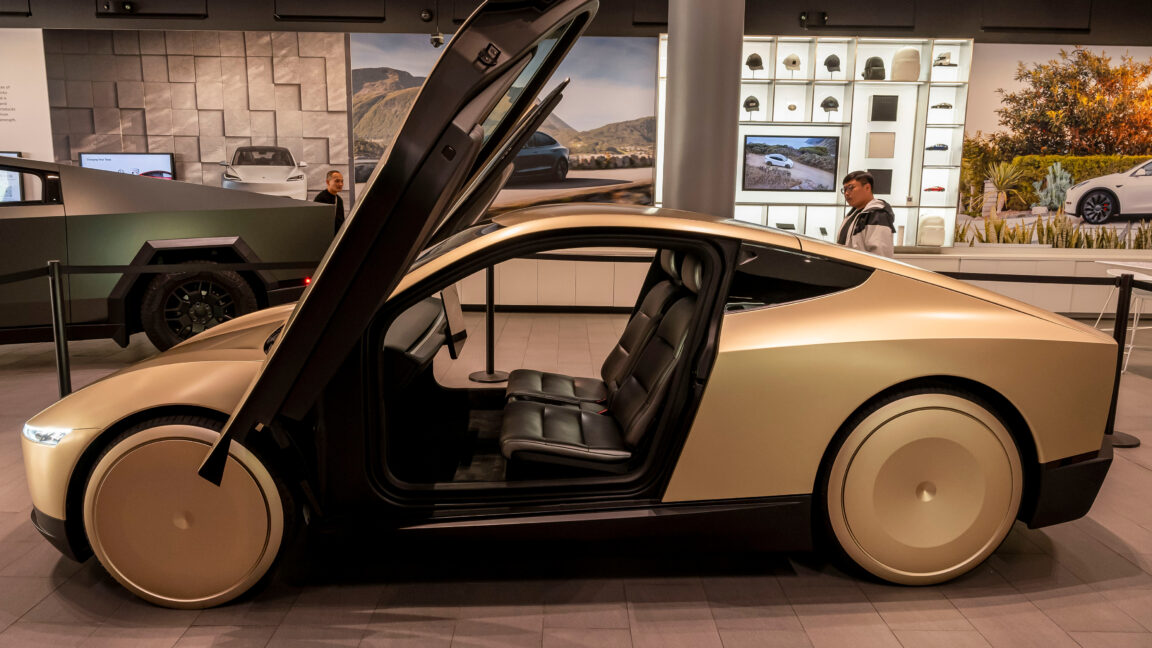
Tesla's distinctive two-seater Cybercab, which operates without a steering wheel or brake pedals, has begun picking up members of the public in Texas and Florida as part of the company's Robotaxi ride-hail network. However, the vehicle is already under investigation by the US federal government.

The National Highway Traffic Safety Administration (NHTSA) is probing whether the Cybercab meets existing federal safety standards. This investigation, termed an Audit Query, will scrutinize the data and process Tesla employed to determine its compliance. The probe comes as NHTSA is in the process of updating vehicle standards to streamline the deployment of driverless cars, including tweaking rules for components like brake pedals and rearview mirrors that are unnecessary for autonomous vehicles.

While companies with unconventional vehicle designs are typically expected to apply for exemptions before passenger operations, Tesla has stated it does not require one, asserting its vehicles adhere to all current safety standards. Ann Carlson, a former acting NHTSA administrator, suggested the investigation indicates significant frustration at NHTSA with Tesla's approach, calling the company's disregard for the exemption process "gobsmacking."

NHTSA has the authority to mandate changes to a vehicle or its development process and can pursue enforcement actions, including civil penalties. Volvo Group North America, for instance, paid $130 million in penalties following an investigation into its recall procedures. Tesla CEO Elon Musk has articulated a vision for the company as a robotics and autonomous vehicle entity, distinct from a traditional automaker, with plans to deploy millions of Cybercabs annually.

Frequently asked questions

The Cybercab is Tesla's driverless, two-seater vehicle designed for ride-hailing services, notably lacking a steering wheel or brake pedals.

The NHTSA is investigating to ensure the Cybercab meets federal vehicle safety standards, especially given its unconventional design.

Tesla claims it does not need an exemption, stating its vehicles comply with existing safety standards, while NHTSA expects companies with non-standard designs to seek exemptions.

NHTSA could require Tesla to change its vehicle or processes, or impose civil penalties.

What Happens Next

01NHTSA may require Tesla to alter its vehicle design or compliance process.
02NHTSA could pursue enforcement actions, including civil penalties against Tesla.
CME Headlines
  • Risk Management and Monitoring Notice: Multi-Factor Authentication Updates - September 12
    3 Sep · 5:00 AM

How It Developed

Tesla deployed its driverless Cybercab for public rides in Texas and Florida.
The National Highway Traffic Safety Administration (NHTSA) launched an investigation into the Cybercab.
The investigation, an Audit Query, will examine Tesla's data and process for determining safety compliance.
NHTSA is updating vehicle standards to facilitate driverless car deployment.
Tesla claims its Cybercab complies with all existing safety standards and does not require an exemption.

Sources

T1
Tesla’s Cybercab has been deployed, and it’s already under investigationArs Technica

Related Stories

Tesla Cybercab Details Emerge: No Minors Under 13, Manual Door Release
4 Sep · 5:11 PM
Flock cameras' AI surveillance sparks privacy fears and vandalism
5 Sep · 1:26 AM
California AG Probes OpenAI Over Hugging Face AI Agent Breach
4 Sep · 9:31 PM
OpenAI to improve disclosure of rogue AI incidents
5 Sep · 2:57 PM
Xi Jinping to Bring Large CEO Delegation on US Visit
4 Sep · 8:12 PM