Key facts
- Uber has launched the UK's first robotaxi service in London, in partnership with AI startup Wayve.
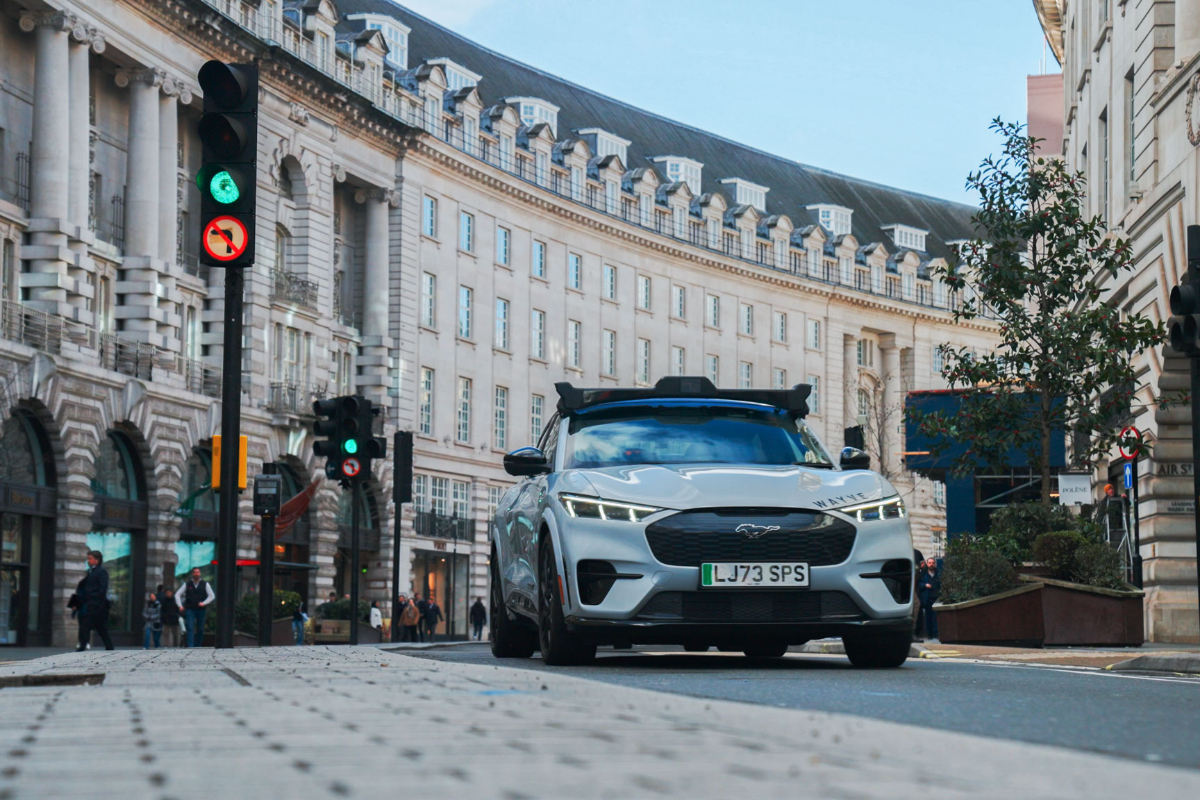
- Initially, 15 electric Ford Mustang Mach-Es equipped with Wayve's AI technology are operating.
- Each vehicle requires a human safety driver to be present and ready to intervene.
- Rides are booked via the Uber app, with fares matching standard UberX journeys.
- Transport for London has licensed the vehicles as private hire vehicles, requiring a safety driver.
Londoners can now hail self-driving taxis for the first time, as rides in Wayve's autonomous vehicles have been added to the Uber app. The initial fleet consists of 15 licensed vehicles, a small fraction of the capital's over 100,000 private hire vehicles. Each car still includes a licensed human driver in the front seat, ready to take over control if necessary.
Transport for London recently licensed Uber and UK tech company Wayve's modified Ford Mustang cars as private hire vehicles, a condition that mandates a safety driver. Regulatory approval for fully autonomous operations without a safety driver requires a separate government process and agency, the Driver and Vehicle Standards Agency, and is not expected this year.
This launch marks a significant milestone, allowing Uber to gain an edge in the race to bring driverless taxis to London, a crucial market for wider European rollout. Google-owned Waymo and China's Baidu are also testing robotaxis in the city.
Alex Kendall, Wayve's CEO, expressed pride in introducing the company's AI Driver technology to the public in London. He acknowledged that the technology is still maturing and that driverless services are forthcoming, though he declined to provide a specific timeline. Wayve plans to transition to scalable, manufacturer-produced vehicles, specifically new Nissan Leaf robotaxis equipped with its technology, and is working in parallel to validate safety metrics and secure regulatory approval for fully driverless services.
Wayve's technology is based on an AI learning model, differing from the mapping approach used by competitors like Waymo. During a test drive, the vehicle demonstrated human-like decision-making, such as re-parking after stopping appropriately. The cars will be hailed and unlocked via the Uber app, with the human driver introducing themselves and explaining their role.
While these are the first self-driving cabs for hire in London, fully driverless services are already operational in many cities globally, particularly in the US and China, as well as the UAE. Uber also partnered in launching Europe’s first commercial robotaxi service in Zagreb, Croatia, earlier this summer, also with a human driver onboard.
Sarfraz Maredia, Uber's head of autonomous mobility, called the London launch a major milestone for scaling safe, accessible AV technology in a complex urban environment. He anticipates that, over time, consumers will benefit from safer and cheaper rides, though achieving cost competitiveness with human-driven rides will take time. Maredia also addressed concerns from drivers, believing they will not be displaced due to the market's growth and the complexity of the city, and that Uber aims to be a platform for both human drivers and AVs.
Transport Secretary Heidi Alexander hailed the launch as a major milestone for the future of transport in London, highlighting British innovation. However, David McMullen, a senior organiser at the GMB union, cautioned about the potential for unprecedented social and economic disruption if the rollout of driverless cars is not carefully managed.