Key facts
- Taiwan Defense Minister Wellington Koo has not received information about the US dividing a $14 billion arms sale into smaller batches.
- Koo stated that Washington's commitment to Taiwan's defense capabilities remains unchanged.
- Previous reports suggested Taiwan might receive the arms sale in smaller chunks to avoid upsetting Beijing.
- The US is legally obligated to provide Taiwan with the means to defend itself.
- Taiwanese Foreign Minister Lin Chia-lung and former president Tsai Ing-wen are currently visiting the US.
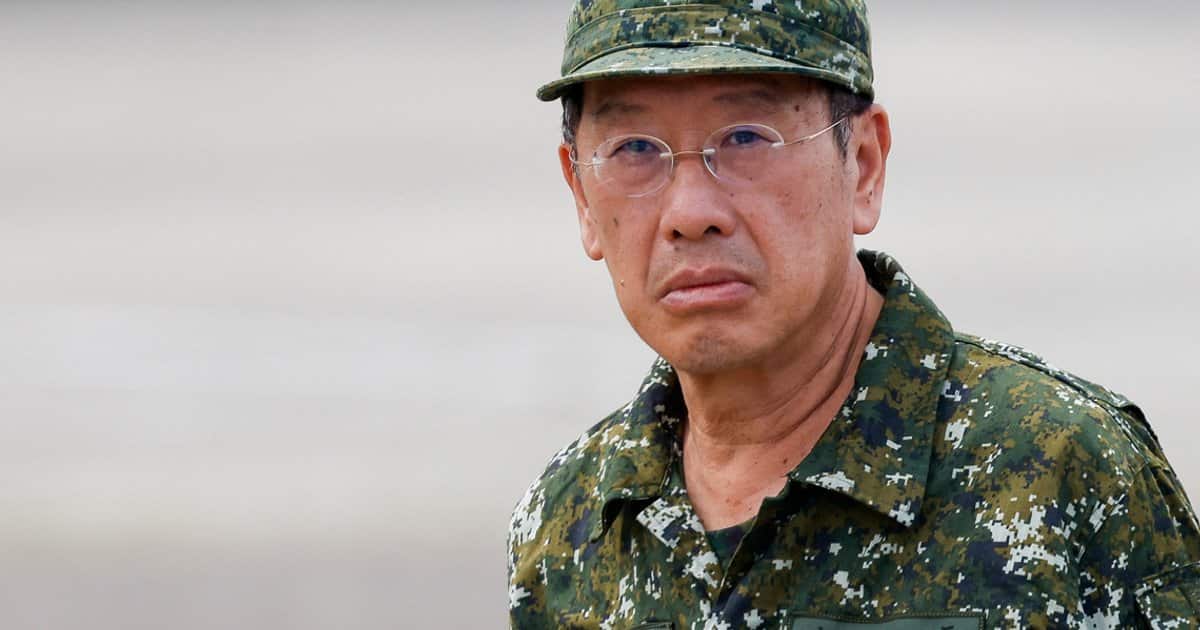
Taiwan's Defense Minister Wellington Koo stated on October 6 that he had not received any information regarding the United States potentially dividing a $14 billion arms sale into smaller batches. He affirmed that Washington's commitment to Taiwan's defense capabilities remains unchanged.
Officials in Taipei had previously suggested that the US might carve up the arms sale into smaller chunks in an effort to avoid upsetting Beijing too much. However, Koo, speaking in Parliament, said the US has repeatedly reaffirmed its commitment to helping Taiwan strengthen its self-defense capabilities.
"Regarding arms sales, we respect the US review process. We are also continuing to coordinate with the United States. At present, we have not received any information about so-called separate batches," Koo added, without elaborating.
US President Donald Trump had previously held back approval of the new package of arms sales to Taipei, aiming to maintain warm relations and a fragile trade truce with Chinese President Xi Jinping. In December, Trump had approved an $11 billion package. In May, Trump described the pending package as a "very good negotiating chip."
China, which views Taiwan as its own territory, has repeatedly called for the arms sales to end. The US is bound by law to provide Taiwan with the means to defend itself, and Washington is Taipei's most important international backer.
Koo also noted that Taiwan and the US "do indeed have close exchanges in the military and defence spheres," which he said would help with Taiwan's war-preparedness efforts and the transformation of its armed forces. This week, Taiwanese Foreign Minister Lin Chia-lung and former president Tsai Ing-wen are in the US. A US State Department spokesperson commented that engagement with Taiwan benefits the US and the international community due to Taiwan's tech prowess and vibrant democracy. The Chinese embassy in Washington reiterated its firm opposition to official interactions between Taiwan and the US.