Key facts
- Trump and Xi agreed to dialogue on AI and tariff reductions on $30 billion in goods.
- Xi Jinping urged the U.S. to oppose "Taiwan independence" and handle the Taiwan issue prudently.
- Japanese Prime Minister Sanae Takaichi affirmed close U.S.-Japan cooperation with Trump before the summit.
- Trump stated he and Xi "didn't spend a lot of time talking about Taiwan."
- Reports suggest Xi tried to convince Trump to cut weapons sales to Taiwan.
- Trump previously suggested arms sales to Taiwan were a "good bargaining chip" in talks with China.
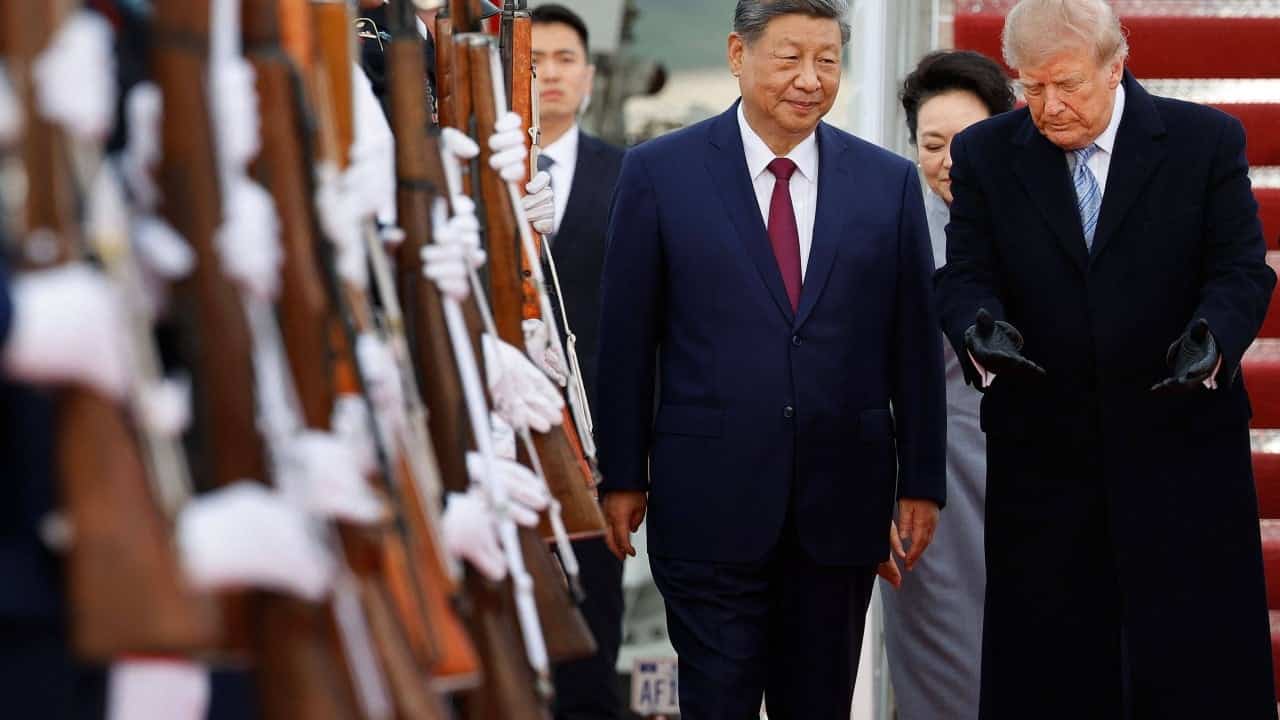
Anxiety surrounds Taiwan following a summit between U.S. President Donald Trump and Chinese President Xi Jinping, with fears that Trump might compromise the island's security in negotiations. The leaders agreed to dialogue on artificial intelligence and tariff reductions on $30 billion of goods, but discussions on semiconductors and export controls were notably absent.
Readouts from the meeting presented differing accounts, particularly regarding Taiwan. While Trump initially remained silent and later stated that Taiwan was not a major topic, Chinese state media quoted Xi Jinping urging the U.S. to "oppose Taiwan independence" and handle the issue prudently. Reports suggest Xi pressed Trump to curtail support for Taiwan and reduce weapons sales.
This follows a precedent from a May 2026 meeting where differing readouts emerged, and Trump later made comments suggesting he was "not looking to have somebody go independent" and that Taiwan needed to "cool down a bit." He also accused Taiwan of stealing the U.S. semiconductor industry and questioned the commitment of U.S. troops to defend Taiwan, framing arms sales as a "good bargaining chip."
Ahead of the latest summit, Japanese Prime Minister Sanae Takaichi met with Trump, affirming close U.S.-Japan cooperation on economic security and peace in the Taiwan Strait. This meeting, occurring before Trump's discussion with Xi, highlighted Japan's security concerns, which are directly tied to the Taiwan Strait's stability due to its proximity, U.S. forces stationed there, and critical semiconductor supply chains.