Key facts
- The Supreme Court denied the request in a one-sentence order with no explanation and no publicly noted dissents.
- The justices acted six hours and 24 minutes after the administration's filing, without soliciting a response from California.
- A Justice Department spokesperson said the department was deploying election monitors and charging election fraudsters daily.
- The court in September refused to let the administration enforce a US Postal Service rule restricting voting by mail.
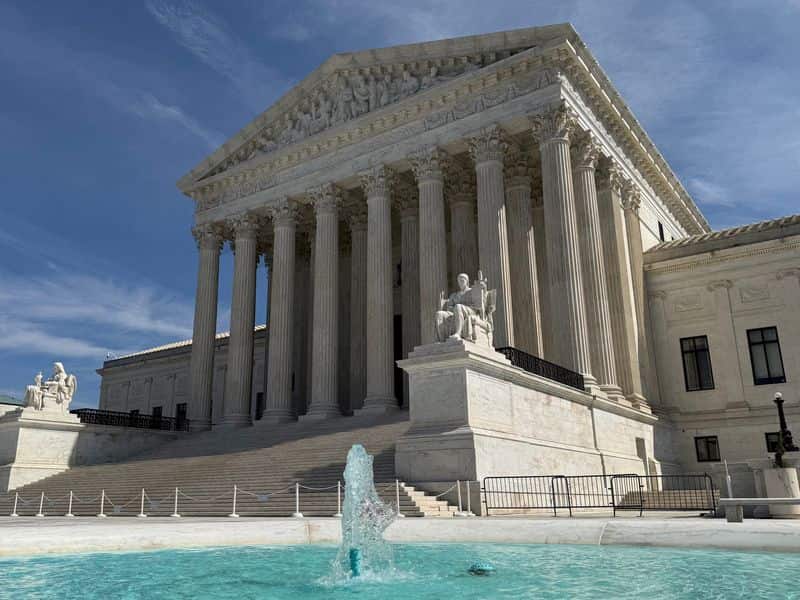
The US Supreme Court denied the Trump administration's request to temporarily block California from counting mail-in ballots from more than 20,000 registered voters whom federal officials allege are likely non-US citizens, Reuters reported. The denial came in a brief, one-sentence order with no explanation and no publicly noted dissents, six hours and 24 minutes after the administration filed, on the eve of Tuesday's midterm elections.
The justices did not solicit a response from California before ruling. Ohio State University election law expert Edward Foley said that when a case is exceptionally weak, not bothering to get a response shows how weak the filing was. Loyola Law School professor Justin Levitt said the broader string of losses by Republicans and the Justice Department was because their cases have not been very good, calling the California case the most striking example yet.
A Justice Department spokesperson expressed disappointment in the ruling and said the department was deploying election monitors in California and across the country, charging election fraudsters daily and pursuing other legal avenues to ensure that only eligible American citizens vote.
The ruling followed other recent setbacks for the administration and Republicans. In September the court refused to let the administration enforce a US Postal Service rule to restrict voting by mail, with justices Samuel Alito and Clarence Thomas publicly dissenting, and issued three decisions barring Missouri from using a redrawn map of US House districts designed to favor Republicans.
Earlier in the election cycle the court's conservative majority had ruled in Republicans' favor. In April it gutted a key provision of the Voting Rights Act, and in June it threw out longstanding campaign finance limits in a challenge brought by Trump's vice president, JD Vance, and others. Notre Dame Law School professor Derek Muller said the Voting Rights Act and campaign finance cases involved long-contested legal issues, while the recent cases were filed close to an election and were half-baked or under-theorized.