Key facts
- SpaceX plans a $100 billion investment in Louisiana for its Starship program.
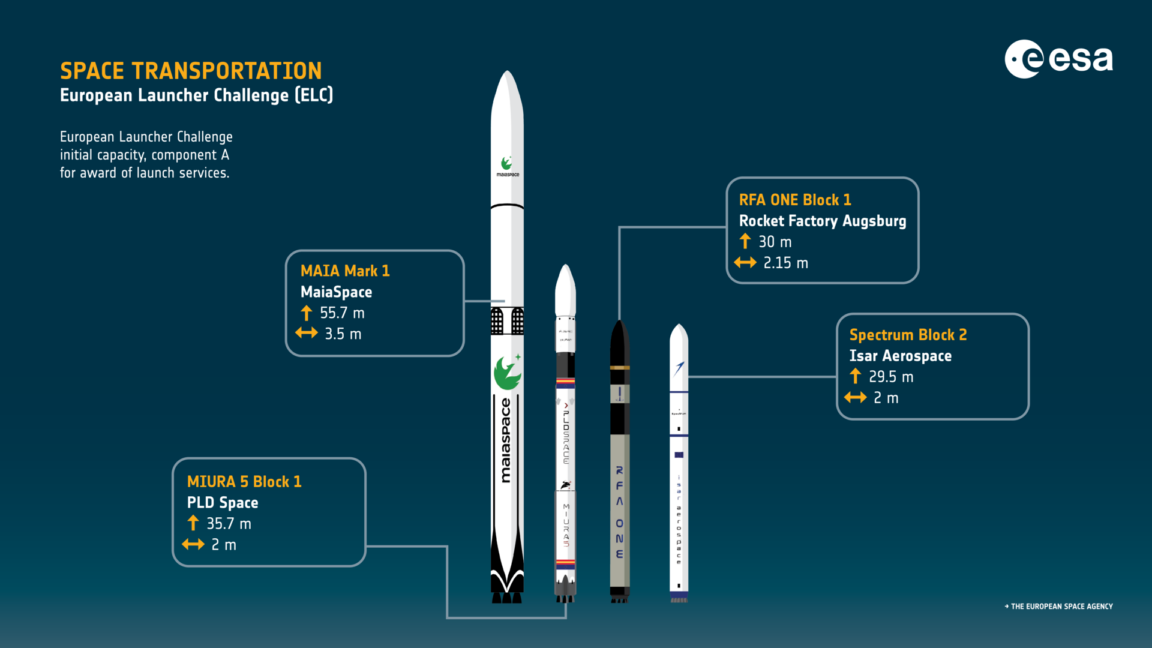
- The European Space Agency (ESA) awarded significant funding to German and Spanish launch startups: Rocket Factory Augsburg, PLD Space, and Isar Aerospace.
- SpaceX will transition Starlink missions from Florida to Starship launches.
- Chinese firm Galactic Energy's Pallas-1 rocket is nearing its first orbital launch attempt.
- A new US national space transportation policy aims for over 1,000 launches annually by 2030.
SpaceX is planning a significant investment of up to $100 billion in Louisiana to develop its Starship program, a move that could dramatically reshape the coastal region.
In Europe, the European Space Agency (ESA) has awarded substantial contracts to several launch startups to accelerate their vehicle development. Rocket Factory Augsburg (Germany) received 186.9 million euros, PLD Space (Spain) received 158.9 million euros, and Isar Aerospace (Germany) received 197.8 million euros. These funds are intended to enhance Europe's access to space and support small launch vehicle operations.
Meanwhile, India's launch capacity gap remains a concern, as highlighted by Jatan Mehta's analysis. Despite successes like Skyroot's Vikram-1 rocket, India faces constraints in spaceports, suppliers, and medium-to-heavy lift capabilities.
In other launch news, Space One's Kairos rocket is slated to launch a Japanese radar-imaging startup's satellite in 2028, despite Kairos's previous launch failures. SpaceX has completed its final planned Starlink mission from Florida using the Falcon 9 rocket, with future Starlink deployments from the state to utilize Starship. The company's Falcon 9 and Falcon Heavy rockets will now primarily carry external customer payloads from Florida.
Chinese commercial firm Galactic Energy is preparing for the debut orbital launch of its Pallas-1 liquid propellant rocket. The rocket is a two-stage vehicle with a 3.35-meter diameter body and a maximum payload capacity of 7,000 kilograms to low-Earth orbit.
Additionally, a new national space transportation policy signed by President Donald Trump aims to increase the U.S.'s launch and reentry capacity to over 1,000 per year by 2030, encouraging infrastructure investment at federal ranges.