Key facts
- Over 300 South Korean workers detained in a US immigration raid at a Georgia battery plant site last year are filing administrative claims.
- The claims are being filed with nine US agencies, including the Department of Homeland Security, Department of Justice, Department of Labor, and Immigration and Customs Enforcement.
- The workers allege unlawful detention, demeaning living conditions, intentional infliction of emotional distress, humiliation, and lasting psychological trauma.
- The claims seek damages for confiscated belongings, lost work, and psychological harm.
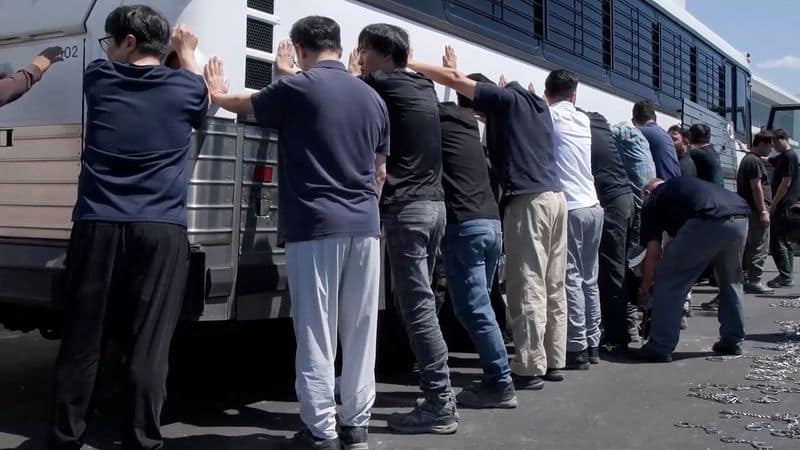
- US authorities arrested 475 people, a majority of them South Koreans, during the raid at the electric vehicle battery plant construction site.
More than 300 South Korean workers detained in a US immigration raid at a Korean battery plant construction site in Georgia last year are initiating legal action against the US government. This marks the first significant legal challenge concerning the immigration crackdown conducted under President Donald Trump's administration.
Administrative claims have begun to be filed on behalf of the workers with nine US federal agencies, including the Department of Homeland Security, the Departments of Justice and Labor, and Immigration and Customs Enforcement. According to a lawyer representing the claimants, these claims are a necessary prerequisite to filing a federal lawsuit.
The raid, which occurred in September last year at the construction site for a joint venture between Hyundai Motor Group and LG Energy Solution, resulted in the arrest of 475 individuals, the majority of whom were South Korean nationals. US authorities described the operation as "the largest single site enforcement operation in the history of Homeland Security Investigations," asserting that the arrested individuals were present in the US illegally, with some having crossed the border unlawfully and others violating the terms of a visa waiver program that prohibits employment.
One South Korean worker claimed he was unlawfully detained for seven days and subjected to "demeaning living conditions," leading to "intentional infliction of emotional distress, humiliation ... and lasting psychological trauma." The claims seek compensation for confiscated belongings, lost wages, and psychological harm, while also alleging false imprisonment, abuse of process, and intentional infliction of emotional distress.
The claimants' lawyer stated that the objective of these claims is to compel the US government to acknowledge and apologize for what they deem an "enormous, unjust mistake."