Key facts
- South Korea's GDP is projected to be 0.38 percentage point higher cumulatively over the first decade after CPTPP entry.
South Korea's economy is projected to grow by 0.38% over the decade following potential membership in the Comprehensive and Progressive Agreement for Trans-Pacific Partnership (CPTPP), according to the Ministry of Trade, Industry and Resources. The analysis, involving multiple government ministries, estimated an annual increase in manufacturing production of 6.3 trillion won to 6.7 trillion won, while agricultural production is expected to decline.
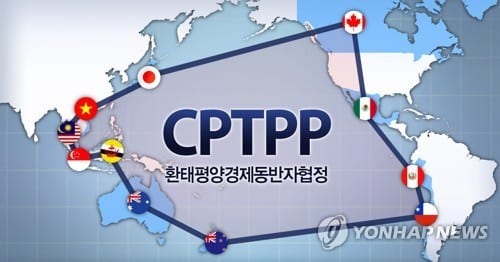
South Korea's potential entry into the CPTPP could significantly boost its manufacturing sector and overall GDP, though it may negatively impact agricultural production, highlighting the trade-offs involved in joining the major Indo-Pacific trade bloc.
SEOUL, Sept. 28 (Yonhap) -- South Korea's economy is projected to grow by 0.38 percent over the 10 years following its potential membership in the Comprehensive and Progressive Agreement for Trans-Pacific Partnership (CPTPP), the industry ministry said Monday. The government released the projection after conducting a comprehensive analysis of the potential impact of South Korea's CPTPP membership on the macroeconomy, manufacturing and small and medium-sized enterprises (SMEs), as well as the agriculture, fisheries and forestry sectors, according to the Ministry of Trade, Industry and Resources (MOTIR).
The latest estimate showed that South Korea's gross domestic product (GDP) would be 0.38 percentage point higher, on a cumulative basis, over the first decade after its entry into the CPTPP than it would be if the country did not join the trade pact, the ministry said. By sector, the production impact on the manufacturing sector is projected to increase by 6.3 trillion won (US$4.6 billion) to 6.7 trillion won annually over the 15 years following membership, while the impact on agricultural production is estimated to be a decline of 710 billion won.
The CPTPP is a major Indo-Pacific trade agreement comprising 12 countries, including Japan, Mexico, Australia, Canada and Vietnam. Together, the member countries accounted for about 15.2 percent of global trade in 2019. In 2022, the South Korean government decided to pursue membership in the CPTPP. However, it did not submit a formal application, amid opposition from the agriculture and fisheries sectors and strained relations with Japan. Last month, the government said it would review whether to seek membership by closely examining the national interest and tangible benefits that joining the pact would have on the livelihoods of ordinary people.
Pick the topics you care about. Get only what matters, on your cadence.