Key facts
- Merz's letter, seen by Reuters, said a commitment by all EU members to help Ukraine was a prerequisite for discussing further financial matters.
Slovak Prime Minister Robert Fico accused German Chancellor Friedrich Merz of "blackmail" on November 10, after Berlin pushed to tie a Ukraine funding deal to talks on the EU's next long-term budget. Merz wrote to European Council President Antonio Costa that all EU members must help fill a projected €70 billion Ukraine funding gap for 2027.
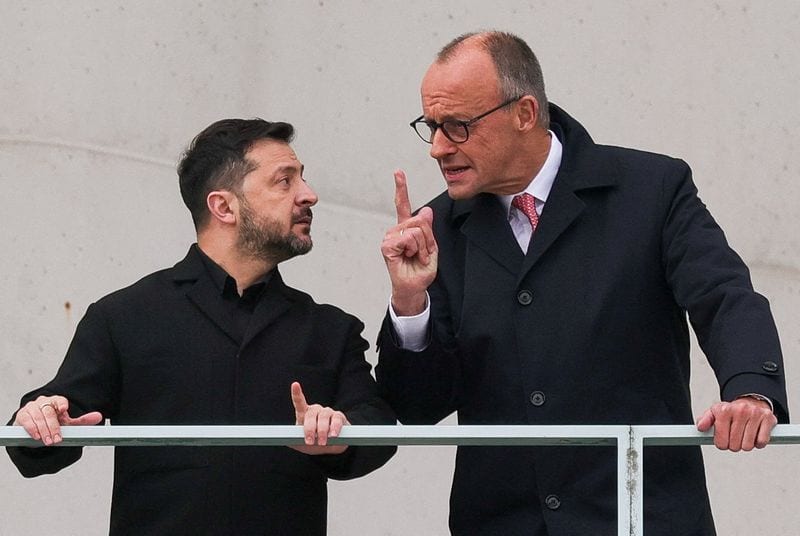
Germany is the EU budget's biggest contributor, and Merz's letter makes a €45 billion EU contribution toward a €70 billion Ukraine funding gap for 2027 a condition for discussing other budget matters. Slovakia, the Czech Republic and Hungary, which opted out of the €90 billion loan agreed in December 2025, have signalled they will not join a new one.
Slovak Prime Minister Robert Fico accused German Chancellor Friedrich Merz of "blackmail" on November 10 after Berlin pushed to link a deal on funding for Ukraine to talks on the European Union's next long-term budget.
In a letter to European Council President Antonio Costa seen by Reuters, Merz said all of the EU must contribute to funding Ukraine as it defends itself against Russia's invasion. He said a commitment that all EU members would help Ukraine fill a projected €70 billion funding gap for 2027, with an expected EU contribution of €45 billion, was a prerequisite for "discussing any further matters, particularly those with financial implications".
Fico responded: "We must respond to blackmail." He added: "We have the same veto as the German Federal Chancellor." Fico has criticised EU policy on the war in Ukraine, opposing military aid and keeping cordial ties with Russia, even as other EU leaders have isolated Moscow for its 2022 invasion.
Czech Prime Minister Andrej Babis, alongside Fico, said blocking the EU budget would also block money earmarked for Ukraine.
The EU is negotiating its next seven-year budget, to run from 2028. Merz's move was seen as an attempt to use Germany's status as the budget's biggest contributor to pressure countries reluctant to sign up for more support for Ukraine. Last December, the EU agreed a €90 billion loan for Ukraine. Slovakia, the Czech Republic and Hungary opted out and have signalled they will not take part in any new loan.
Pick the topics you care about. Get only what matters, on your cadence.