Key facts
- The bill would cut funding for Czech Television and Czech Radio by about 15%, possibly as early as next year.
- The government says scrapping the household fee would ease costs for consumers.
- Opposition parties compared the changes with media reforms under former Hungarian Prime Minister Viktor Orban.
- The European Federation of Journalists said the bill goes against the European Media Freedom Act.
- Prime Minister Andrej Babis said on Facebook that no nationalisation of media is being prepared.
- Local media reported several people unsuccessfully tried to enter the parliament building.
The Czech ruling coalition pushed changes to public media funding through a first parliamentary hurdle in a rare overnight vote, sending the bill to committees for further discussion despite criticism that the changes could weaken broadcaster independence.
The proposal was brought to the floor outside the planned order of proceedings on Friday, October 23. Speaker Tomio Okamura of the far-right SPD party limited debate and scheduled the vote for 4:36 a.m. (0236 GMT) on Saturday, October 24. The coalition's majority then voted to send the bill to committees.
The government of Prime Minister Andrej Babis says it is scrapping the 205 crown ($9.45) monthly household broadcasting fee to ease costs for consumers, with funding instead coming from the state budget. Critics say the changes would cut funding for Czech Television and Czech Radio by about 15%, possibly as early as next year, and keep nominal funding unchanged for several years, making the broadcasters more vulnerable to political pressure.
Opposition parties have compared the proposed changes with reforms in Hungary under former Prime Minister Viktor Orban, who oversaw a major expansion of pro-government media. The European Federation of Journalists said in a statement that the bill goes against the European Media Freedom Act, which requires adequate, stable and predictable funding for public service media.
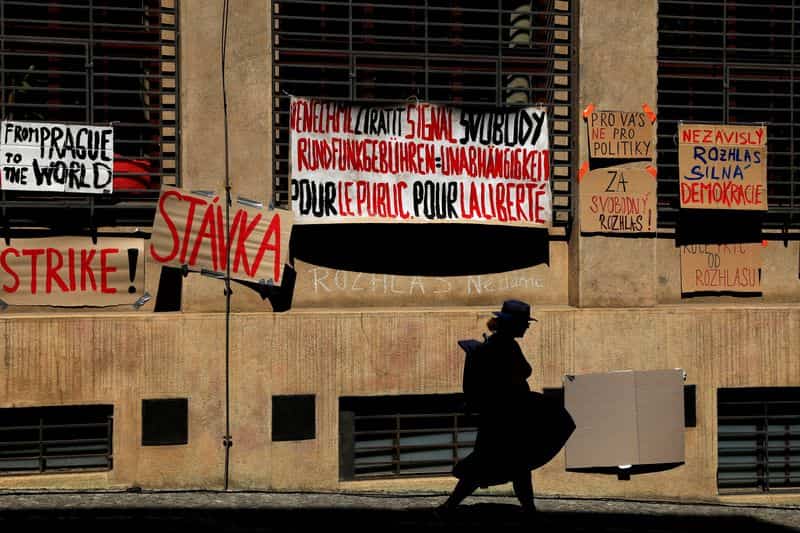
Hundreds of protesters gathered outside parliament, with some remaining overnight, and local media reported that several people unsuccessfully tried to enter the building. Journalists and other employees at the broadcasters announced a strike for November 3, while a civic group called a public protest for Sunday.
Babis said on Facebook late on Friday: "There is no war for independent media. There is no fight for democracy and no nationalisation of media is being prepared." The proposal and its fast-track treatment drew criticism from the broadcasters, international journalism groups and institutions including universities and the Catholic Church.