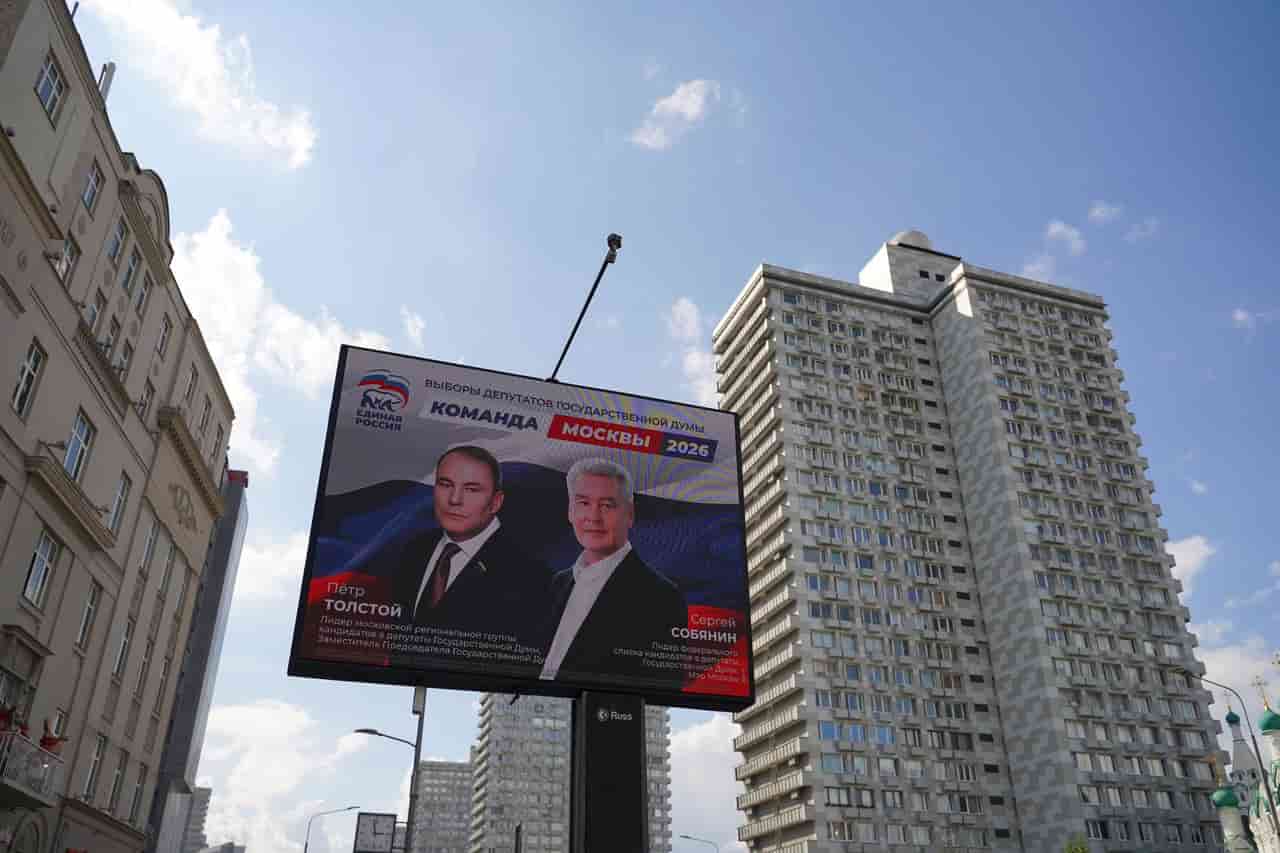
As Russia prepares for its State Duma elections from September 18-20, Russian officials and state-aligned media have intensified claims that Western countries are plotting to interfere with the vote. These accusations come despite a history of similar charges leveled by Western governments against the Kremlin for its own alleged interference in foreign elections.
Russia's foreign intelligence service alleged on August 31 that the European Union plans to orchestrate "provocations" at polling stations both within Russia and abroad, and is collaborating with Ukraine on cyberattacks targeting Russia's election infrastructure. Further compounding these claims, Russian Foreign Minister Sergey Lavrov stated on September 8 that the EU is training "secret" monitors to observe the Duma elections. Vasily Piskaryov, who heads the State Duma commission investigating foreign interference, alleged that "extremist" groups intend to conduct "fake exit polls" at Russian embassies and recruit Russian-speaking citizens to spread disinformation.
These allegations have been widely reported by Russian state and pro-state media, though Russian officials have not presented evidence to support them. The EU has dismissed the accusations. Julia Smirnova, a disinformation researcher at the Germany-based monitoring agency CeMAS, told the Kyiv Independent that the narrative serves three main purposes: discrediting criticism from the exiled Russian opposition, reinforcing an image of Russia being under siege by foreign powers, and diverting attention from Russia's own international interference activities.
Democracy watchdogs, including the U.S.-based NGO Freedom House, consider Russian elections to be neither free nor fair, citing issues such as vote-buying, coercion, and suppression of opposition. While the ruling United Russia party is expected to win, some Kremlin-aligned parties are permitted to participate as "systemic opposition" to create a semblance of democratic competition. Opposition politicians who deviate from the Kremlin's line face imprisonment, exile, or worse. Independent election monitoring has been systematically dismantled, with Russia's only independent watchdog, Golos, being designated a "foreign agent" and dissolved. Furthermore, Russia plans to hold elections in occupied Ukrainian territories, a move that violates international law and is expected to draw criticism.
Smirnova noted that the current accusations are aimed at delegitimizing any criticism of the Russian regime from exile media or politicians, framing it as foreign meddling. She also pointed out that Russia employs "whataboutism" by accusing the EU of actions it is currently undertaking itself in European countries, such as alleged interference in Romania's presidential election and disinformation campaigns linked to Russian interests in Germany and France. This tactic, she stated, hollows out the meaning of election interference.