Key facts
- German police are investigating two new suspected attempts to sabotage the country's electricity grid.
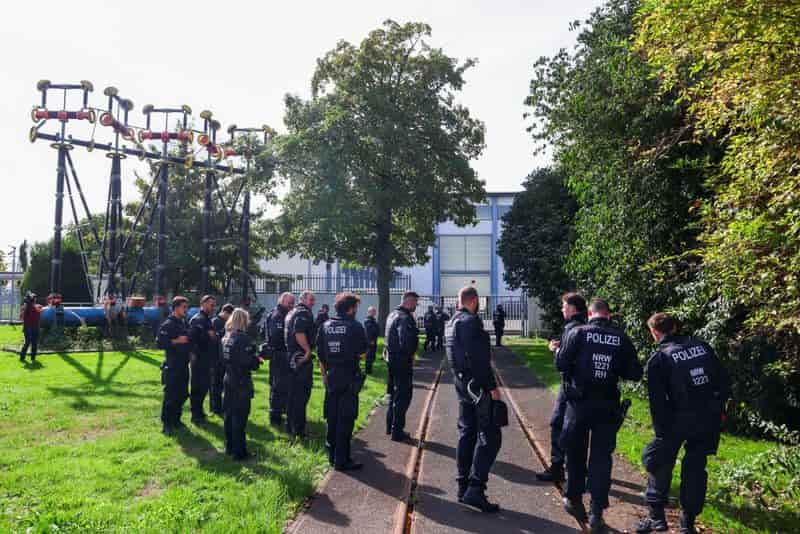
- One incident involved an attempt to short-circuit a power grid installation in Dormagen.
German police responded to two new suspected attempts to sabotage the country's electricity grid, according to a report by Bild. The incidents follow an attempted drone attack at Leipzig airport, which Berlin has attributed to Russia.
The repeated suspected sabotage attempts on critical energy infrastructure raise concerns about national security and energy supply stability in Germany, particularly amid heightened geopolitical tensions.
German police have responded to two further suspected attempts to sabotage the country's electricity grid, according to a report by the newspaper Bild. These incidents heighten the nation's state of alert, particularly after an attempted drone attack at Leipzig airport, which Berlin has blamed on Russia.
Local police indicated that an attempt was made to short-circuit a power grid installation in Dormagen, located in the western state of North Rhine-Westphalia. According to the report, police have received a letter claiming responsibility for this incident.
Separately, police in the northern town of Ganderkesee cordoned off a transformer station on Friday due to suspicious circumstances, as reported by Bild and other local media. A police spokesperson informed public broadcaster NDR that officers had made a discovery overnight requiring a police response, though further details were not provided. The spokesperson assured that there was no danger to the public.
Earlier in the week, Germany was already dealing with two other suspected sabotage cases. One involved vandalism at a substation in Bergheim, North Rhine-Westphalia, which led to the temporary disconnection of lignite power plant units with a combined capacity of 4,200 megawatts. In another incident, devices carrying conductive material damaged power lines at a critical high-voltage node in the eastern state of Brandenburg.
Pick the topics you care about. Get only what matters, on your cadence.