Key facts
- Retailers are increasingly installing digital advertising screens in stores.
- Walmart is testing screens in aisle endcaps to display sponsored product information.
- Walgreens is partnering with Looma to add digital displays to 1,200 stores.
- Amazon has rules for digital ads in Whole Foods, focusing on in-stock items.
- Shoppers are more receptive to ads in certain contexts, like at the front entrance or over the deli counter.
- Shoppers were 2.5 times more likely to consider a product when presented in a relevant context on an in-store screen.
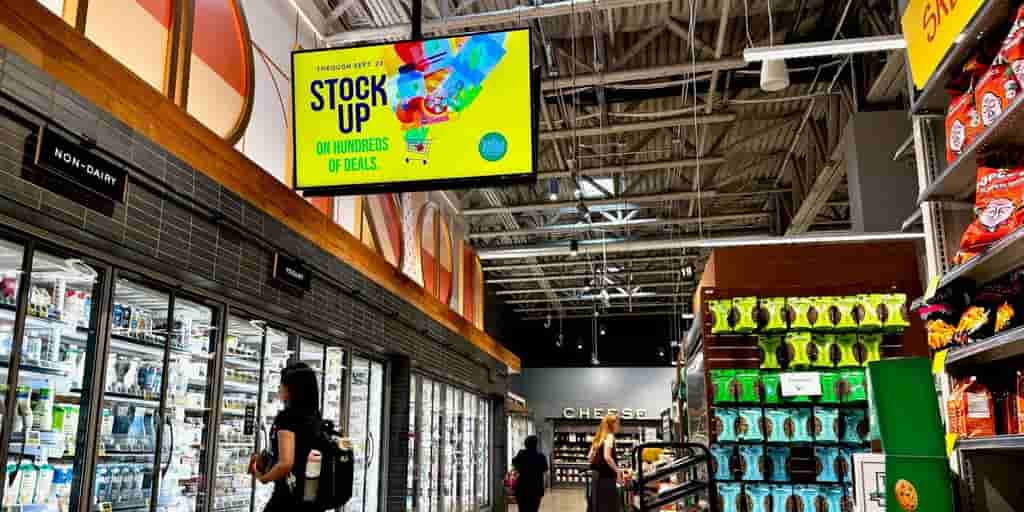
Retailers are increasingly integrating digital advertising screens into their physical stores, aiming to enhance shopper engagement and create new revenue streams. Companies like Walmart, Walgreens, and Amazon are placing these screens in high-traffic areas such as aisles, endcaps, and checkout counters.
Walmart is actively testing digital displays in aisle endcaps, which can provide up-to-date inventory and pricing information for sponsored products. Ryan Mayward, Walmart's head of advertising, highlighted the significant opportunity for more engaging in-store screens. The retail giant is also exploring "non-endemic" ad placements on its Vizio TV platform and in its app, featuring businesses like fast-food restaurants and insurance agencies.
Walgreens is re-entering the in-store digital ad space by partnering with Looma to equip approximately 1,200 locations with screens starting in October. Looma also provides services to other retailers, projecting that major chains could have 100 to 200 screens per location within seven years. Amazon's guidelines for Whole Foods Markets screens generally restrict ads to in-stock products, though front entrance displays may feature external brands, with an emphasis on ads that "inspire and inform" without being distracting.
Research indicates that shopper acceptance of these screens is context-dependent, with higher receptivity at store entrances or over service counters compared to cooler doors or shelves. A survey found that shoppers were 2.5 times more likely to consider a product when presented in a relevant in-store context, and nearly two-thirds reported making a purchase after seeing an ad on a screen. These initiatives not only boost direct sales but also contribute to higher-margin advertising businesses, which are crucial for retailers' overall profitability.