Key facts
- Republicans are increasing spending in at least 39 congressional races where they haven't previously deployed money this cycle.
- Many candidates receiving new support are in Republican strongholds and still lead in public polls.
- House Republican leaders have warned campaigns they cannot assume victory even in districts Trump won by double digits.
- Republicans currently hold a narrow 218-214 majority in the House.
- Republican-leaning super PACs have outspent Democrats by almost 2-to-1 in the last three weeks, spending roughly $309.7 million since Labor Day compared to $174.2 million for Democrats.
- Republican groups have spent about $2 million on text messages, direct mail, and digital ads since September 5 in a South Texas district Trump won by 18 percentage points.
Republicans are significantly increasing spending in over three dozen US House races previously considered secure, signaling a defensive posture ahead of the November 3 election. Internal polling suggests these districts may be more vulnerable than anticipated, prompting a shift in campaign strategy and resource allocation.
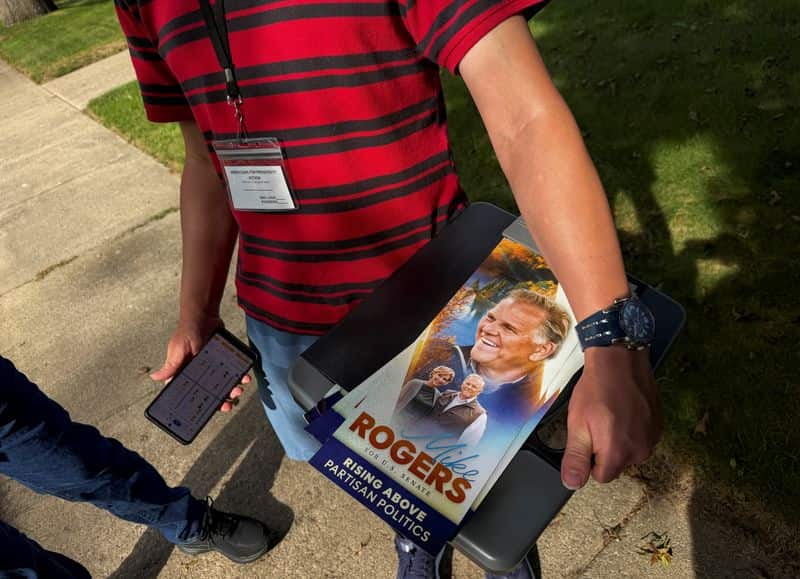
Major Republican groups and megadonors have begun spending in at least 39 congressional races where they haven’t previously deployed money this cycle, according to a Reuters review of spending by some of the largest Republican political groups. Many of these candidates are in Republican strongholds and still lead in public polls, but party leaders are reportedly worried that voters may express dissatisfaction with US President Donald Trump’s policies.
House Republican leaders have warned campaigns that internal data indicates they cannot assume victory, even in districts Trump won by double digits. Republican strategist Ron Bonjean noted that Republicans are “playing defense in some of the strongholds that they're used to not having to worry about.” Republicans currently hold a narrow 218-214 majority in the House, with Democrats needing to net at least four seats to regain control.
Republican operatives stated they are using their substantial war chest to "stifle Democrats before they have a chance to attack" and to ensure Republican-held districts remain in party hands. Natalie Baldassarre, national press secretary for the Republican National Committee, said, "We’re not taking anything for granted, because, unlike Democrats, Republicans aren’t throwing in the towel on races we can win.”
Examples of this increased spending include Representative Bryan Steil’s Wisconsin district, where conservative super PACs invested $1.5 million, and Representative Gregory Murphy’s North Carolina district, which received $131,107 from a conservative PAC. The emergency deployments reflect economic strain in traditionally Republican areas, with rising gas, energy, and fertilizer costs impacting voters, particularly in the agricultural heartland. One Republican House campaign aide described the environment for candidates in Iowa, Kansas, and other Midwest states as "dire" due to soaring diesel prices.
Overall, independent committees have spent over $1.56 billion on federal elections, with roughly $496 million deployed since Labor Day. Republicans have reserved at least $888 million in advertising, compared to $666 million for Democrats. Republican-leaning super PACs have outspent Democrats by almost 2-to-1 in the last three weeks, spending approximately $309.7 million since Labor Day, versus $174.2 million for Democratic candidates. Mike Marinella, national press secretary for the National Republican Congressional Committee, stated, "Republicans have air superiority. House Democrats are scrambling to catch up with the very limited resources they have.”
Democrats acknowledge the funding disadvantage but argue the Republican spending surge in traditionally Republican districts highlights the party's difficulties. Viet Shelton, spokesman for the Democratic Congressional Campaign Committee, said, "Republicans are running scared, know they’ve lost the American people, and are trying one last hail mary to spend their way out of certain defeat.” In a South Texas district Trump won by 18 percentage points, Republican groups have spent about $2 million on various ads since September 5 to aid incumbent Representative Monica De La Cruz, whose seat Cook Political Report moved from "lean Republican" to "tossup."