Key facts
- Philippines is advocating for "minilateral" defense links and a stronger ASEAN security role.
- Analysts are divided on the strategic value of the "Squad" alliance (US, Philippines, Japan).
- Filipino public opinion shows strong negative perceptions of China and support for asserting maritime rights in the West Philippine Sea.
- The Trump-Xi summit is expected to focus on strategic stability, trade, technology, and Taiwan.
- Half of ASEAN members reportedly favor China over the US.
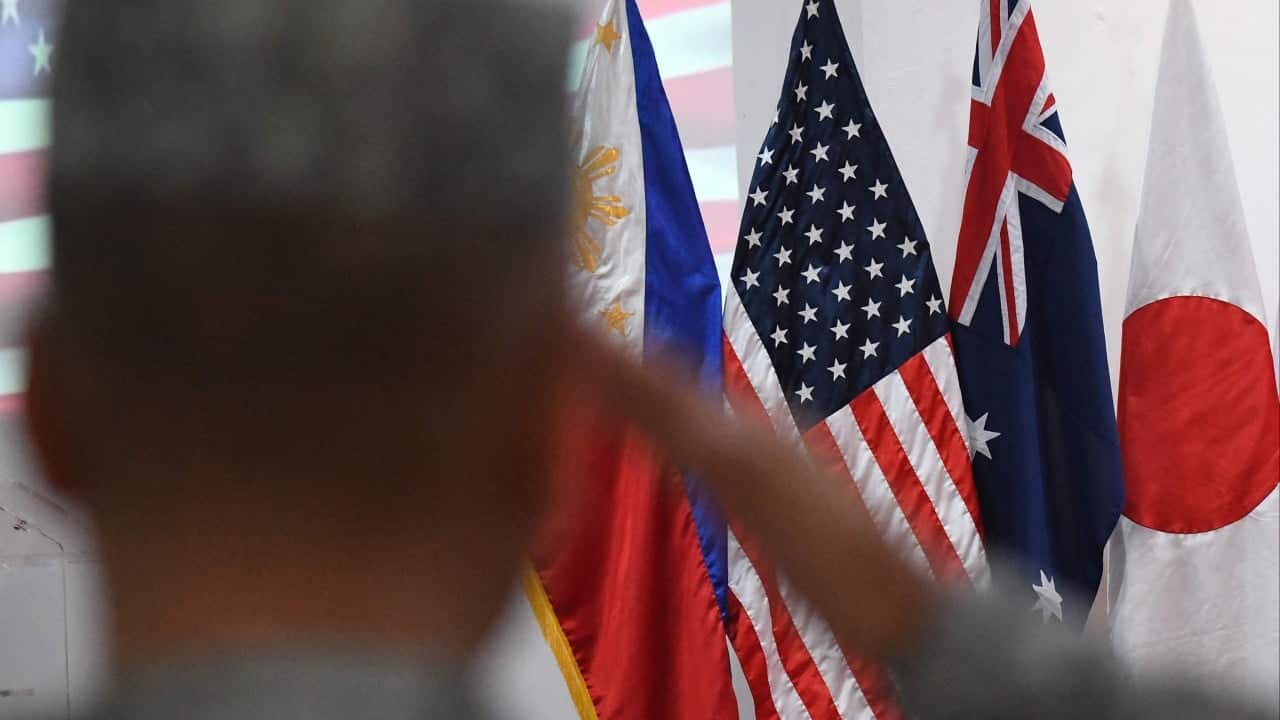
The Philippines is pursuing a dual agenda of strengthening "minilateral" defense alliances and enhancing ASEAN's security role, a strategy that has drawn mixed reactions from analysts. Some view Manila's push for informal defense groupings, such as the "Squad" alliance involving the US, Japan, and the Philippines, as a strategic opportunity. However, others question the actual impact of such informal arrangements.
Ahead of a significant meeting between US President Donald Trump and Chinese President Xi Jinping, the Philippines finds itself in a delicate geopolitical position. Its geography places it at the nexus of the South China Sea, the First Island Chain, and the Taiwan Strait, while its alliance commitments tie it to the US and its economic realities to China. Filipino public opinion, with a strong majority supporting the assertion of maritime rights against China, narrows the policy options for decision-makers.