Key facts
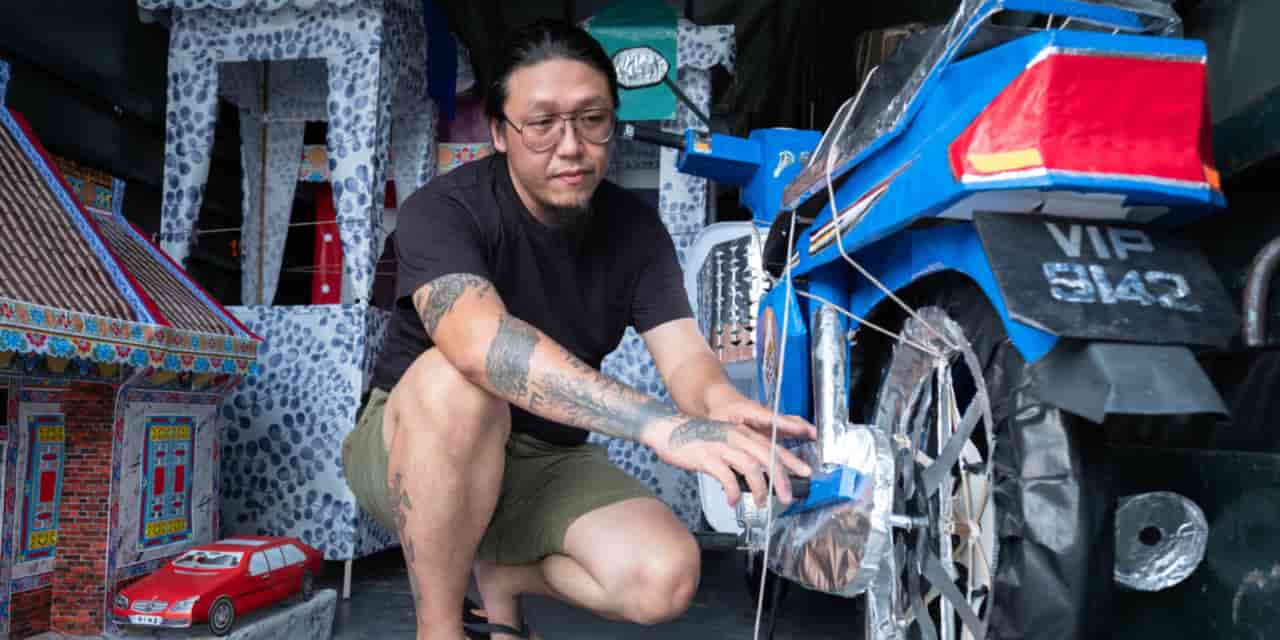
- Paper effigy makers in Penang, Malaysia, create detailed replicas of items like iPads, BMW cars, and houses.
- These effigies are traditionally burnt as offerings for the deceased during festivals and funerals.
- Young artisans are learning the craft, with Lee Teik Joo being a notable apprentice.
- Master craftsman Koh Beng Hock emphasizes hard work, patience, attention to detail, and artistic flair for effigy making.
- The craft requires flexibility and innovation, with apprentices adapting traditional techniques.
In Penang, Malaysia, a traditional craft is finding new life as artisans meticulously construct elaborate paper effigies. These creations, ranging from replicas of modern electronics and vehicles to full-size houses complete with servants, are central to Chinese customs involving burning offerings for the deceased. The practice is particularly active during events like the Qing Ming Festival and the Hungry Ghost Festival.
Lee Teik Joo, a 25-year-old, is one of the younger faces in this trade, having apprenticed under master craftsman Koh Beng Hock. Lee learned the intricate process of slicing bamboo sticks and binding them with paper to form skeletal frames that are then detailed to resemble various objects. He noted that splinters are a common occupational hazard.