
Key facts
- Adyen data showed store transactions on Oxford Street rose 19% in the seven days from October 26 versus the prior week and a year earlier.
- Spending value on the street rose 28% from a year earlier and 12% on the previous week, per Adyen.
- The traffic-free section runs from Orchard Street to Great Portland Street, almost a kilometer, and opened on October 26, 2026.
- The first phase bars private motorized vehicles, buses, taxis, private hire vehicles, cycles, scooters and pedicabs.
- Final approval for the pedestrianization was granted in February 2026 after two public consultations.
Retailers on London's Oxford Street recorded a 19% rise in store transactions in the seven days starting October 26, 2026, compared with the prior week and a year earlier, according to data from technology company Adyen. Overall spending value rose 28% from a year earlier and 12% on the previous week, Adyen said.
The figures follow the start of the street's first traffic-free phase on Monday, October 26, when almost a kilometer from Orchard Street to Great Portland Street was closed to private motorized vehicles, buses, taxis, private hire vehicles, cycles, scooters and pedicabs. The project was first proposed by Mayor of London Sadiq Khan in 2016, blocked in 2018 after two public consultations, resumed in 2024 and given final approval in February 2026, according to ArchDaily.
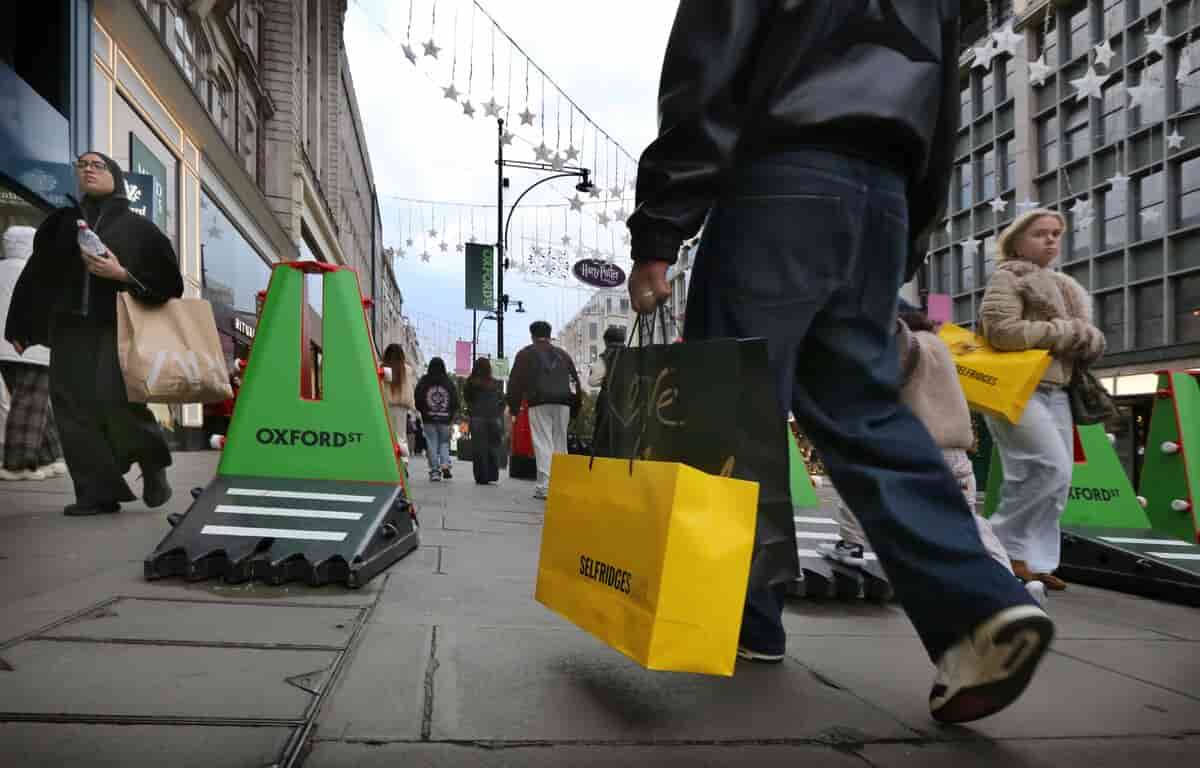
The Oxford Street Development Corporation, a Mayoral Development Corporation, oversees the project and can take over planning powers from Westminster City Council. A London Construction Magazine visit on Friday, October 30, found the street busy with pedestrians but noted that asphalt, kerbs and temporary barriers remained, with little new seating or planting in place ahead of permanent works.