All NewsEducationTVBrokers
Equities & FundsCrypto & Digital AssetsAI & TechnologyBusiness & CorporateUS Politics & PolicyGeopolitics & Global RiskMacro, Rates & FXCommodities & EnergyEuropean Politics & MarketsAsia-PacificReal Estate & Property
All NewsHome
← Back to Commodities & Energy

Odesa farmers defy Russian assaults, but harvest remains unsold

Created at 8 Sep · 4:26 PM1 source↑ Market-relevant
IN SHORT

Despite a strong harvest, Odesa farmers cannot sell their grain due to intensified Russian attacks on Black Sea ports. The maritime corridor is effectively blocked, leading to drastically reduced exports and farmers operating at a loss.

Key Numbers

76age of farmer Volodymyr Varbanets
206hectares farmed by Varbanets
50kilometers to Greater Odesa's ports
169vessels entering Greater Odesa ports in July
1-2ships arriving daily in Greater Odesa by late August
1.42 million metric tonsUkraine agricultural exports Aug. 1-26
822,000 metric tonsUkraine grain exports Aug. 1-26
Hr 11,000 ($265)last year's wheat price per ton
Hr 3,500-4,000 ($84-$96)current wheat price per ton
Hr 25,000 ($602)last year's lentil price per ton
Hr 15,000 ($361)current lentil price per ton
400kilometers to Danube ports
30-35%transport cost to Danube ports as % of sale value
5,000-7,000 metric tonsvessel capacity on Danube route
5,000trucks needed for one 100,000-ton ship
70vessels waiting for Sulina Canal by end of August

Who's Involved

Volodymyr Varbanets
76-year-old farmer in Odesa Oblast
Dmytro Barinov
President of the Ukrainian Ports Association Ukrport
Odesa farmers defy Russian assaults, but harvest remains unsold

↳ Why This Matters

The inability to export grain due to Russian attacks threatens Ukraine's agricultural sector, a vital part of its economy, and impacts global food supply chains. Farmers are facing financial ruin, and the disruption highlights the ongoing geopolitical risks to international trade.

Key facts

  • Odesa farmers are experiencing a strong harvest but cannot sell their crops due to Russian attacks on ports.
  • The maritime corridor for grain exports has become a 'kill zone,' with significantly fewer ships daring to enter.
  • Russian attacks have targeted civilian cargo vessels, including those carrying grain and fertilizers.
  • Farmers are receiving prices for grain and lentils that are a fraction of last year's values.
  • Alternative export routes through Danube ports and Romania's Constanta are congested and also face Russian attacks.

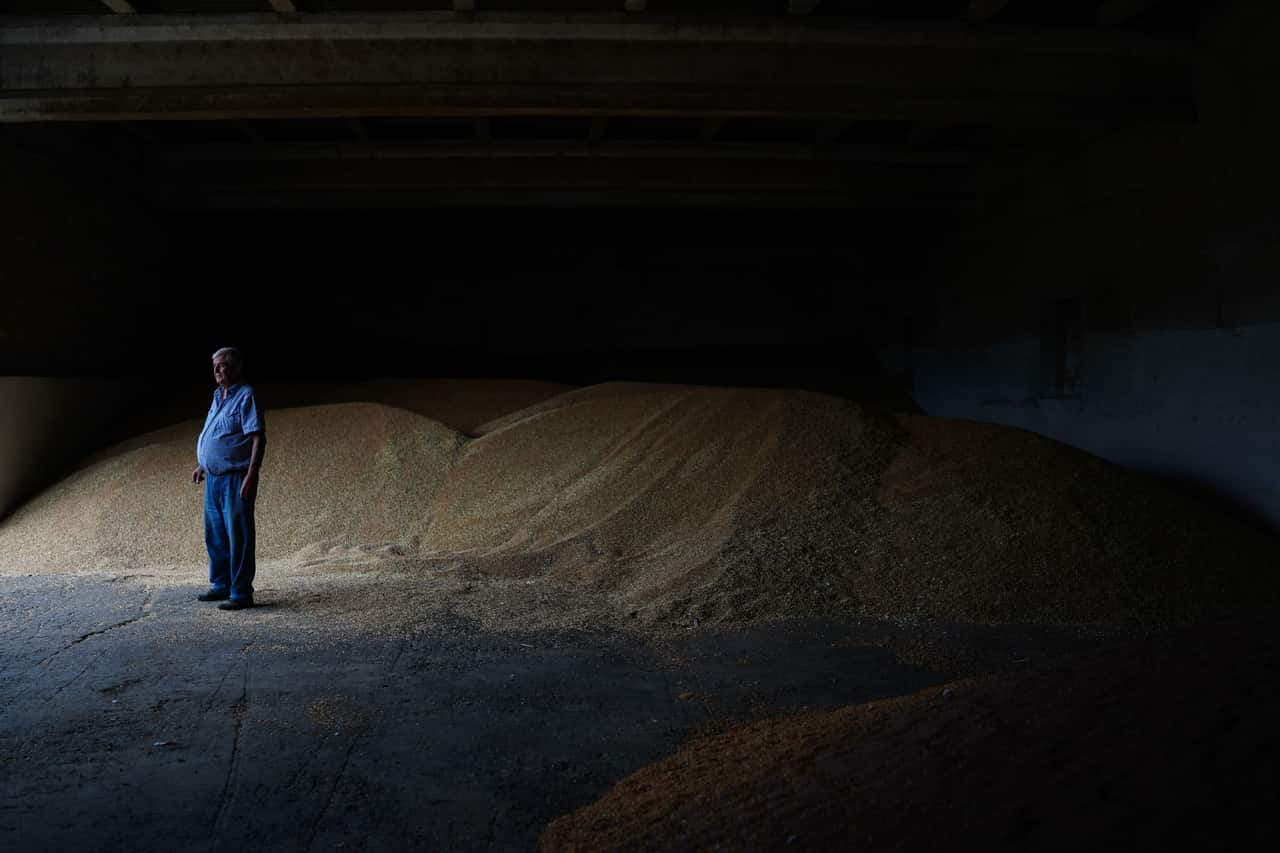
Farmers in Odesa Oblast, Ukraine, are facing significant challenges in selling their harvest due to intensified Russian assaults on Black Sea ports. Volodymyr Varbanets, a 76-year-old farmer, reported an unusually good harvest this year, but the grain remains unsold because the maritime corridor to the Greater Odesa ports is effectively blocked by Russian attacks.

Since mid-July, Russia has escalated attacks on port infrastructure, creating a 'maritime kill zone' that deters commercial shipping. Dmytro Barinov, president of Ukrport, described the situation as 'ship hunting,' noting a drastic reduction in vessel arrivals. Container lines have suspended calls, and even bulk carriers are increasingly hesitant to enter the ports due to safety concerns, despite higher pay offers for crews.

The impact on exports is severe. Between August 1 and August 26, Ukraine exported only about one-third of its potential agricultural volume, with grain exports at one-fifth of capacity. Farmers like Varbanets are forced to sell their produce at drastically reduced prices, often operating at a loss given rising costs for diesel, fertilizer, and spare parts.

While Ukraine has alternative export routes, such as the Danube ports of Izmail and Reni, these are smaller, more expensive, and also subject to Russian attacks. Congestion at these ports and at Romania's Constanta port further complicates export efforts, highlighting the critical reliance on the deep-water ports of Greater Odesa.

Frequently asked questions

Intensified Russian attacks on Odesa's ports have made the maritime corridor too dangerous for commercial shipping, effectively blocking exports.

Prices have fallen dramatically, with wheat selling for roughly Hr 3,500 to 4,000 per ton, down from Hr 11,000 last year.

Yes, Ukraine can use its Danube ports or Romania's Constanta port, but these routes are smaller, more expensive, congested, and also face Russian attacks.

Farmers are operating at a loss due to low selling prices and increased costs for fuel, fertilizer, and parts, while also facing financial obligations like rent and taxes.

What Happens Next

01Ukraine continues to patrol the Black Sea to defend infrastructure.
02Farmers must decide whether to store grain for up to a year or sell at a significant loss.
03The effectiveness of alternative export routes will be further tested by congestion and continued Russian threats.
CME Headlines
  • Crude oil hits eight-week high.
    8 Sep · 3:17 PM
  • Crude oil hits eight-week high.
    8 Sep · 3:17 PM
  • Crude oil hits eight-week high.
    8 Sep · 3:17 PM

How It Developed

Russia intensified attacks on Odesa's ports and adjacent infrastructure starting mid-July.
The maritime corridor for grain exports from Ukrainian ports is largely blocked.
Attacks on civilian commercial vessels in the Black Sea have increased.
Container lines suspended calls, and bulk carriers are increasingly reluctant to enter Odesa.
Ukraine's agricultural exports are significantly reduced, with grain exports at one-fifth of potential volume.
Farmers are receiving drastically lower prices for their grain and other crops.
Farm costs for diesel, fertilizer, and spare parts have risen, leading to operations at a loss.
Alternative routes via Danube ports and Romania's Constanta are congested and also targeted by Russia.

Sources

T1
'We will sow' — Odesa farmers defiant in face of relentless Russian assaultsThe Kyiv Independent

Related Stories

Irish Seaweed Industry Threatened by Canadian Company's Exclusive Harvesting Bid
8 Sep · 9:16 AM
Vitol CEO: Global Fuel Markets Are "Tight and Inflexible"
8 Sep · 11:21 AM
Global Diesel Supply Crunch Expected to Persist Through Winter
8 Sep · 8:41 AM
Sri Lanka bars tourists from drought-hit park areas as El Nino looms
8 Sep · 5:11 AM
Suez Canal Traffic Surges Amid Red Sea Shipping Threats
8 Sep · 1:21 PM