Key facts
- Tilger said Nexperia is oversubscribed as suppliers divert capacity toward AI data centers and robotics.
- Tilger said some competitors had shifted capacity away from the commodity semiconductors Nexperia supplies.
- Tilger said investment in mature technologies used for diodes and transistors had lagged for years.
- Chery said some foundries and assembly and packaging firms are disengaging from mainstream technology.
- Chery said STMicroelectronics' own manufacturing footprint offers some protection from supply constraints.
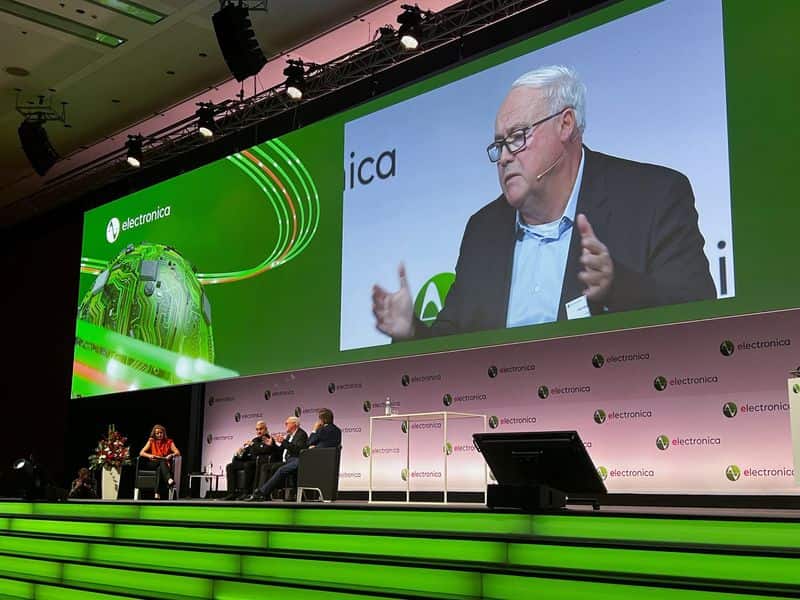
Nexperia interim CEO Stefan Tilger said the Dutch chipmaker is "totally oversubscribed" as suppliers divert manufacturing capacity toward fast-growing AI data centers and away from the mature chips used in cars and industrial equipment. He spoke to Reuters at the Electronica trade fair in Munich on November 10.
Tilger said some competitors had shifted capacity away from the commodity semiconductors Nexperia supplies, creating bottlenecks in parts of the automotive supply chain. "The automotive industry is suffering at the moment quite heavily," he said.
STMicroelectronics CEO Jean-Marc Chery warned on November 9 that foundries and chip-packaging companies were increasingly shifting resources away from products used in automotive and industrial applications. "We see many bottlenecks," Chery said at a CEO panel ahead of the conference. Some foundries and assembly and packaging firms that previously served a broad range of customers "are disengaging ... from mainstream technology", he said.
Tilger said demand from AI data centers and robotics was absorbing capacity, while investment in the mature technologies used for diodes, transistors and other basic components had lagged for years. Nexperia specializes in high-volume, low-cost semiconductors used primarily in vehicles and industrial equipment and, unlike larger rivals such as STMicroelectronics, has a narrower product range focused on mature-node components.
Chery said ST's own manufacturing footprint offered some protection from supply constraints. "We control a part of our future with our CapEx and our manufacturing," he said.