Key facts
- U.S. Secretary of State Marco Rubio imposed sanctions on ICC President Tomoko Akane and senior trial lawyer Abdoulaye Seye.
- The sanctions freeze assets of targeted ICC officials and restrict their access to the U.S. financial system.
- Netherlands' Foreign Minister Tom Berendsen stated that international tribunals must operate freely.
- The ICC condemned the sanctions as a 'flagrant attack' on its independence.
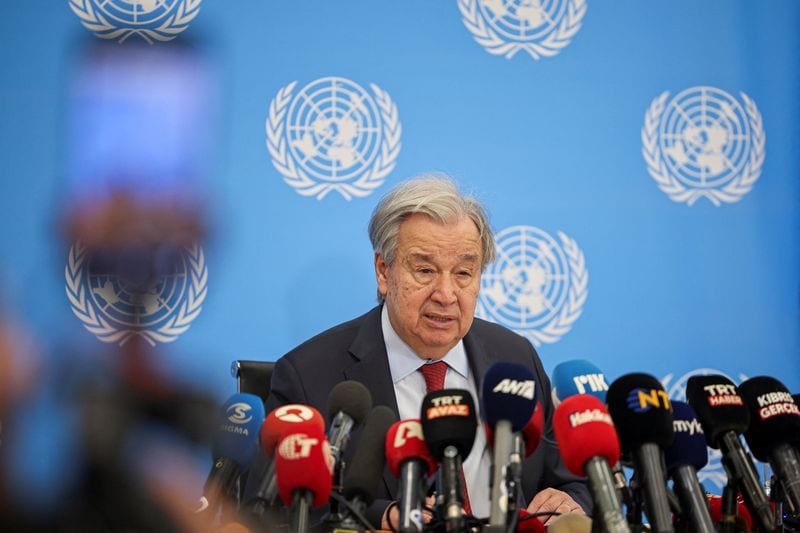
- U.N. Secretary-General Antonio Guterres expressed serious concern over the sanctions.
- Japan also criticized the U.S. sanctions as 'very unfortunate'.
The United Nations Secretary-General Antonio Guterres has expressed serious concern regarding the U.S. decision to impose sanctions on International Criminal Court (ICC) President Tomoko Akane and senior trial lawyer Abdoulaye Seye. A UN spokesperson stated that while the UN and ICC are separate, the UN views the court as a key pillar of international criminal justice. The sanctions, imposed by U.S. Secretary of State Marco Rubio, are part of an ongoing campaign against the ICC, which the U.S. accuses of overstepping its mandate. The Netherlands has also criticized the sanctions, with Foreign Minister Tom Berendsen asserting that international tribunals must operate freely. The ICC itself has condemned the measures as a 'flagrant attack' on its independence. Japan has similarly voiced criticism, calling the sanctions 'very unfortunate.' The sanctions freeze assets of the targeted officials and restrict their access to the U.S. financial system.