Key facts
- The US Space Force confirmed Swift's re-entry at 7:39 a.m. EST over Indonesia's North Sumatra province.
- NASA said it expected most of the 3,200-pound satellite to burn up, with some fragments surviving.
- The LINK rescue vehicle, launched in July by NASA and Katalyst, spun out of control and the mission was abandoned by mid-August.
- Swift, launched in 2004, studied gamma-ray bursts and contributed to some 7,000 published scientific papers.
NASA's Swift satellite telescope re-entered Earth's atmosphere over Indonesia's North Sumatra province on November 4, burning up as expected, the space agency reported. The US Space Force confirmed the re-entry occurred at 7:39 a.m. EST, with the satellite moving at about 22 times the speed of sound, roughly 200 miles north of the equator, according to NASA.
The Neil Gehrels Swift Observatory weighed roughly 3,200 pounds (1,452 kg). NASA said it expected frictional heat to incinerate most of the satellite well above Earth's surface, with some fragments surviving, though the agency reported no damage or injuries from falling debris. The Space Force had earlier put the odds of harm to anyone on Earth at one in 2,100.
The re-entry came less than three months after a rescue spacecraft failed to boost the satellite to a higher orbit. NASA's $500 million Swift, launched in 2004, was designed primarily to study gamma-ray bursts, the most intense blasts of energy in the universe, using three telescopes. It also studied hundreds of supernova explosions, star-shredding black holes, stellar X-ray flares, asteroids and comets, contributing to some 7,000 published scientific papers. It ceased operations on October 20.
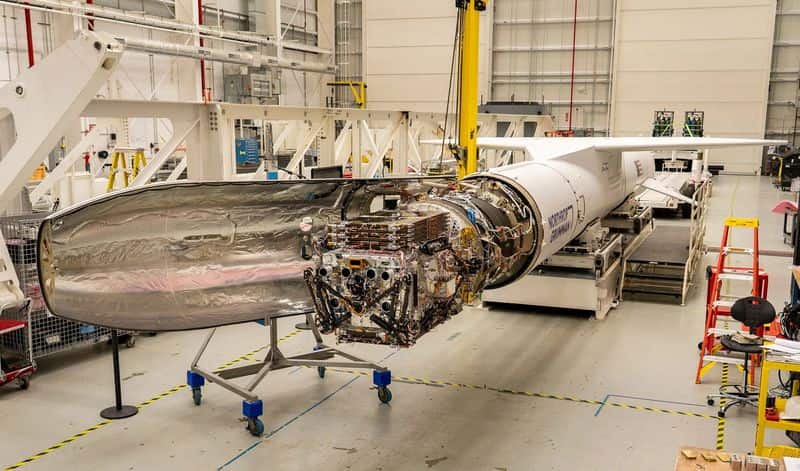
The observatory, which lacked its own propulsion system, outlasted its two-year design life and had been drifting toward orbital instability for months. In July, NASA and Arizona-based startup Katalyst launched a rescue vehicle called LINK to rendezvous with Swift, latch on and tug it into a higher orbit. But LINK began spinning uncontrollably soon after reaching space, and by mid-August mission managers abandoned the effort.
Dean Sladen, an aerospace engineer for Britain-based industrial parts supplier Accu Components, said before re-entry that only a "handful of small, scorched fragments are expected to make it down, nothing recognizable as a telescope." He said satellites this size re-enter the atmosphere regularly and that in nearly 70 years of spaceflight no one has been killed by falling debris, adding that designing satellites to come down safely matters more and more.