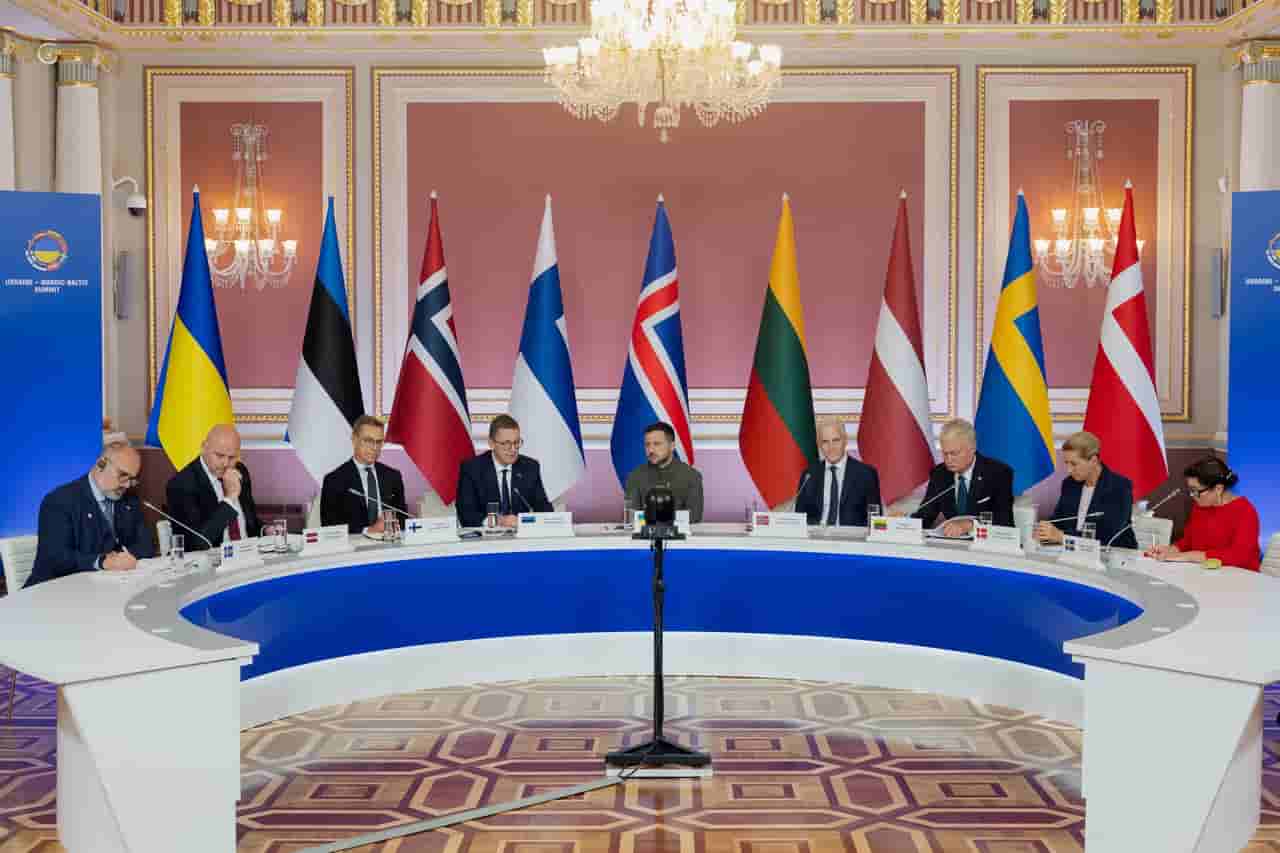
Latvian Prime Minister Andris Kulbergs declared that Russia's escalating hybrid warfare tactics against European countries represent a 'war against the West.' Speaking on Aug. 24 during a meeting of the Coalition of the Willing in Kyiv, Kulbergs detailed how Russia employs disinformation, migration, and cyberattacks to destabilize the continent.
Kulbergs specifically highlighted the organized migration crisis toward the EU, which he stated is being managed by the Kremlin through Belarus and criminal organizations. "We see that it is one of the highest threats, with a case that is well organized by the Kremlin through the hands of Belarus and through criminal organizations that are also making money from it as a service," he said.
Belarus has previously been accused by European nations of deliberately channeling migrants from the Middle East, Africa, and Asia toward Lithuania, Latvia, and Poland as a form of hybrid warfare, particularly after the EU imposed sanctions on Minsk in 2021. The Kremlin has also been implicated in supporting this renewed campaign.
Beyond migration, Kulbergs pointed to cyberattacks and efforts to disrupt elections and public opinion as key components of Russia's strategy. "We also see cyberattacks happening. We see potential disruptions of public aspects, as we've seen in many countries — attacking elections, trying to disrupt the mindset of the people," he stated.
The Baltic states have recently experienced several drone incidents. In May, Lithuania issued an air raid alert due to a suspected drone entering its airspace from Belarus. On Aug. 14, fighter jets from NATO's Baltic Air Policing mission shot down a drone in Latvian airspace. More recently, Lithuania reported intelligence suggesting Russia might use Ukrainian-made drones for false-flag attacks on critical infrastructure in the region.
Despite these provocations, Kulbergs asserted that Russia's actions have ultimately strengthened NATO. "Russia does not understand. They have actually made us stronger together. They have made NATO stronger. We now have Sweden and Finland joining in," he concluded.