Key facts
- NATO countries are increasingly downing Russian drones that enter their airspace.
- The use of expensive air-to-air missiles against cheap drones is unsustainable.
- Europe is developing new, cost-effective drone defense systems and initiatives.
- Technological, coordination, and political challenges hinder the deployment of new defenses.
- Interceptor drones and anti-aircraft systems are being acquired by several European nations.
NATO countries are increasingly engaging and shooting down Russian drones that breach their airspace, a shift from previous restraint driven by fears of escalation. This change follows incidents including civilian casualties in Romania and the diversion of Ukrainian drones by Russian electronic jamming. However, the high cost of using air-to-air missiles against inexpensive drones presents a significant sustainability challenge for European defense.
Since 2023, Russian drones have been observed crashing in Romania near the Ukrainian border, and have also strayed into Polish airspace. Turkey downed a drone approaching its Black Sea airspace in December 2025. Following a drone strike in Galati, Romania, on May 29, 2026, Bucharest intensified its response, with its air force downing multiple drones in subsequent weeks. Romanian authorities recorded over 40 incursions in the first half of 2026 alone. Some incursions are suspected to be intentional provocations, while others may be accidental. Russian jamming tactics have also diverted Ukrainian drones targeting Russian infrastructure into Baltic and Finnish airspace, leading to drone downings by NATO jets in Estonia, Latvia, and Finland.
In response, Europe is pursuing various initiatives to bolster its drone defenses. NATO's Eastern Sentry is reinforcing the flank with existing assets, while the EU's European Drone Defense Initiative (EDDI), or "Drone Wall," aims to create a multi-layered defense system specifically for unmanned aerial systems. Poland is developing its own anti-drone system as part of its Eastern Shield project and participating in a "Baltic Drone Wall" initiative with neighboring countries.
The focus is on cost-effectiveness. Poland has received U.S.-designed Merops systems, which use AI-driven Surveyor interceptor drones valued at around $15,000, and have been credited with significant interceptions in Ukraine. Romania is acquiring Rheinmetall's Skyranger and Skynex systems, and Israeli Spyder missile launchers. Poland and Norway's Kongsberg have unveiled the SAN counter-drone system, featuring anti-air guns, interceptor drones, and guided rockets.
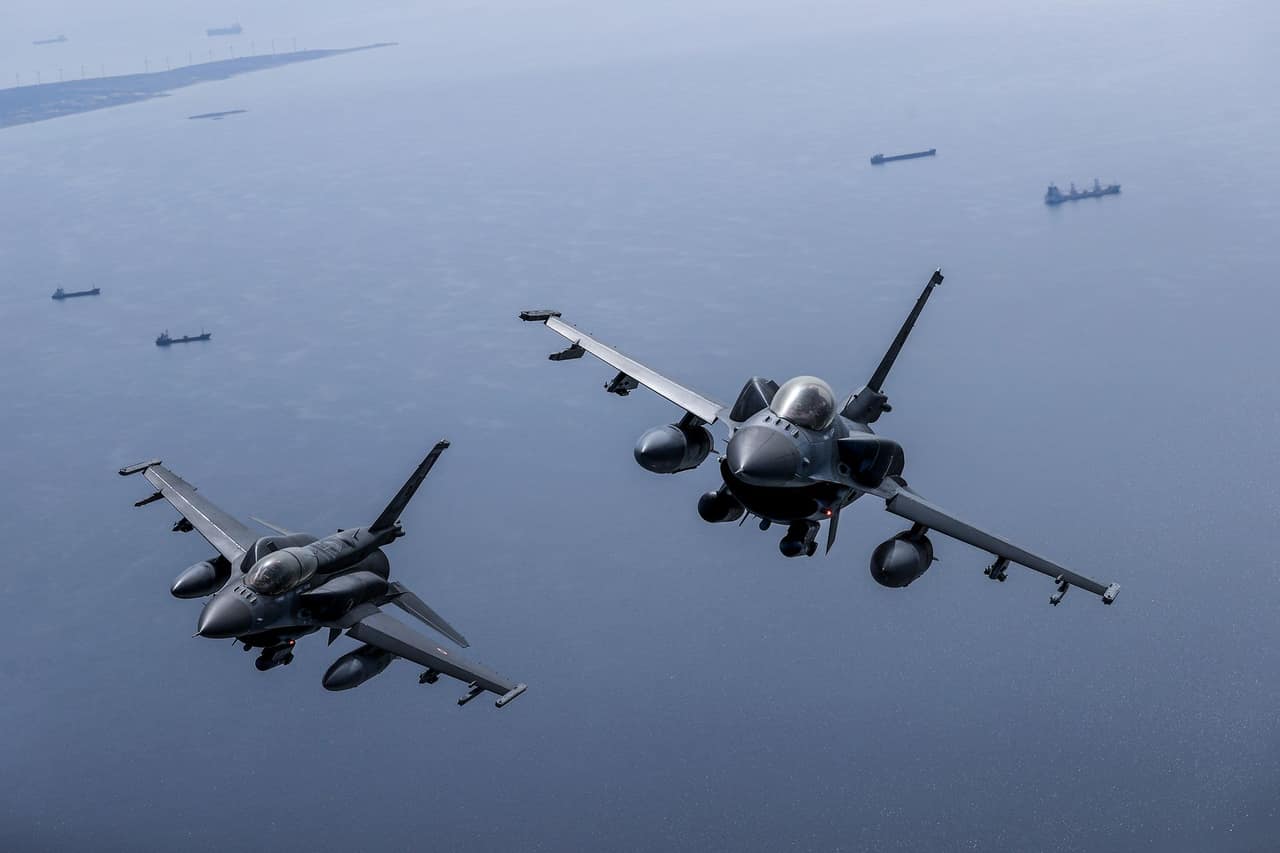
Despite these new systems, fighter jets are currently handling most interceptions due to the operational readiness and timing of the new technologies, which are expected to become fully functional later in 2026 or by the end of the decade. Experts note that while the cost of a missile is high, the potential human and economic toll of a successful drone strike on critical infrastructure or civilians can be far greater, justifying the use of reliable, albeit expensive, interception methods. However, the long-term strategy involves acquiring cheaper munitions for fighter jets and fielding more cost-effective short-range systems.