Key facts
- Most of the 17 new food and drink stalls at Kyiv's Bessarabskyi Market have closed less than a year after its late-2025 reopening.
- The $3.5 million renovation project aimed to transform the historic market into a trendy food court.
- Only one fast food chain, Big Mama, and a coffee shop remain open among the new eateries.
- The project's former manager, Natalia Dzhulai, departed in early June 2026.
- Architectural researcher Ihor Kravets cited wartime conditions, including blackouts and financial constraints, as reasons for the failure.
- The renovation faced criticism for a lack of transparency and public involvement.
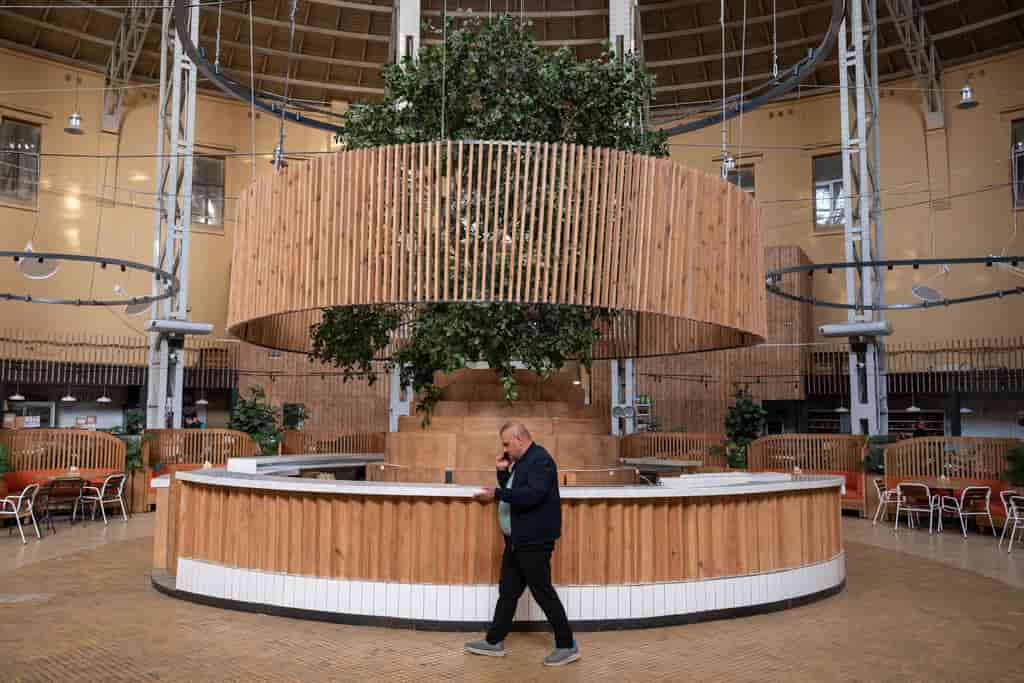
Bessarabskyi Market, a historic Kyiv landmark for 114 years, has seen its ambitious upscale food court renovation fail less than a year after its late-2025 reopening. The project, which aimed to replicate the success of the Kyiv Food Market, replaced traditional produce stalls with 17 new food and drink establishments, including a cocktail bar and a sushi bar.
However, by early June 2026, most of these new eateries had closed, leaving only a coffee shop and the fast food chain Big Mama operational. The $3.5 million project's former manager, Natalia Dzhulai, departed in early June. The renovation faced criticism for its lack of transparency and public input, with architect Pavlo Peker suggesting that a lack of community involvement contributed to the failure.
Architectural researcher Ihor Kravets pointed to wartime challenges such as blackouts, public emotional exhaustion, and growing financial constraints as significant factors. The broader economic strain in Ukraine, including a shortage of 2.5 million workers and the closure of 300 Kyiv food and drink establishments in March 2026 alone, further impacted the market's viability. Additionally, the difficulty of heating the vast, heritage-protected building during the severe winter of 2025, exacerbated by Russian attacks, drove customers away, according to Big Mama owner Ruslan Kravchenko.
While the new eateries struggled, many of the original produce vendors, like Natalia Vorovyoba who has worked at the market for nearly three decades, remain. However, they too have seen business decline significantly, with Vorovyoba noting that the market's transformation into a food court, including a bar in the center, makes no sense for a traditional grocery market. She fears the renovation may have delivered a fatal blow to her long-standing business.