Key facts
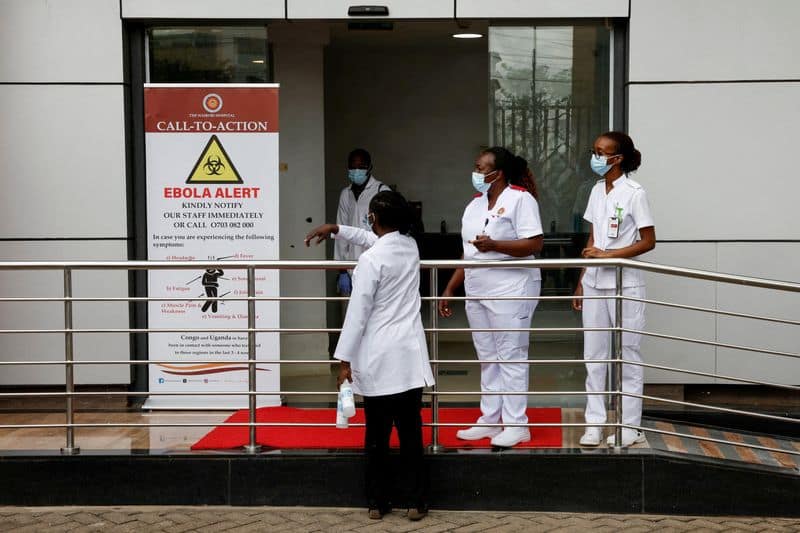
- Kenya confirmed its first Ebola case, a national who had traveled from the Democratic Republic of Congo.
- The patient died two days after arriving in Nairobi, exhibiting symptoms including fever, chills, muscle pain, and bleeding.
- The man traveled from Beni, Congo, to Kampala, Uganda, and then flew to Kenya.
- Uganda had closed its border with Congo in May but acknowledged its porous nature.
- Kenyan authorities have identified 57 contacts of the deceased, with 10 quarantined.
- A dedicated Ebola screening gate has been set up at Nairobi's Jomo Kenyatta International Airport.
Kenya's first confirmed Ebola case, a national who had traveled from the Democratic Republic of Congo, has highlighted significant gaps in border screening systems. The patient, who had been living in Congo for seven years, fell ill there about a month before arriving in Nairobi.
According to Kenyan officials, the man traveled overland from Beni in northeastern Congo to Kampala, Uganda, where he stayed for one night before flying to Kenya. This itinerary involved traversing the border between Congo and Uganda, which had been closed since May, and passing through multiple airport temperature checks in Nairobi and Entebbe. He also was expected to fill out digital forms to flag potential Ebola exposure.
Health experts and officials noted that the case underscores the need to strengthen screening procedures, including the ability to ask the 'right' questions. Thomas Paerisch, a public health specialist with Medecins Sans Frontieres, emphasized this point.
Ugandan authorities stated the man had a normal temperature when screened at Entebbe airport. However, Kenyan officials suggested he might have taken medication to mask his symptoms at Nairobi airport. Dr. Richard Mugahi, a senior Ugandan health official, told Reuters that authorities were attempting to retrieve the digital form filled out at Entebbe and review airport security footage to trace contacts.
Kenya's Health Minister Aden Duale reported that 57 contacts of the deceased have been identified, with 10 quarantined, and efforts to trace the rest are ongoing. A dedicated screening gate for passengers arriving from Congo and other at-risk countries has been established at Nairobi's Jomo Kenyatta International Airport.
Experts noted that early Ebola symptoms can be difficult to detect, and medications like paracetamol can interfere with temperature checks. Infrared thermometers used at airports measure surface temperature, potentially missing infections. Screening also relies on traveler disclosures, which may not always be honest.