Key facts
- Japan and the US are seeking to build critical mineral supply chains with Latin American countries.
- The initiative aims to diversify supply away from China, particularly for minerals essential for electric vehicle batteries.
- Japanese companies are investing in and trading critical minerals in Latin America.
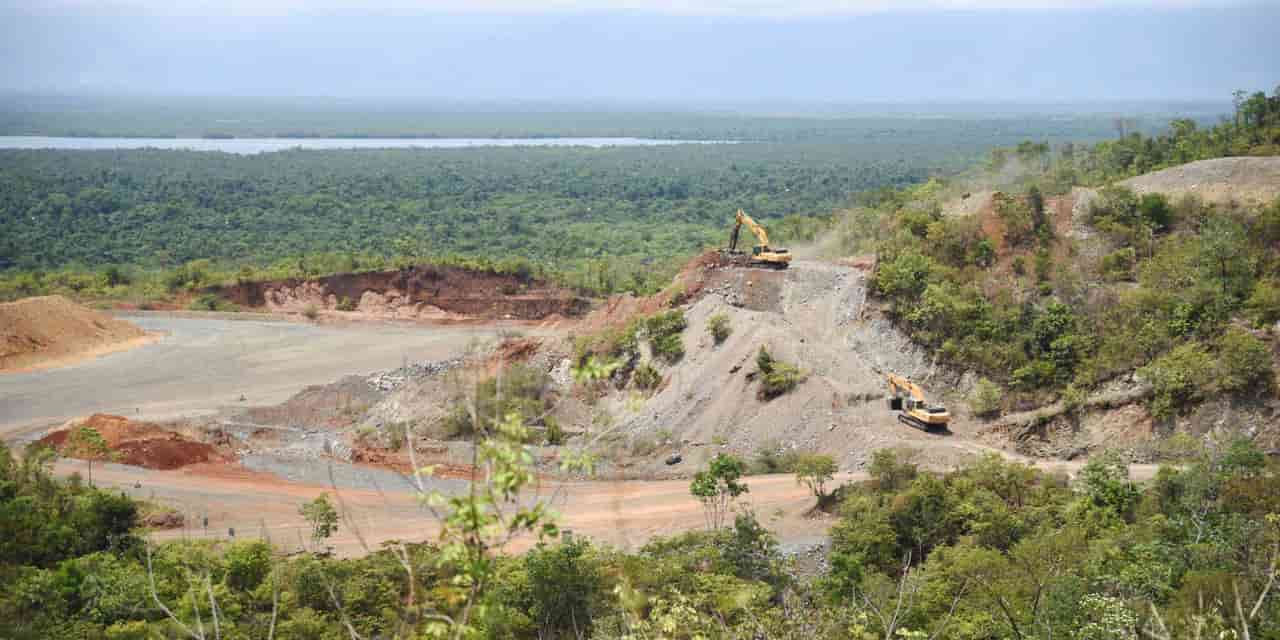
- The Fenix Nickel mine in Guatemala has resumed operations.
- Both the US and Japan have implemented policies to secure critical mineral supply chains.
Japan and the United States are actively exploring enhanced cooperation with Latin American nations to build more resilient and diversified supply chains for critical minerals essential to the global energy transition. This strategic alignment aims to reduce dependence on China, which currently holds a dominant position in these markets.
Experts and officials highlighted these prospects during a recent event co-hosted by the Inter-American Dialogue and the Japan Association of Latin America and the Caribbean (JALAC). Panelists noted that the US and Japan are increasingly collaborating on infrastructure and energy transition initiatives in various regions, including Asia and Africa, and see similar opportunities in Latin America.
Yasushi Noguchi, Director General of the Latin American and Caribbean Affairs Bureau of the Japan Ministry of Foreign Affairs, emphasized Japan's growing interest in the region, building on decades of engagement. He underscored the importance of shared values and partnerships in critical minerals and agricultural development, alongside efforts to address climate change.
Manabu Ohara, Director General of the Latin America and the Caribbean Department at the Japan International Cooperation Agency, pointed to existing collaborations, such as thermal energy development in Costa Rica and green hydrogen projects with the Inter-American Development Bank. The Japanese private sector is also intensifying its involvement, with companies like Toshiba and Sojitsu partnering on lithium-ion battery development and Mitsui securing significant lithium ore purchases.
The push for diversification is driven by geopolitical tensions and a desire to "de-risk" supply chains. The US has implemented measures like the Inflation Reduction Act and Bipartisan Infrastructure Law to incentivize domestic exploration and refinement of critical minerals. President Donald Trump's administration also signaled a continuation of decoupling from China on critical minerals. China's recent export bans on gallium, germanium, and antimony have further underscored the need for alternative sources.
Japan, facing challenges in its electric vehicle industry compared to its traditional automotive sector, has enacted policies like the Battery Industry Strategy and the Economic Security Promotion Act to bolster domestic battery manufacturing and secure strategic minerals such as lithium, nickel, and graphite. Japan already imports substantial amounts of lithium from Chile and aims to strengthen these ties.
The Fenix Nickel mine in El Estor, Guatemala, resumed operations on May 26, 2024, after being suspended in 2022, representing a development in the region's mineral production capacity.