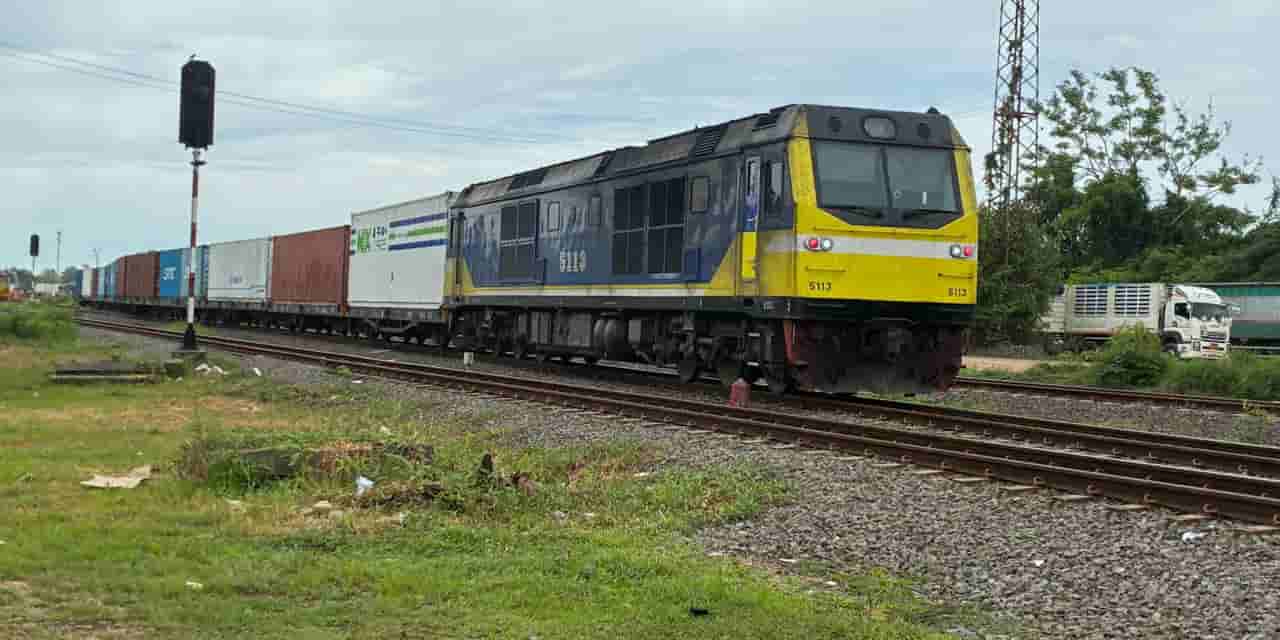
Japan Freight Railway Company is exploring the potential of rail cargo transport in Thailand, a market currently dominated by trucking. A recent trial involved cross-border transport between Thailand and Laos to assess customs procedures, operational efficiency, and transport quality.

This initiative by JR Freight could lead to a significant shift in Thailand's logistics landscape, offering a potentially more sustainable and efficient alternative to trucking and improving regional connectivity.
Japan Freight Railway Company (JR Freight) is exploring opportunities to establish rail cargo transport as a competitive alternative to trucking in Thailand, a market currently dominated by road haulage. The company recently completed a trial cross-border rail freight service between Thailand and Laos, aiming to assess the feasibility of such operations in Southeast Asia.
The demonstration test, which ran from June 15 to June 22, involved transporting three 40-foot containers over a round trip of approximately 650 km between Chonburi Station in Thailand and Thanalaeng Dry Port station in Laos. The trial was designed to verify the practical procedures, customs clearance processes, transport quality, and lead times associated with cross-border rail freight.
Several Japanese logistics firms, including NX Logistics Co., Ltd. (a subsidiary of NIPPON EXPRESS HOLDINGS, INC.), SANKYU-THAI Co., and Siam Nistrans Co., cooperated in the test. NX Logistics Thailand noted that investment in rail infrastructure in Thailand is accelerating, with expectations for rail freight to reduce environmental impact and diversify transport options. However, they also highlighted that rail freight transport in Thailand is not yet fully established as a user-friendly option due to complex procedures and operational rules, particularly for Japanese companies.
JR Freight established a representative office in Bangkok in September 2021 to strengthen ties with local stakeholders and examine the feasibility of overseas operations originating in Thailand. The company plans to leverage the findings from this trial to further its studies on freight railway operations in Thailand and other Southeast Asian countries, potentially examining broader logistics services that combine multiple transport modes.