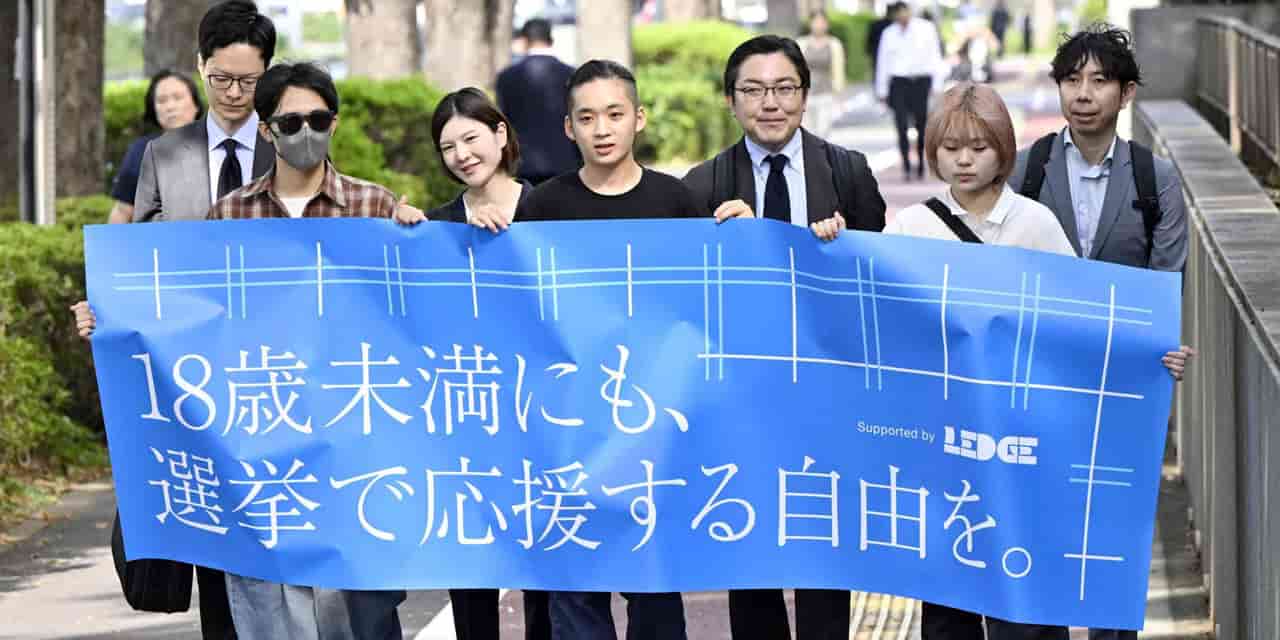
The Tokyo District Court ruled on Friday that Japan's law prohibiting individuals under the age of 18 from participating in election campaigns is unconstitutional. The court determined that the ban infringes upon the right to freedom of expression. However, the court dismissed a claim for damages filed by four plaintiffs, which included high school students.
Under Japanese law, individuals under 18 are forbidden from engaging in election campaigning or being utilized in such activities. Violators face potential penalties including imprisonment for up to one year, a fine of up to 300,000 yen ($1,900), and suspension of civil rights.
The plaintiffs contended that the legislative rationale behind the ban and its associated penalties was unclear, and that a blanket prohibition with criminal sanctions lacked a rational basis. They sought 100,000 yen each to compensate for emotional distress resulting from being denied the opportunity to exercise their political expression rights during elections.
The government's defense stated that the introduction of the ban in 1952 followed issues arising from the mobilization of minors in local elections, which led to problems associated with manpower-intensive campaigning. The government argued that protecting minors was a legitimate legislative objective.