Key facts
- Japan's Air Self-Defense Force confirmed its Global Hawk RQ-4B drone crashed after losing ground contact.
- Floating debris found off the coast of Tottori prefecture was identified as belonging to the aircraft.
- The drone is designed for intelligence, surveillance, and reconnaissance (ISR) operations.
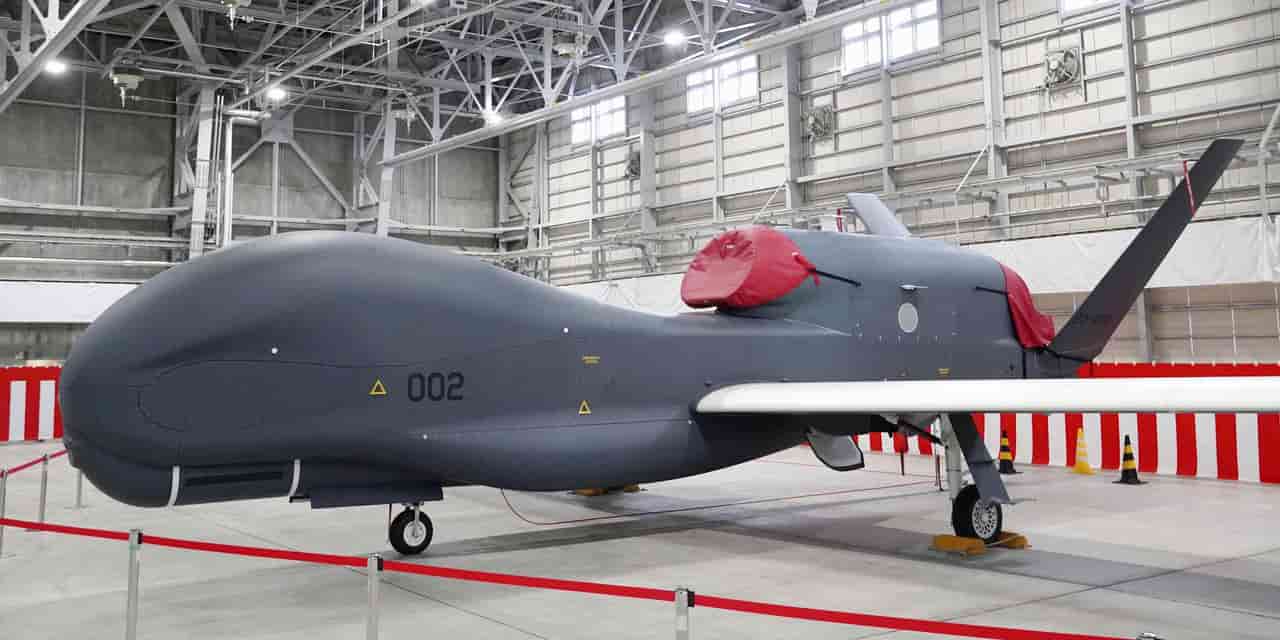
TOKYO -- The Japan Air Self-Defense Force (JASDF) confirmed Wednesday that its Global Hawk RQ-4B unmanned surveillance drone crashed following loss of ground contact, after photographs of floating debris discovered off the coast of western Japan's Tottori prefecture were identified as belonging to the aircraft.
Japan's Air Self-Defense Force announced on Tuesday that a large unmanned Global Hawk reconnaissance aircraft is presumed to have crashed off the coast of the western prefecture of Tottori after losing communications. Floating debris was found at sea, the force said. The RQ-4B Global Hawk, designed by Northrop Grumman, is a high-altitude, long-endurance unmanned aerial vehicle intended to strengthen Japan’s surveillance capabilities. It is equipped with synthetic aperture radar, infrared/electro-optical sensors, and signals-intelligence equipment. Japan has purchased three of these drones, with the first arriving in March 2022. The JASDF established a dedicated unit, the Air Reconnaissance Group, to operate the drones, training with the U.S. Air Force. The Global Hawks are housed at the Misawa Air Base and are intended for information gathering in areas remote from Japan and for persistent airborne monitoring during heightened tensions, according to the JASDF. Jane Bishop, vice president and general manager of autonomous systems for Northrop Grumman, stated that the Global Hawk provides on-demand intelligence, surveillance, and reconnaissance information supporting Japan’s missions of protecting borders, monitoring threats, and providing humanitarian assistance.