Key facts
- Israel will hold national elections on October 27.
- A new Jewish-Arab political party, 'A Place for Us All,' has launched.
- The party aims to attract young voters and unseat Prime Minister Benjamin Netanyahu's government.
- Analysts express concern that the new party could fragment the Arab minority vote.
- Arab parties currently hold 10 seats in the 120-seat Knesset.
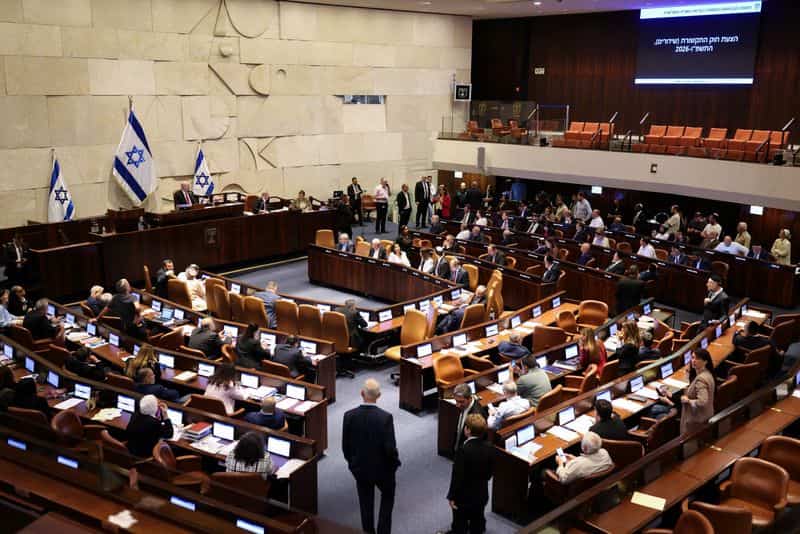
Israel is preparing for national elections on October 27, following the October 7 Hamas attack and subsequent conflicts. A new Jewish-Arab political party, 'A Place for Us All,' has launched with the aim of attracting young voters and unseating Prime Minister Benjamin Netanyahu's right-wing government. The party, founded by leaders of the protest movement Standing Together, advocates for peace and social equality, with its list divided equally between Arabs and Jews.
Members of Israel's Arab minority, who constitute 20% of the population, have historically voted at lower rates than Jewish Israelis. They cite grievances such as underfunded towns and rising crime, which they feel have worsened under the current government, including National Security Minister Itamar Ben-Gvir. In the 2022 election, only 53.2% of Arab voters cast ballots, compared to roughly 75% of Jewish voters.
Analysts express concern that 'A Place for Us All' could further fragment the Arab vote, which is crucial for unseating Netanyahu. Arik Rudnitzky of the Israel Democracy Institute stated that votes for such a party would be 'a waste' for Arab societies. The new party's co-leader, Alon-Lee Green, believes they can expand the electorate by attracting new voters and that gender equality is a priority. He also mentioned potential talks with existing parties about a merger.
However, leaders of established Arab parties have largely dismissed the newcomers. Yousef Jabareen, leader of the Hadash party, believes new parties have little chance of passing the 3.25% electoral threshold. Ahmad Tibi, leader of the Ta'al party, noted that while existing Arab parties are trying to unify for a joint list, a new fringe party joining the race does not help these efforts. The Joint List, an alliance of Arab parties, has been an effective tool for boosting voter turnout in past elections, winning 13 seats in 2015 and a peak of 15 seats in March 2020.