Key facts
- IonQ has unveiled its Superion 256 quantum computer and is accepting orders.
- Customer deliveries of the Superion 256 are scheduled to commence in 2027.
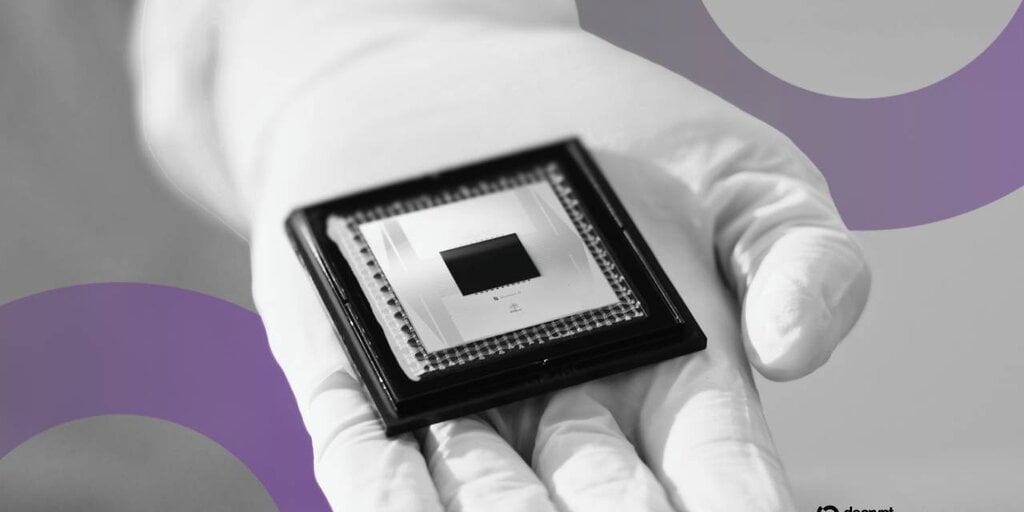
- The company claims its chipmaking subsidiary, SkyWater, has fabricated 256-qubit processors.
- IonQ aims to manufacture quantum computers using semiconductor methods for scaled production.
- Superion 256 is designed to fit into a standard server rack and be accessible via cloud services.
IonQ, a publicly traded technology company, has unveiled its Superion 256 quantum computer and begun accepting orders, with customer deliveries anticipated in 2027. The company, based in Maryland, specializes in building quantum computers and offering access through cloud services, alongside developing quantum networking, sensing, and security technologies.
IonQ Chairman and CEO Niccolo de Masi stated that Superion 256 is the result of integrating capabilities from Oxford Ionics, which allowed for the control of trapped-ion qubits using standard electronics, and SkyWater, which enabled manufacturing at semiconductor costs and scale. IonQ's subsidiary, SkyWater, has reportedly fabricated the first 256-qubit processors, with prototypes showing ions trapped at several U.S. facilities. A qubit is the fundamental unit of information in a quantum computer, capable of representing zero, one, or a combination of both states.
De Masi emphasized that scaling quantum computing effectively relies on a semiconductor foundation, positioning Superion 256 as the first quantum computer platform designed for mass production rather than individual builds. This approach, he noted, will allow for unique upgradeability in the Superion platform. IonQ has reduced its chip design cycle from nine months to two, and the Superion 256 system is designed to fit within a standard server rack, accessible via cloud services. The company has already pre-sold its first system for early 2026, with deliveries planned for 2027. IonQ is also developing Superion 10K, aiming for error-resistant computing demonstrations by 2027 and commercial production in 2028.
The announcement coincides with ongoing debates among researchers regarding the timeline for quantum computers to potentially threaten Bitcoin. Such an attack would necessitate a powerful machine capable of calculating the secret key needed to spend Bitcoin using an exposed public key. However, this would require sustained, reliable calculations using error-protected qubits, and a 256-qubit machine does not automatically break 256-bit security. Preparations are underway, with Galaxy announcing up to $5 million in funding for Bitcoin quantum-security initiatives.