Key facts
- The ICJ found Myanmar committed acts falling under the genocide convention with intent to destroy a substantial part of the Rohingya population.
- It is the first time the ICJ has found a state responsible for genocide, ending a seven-year legal battle.
- Myanmar denied genocide and said its 2016-2017 clearance operations targeted a Rohingya militant group conducting guerrilla attacks.
- The court's judgments are binding but the ICJ has no power to enforce them, though they can shape sanctions and other international action.
- More than 700,000 Rohingya fled to Bangladesh during the 2016-2017 campaign, and more than 1 million remain in camps there.
The International Court of Justice ruled on Thursday that Myanmar committed acts of genocide against its Rohingya minority during "clearance operations" nearly a decade ago. The judgment, read at the court in The Hague, is the first time the ICJ has found a state responsible for genocide and ends a seven-year legal battle.
"The court is fully convinced that Myanmar committed acts falling under … the genocide convention with an intent to destroy a substantial part of the Rohingya population in Myanmar," ICJ president Yuji Iwasawa said during the reading.
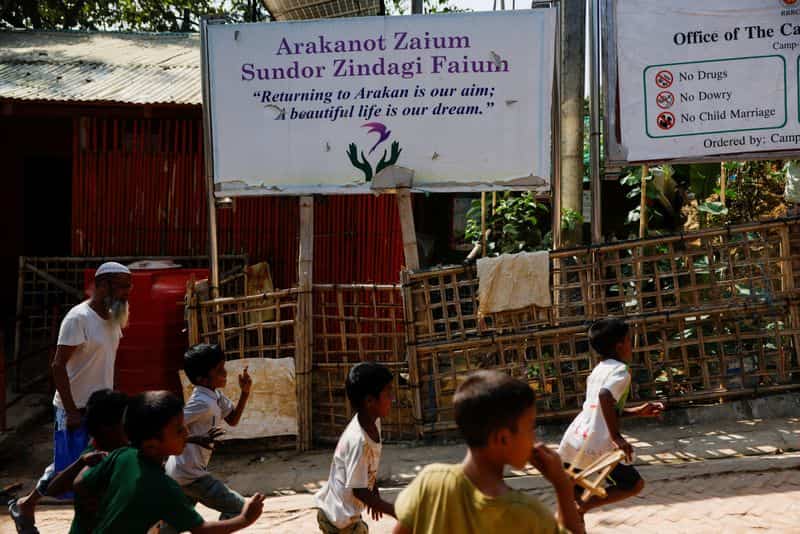
A 2016-17 campaign by Myanmar's military forced more than 700,000 mostly Muslim Rohingya to flee across the border into Bangladesh. Refugees described mass killings of adults and children, gang-rapes and burned villages. More than 1 million Rohingya still live in camps in Bangladesh, and fewer than 600,000 are estimated to remain in Buddhist-majority Myanmar.
Gambia, a Muslim-majority state, brought the case on behalf of survivors. It rested on claims of genocidal statements and patterns of conduct during assaults on Rakhine state, including shooting people as they fled and blocking their return. In January, the ICJ held closed-door sessions to hear from survivors who traveled from camps in Bangladesh.
Myanmar denied carrying out genocide and said its actions targeted a Rohingya militant group that conducted guerrilla-style attacks. Its leader, Min Aung Hlaing, who headed the military during the 2016-2017 attacks, faces a pending arrest warrant from the International Criminal Court on allegations of crimes against humanity.