Key facts
- Janice Tse Siu-wa said the plan aims to steer Hong Kong through an "ever polarising" global landscape.
- John Lee Ka-chiu pledged to reinforce Hong Kong's financial, shipping and trade hubs under the plan.
- Lee said Hong Kong will continue as a "super connector" and expand cooperation with the Global South.
- Tam Yiu-chung warned of further disruption from Sino-US rivalry and urged faster implementation.
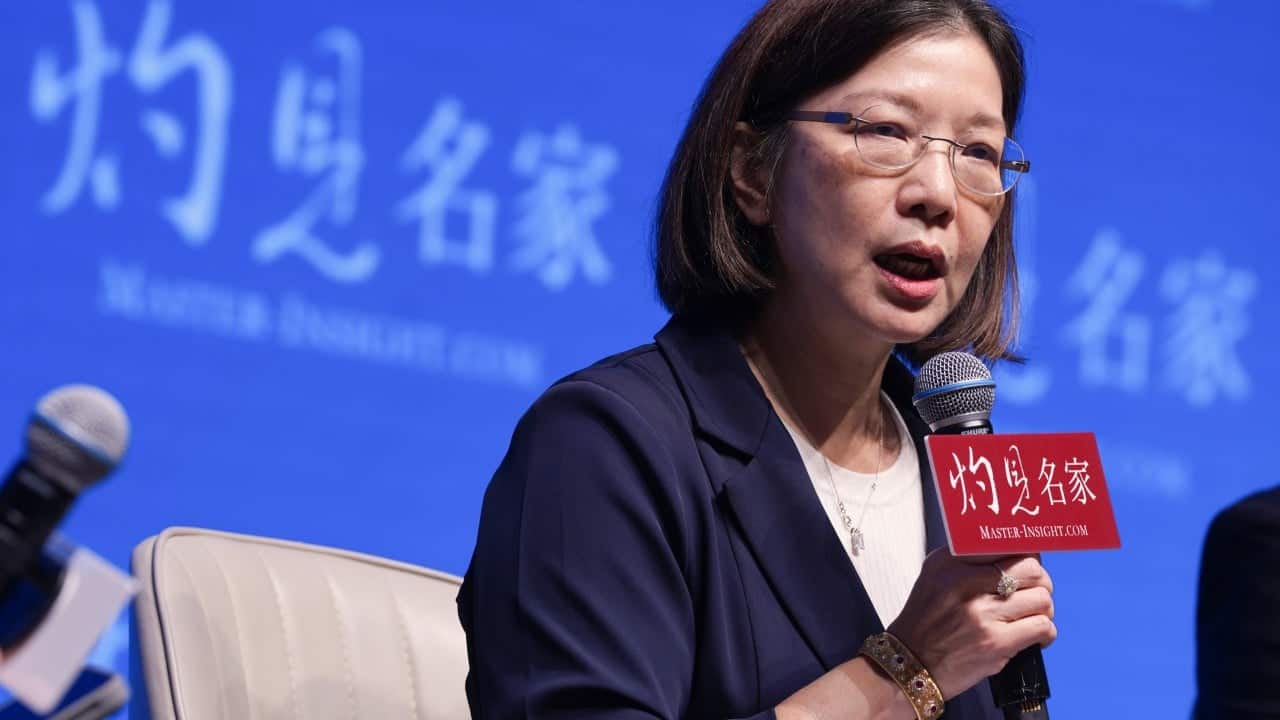
Hong Kong's first five-year plan aims to steer the city through an "ever polarising" global landscape by balancing free-market principles with government planning, the minister responsible for drafting it said at a forum on November 17, 2026. Secretary for Constitutional and Mainland Affairs Janice Tse Siu-wa said Hong Kong, as a small economy facing rapid technological change, needed to combine market forces with state direction.
Chief Executive John Lee Ka-chiu told the forum's opening ceremony that Hong Kong cannot respond passively to accelerating global changes and complex geopolitics. He said the city should use its "one country, two systems" advantage and pledged to implement the plan by reinforcing Hong Kong's financial, shipping and trade hubs while building an international innovation and technology center and a talent hub.
Lee said Hong Kong will continue serving as a "super connector" and "super value-adder", act as a platform for the Belt and Road Initiative and expand cooperation with emerging markets such as the Global South. He said the government will develop the Northern Metropolis and speed up construction of the Hong Kong Park of the Hetao Shenzhen-Hong Kong Science and Technology Innovation Co-operation Zone.
Tam Yiu-chung, a consultant to the Chinese Association of Hong Kong and Macao Studies, told the same forum that the city must safeguard non-traditional security in finance, shipping and trade. He urged faster work on the five-year plan, the Northern Metropolis and innovation development, and said China-US ties had entered a phase of constructive and strategic stability though challenges remain.