Key facts
- Shanghai ranked first in maritime technology, second in ports and logistics and third in shipping, per the report.
- Singapore led the overall ranking for the seventh successive edition, topping shipping, ports and logistics and attractiveness.
- Shanghai's port handled more than 55.06 million TEU in 2025, the world's busiest container port for a 16th straight year, per the report.
- Singapore's port handled a record 44.66 million TEU in 2025 and connects to more than 600 ports, per the report.
- Busan rose from 10th to seventh overall and targets a top-five place by 2030, the report said.
- The study screened more than 15,000 cities and assessed 50 finalists on 48 indicators, its authors said.
Shanghai overtook Rotterdam to rank second among the world's maritime cities in the 2026 Leading Maritime Cities report, DNV said, with the ranking released on November 12. Singapore held first place for the seventh successive edition of the study, which DNV compiled with Norway-based Menon Economics.
Shanghai rose from fourth place in the 2024 edition, while Rotterdam fell from second to fourth. London held third, Tokyo climbed from seventh to fifth and Oslo dropped to sixth, leaving three Asian cities in the top five against two in 2024.
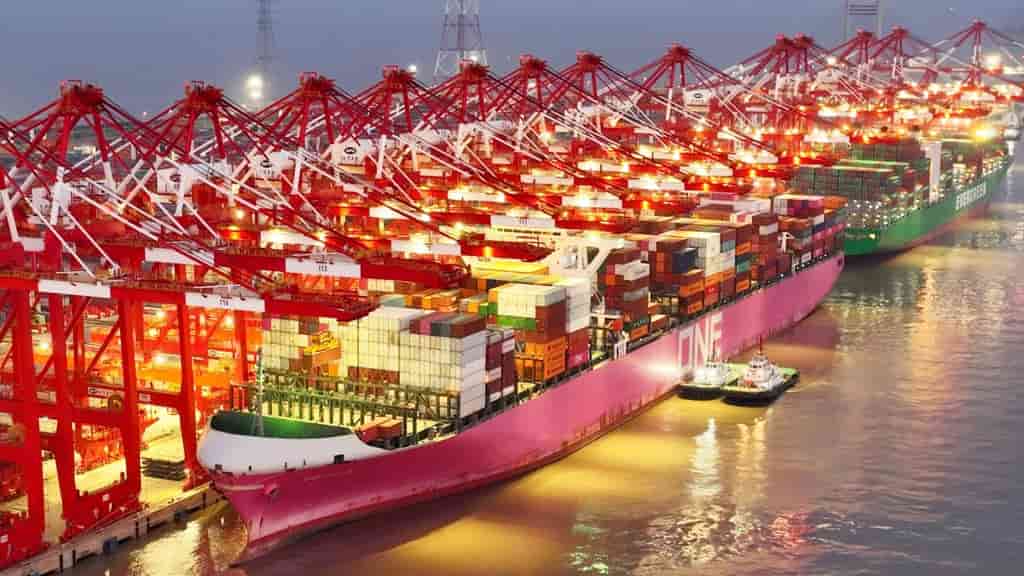
The report ranked Shanghai first in maritime technology, second in ports and logistics and third in shipping. Its port handled more than 55.06 million TEU in 2025, the world's busiest container port for a 16th consecutive year, according to the report.
Singapore topped shipping, ports and logistics, and attractiveness and competitiveness, while placing third in maritime finance and law and fourth in maritime technology. Its port handled a record 44.66 million TEU in 2025, and the city hosts more than 200 international shipping groups and connects to more than 600 ports worldwide, the report said.
Busan rose from 10th to seventh overall and placed second in maritime technology. The South Korean city aims to reach the top five by 2030 through expansion of shipping, finance and legal services, according to the report.
"This year, that points to a shift in the balance of maritime power," said Dr Erik Jakobsen, partner and chair of Menon Economics. DNV maritime chief executive Cristina Saenz de Santa Maria stressed the importance of broad maritime clusters, while report co-author Dr Shahrin Osman, DNV's global business development leader for maritime advisory, pointed to links between infrastructure, services, technology and talent.