Key facts
- The Airport Authority said painting a centerline manually took about three hours; a robot now does it in one.
- The Airport Authority said the robots save about 40% of paint each year and cut working hours by about two-thirds.
- The Airport Authority said more than half of regular, repetitive core marking work is now handled by robots.
- The Airport Authority said it plans to expand the fleet to six robots.
- The Airport Authority said the robots were adapted with Shenzhen firm FJ Dynamics from sports-field line-marking technology.
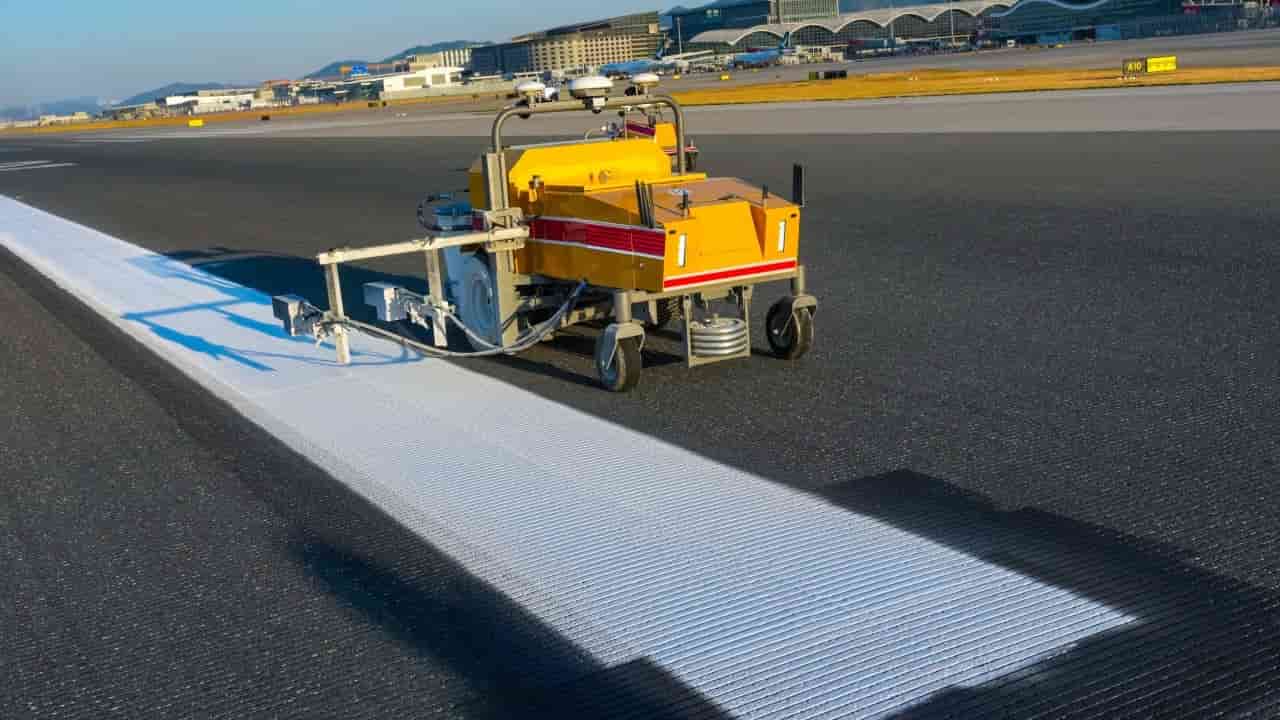
Hong Kong International Airport has become the first in the world to deploy robots to repaint runway markings, its managing authority, the Airport Authority, said on November 15, 2026. The authority said the machines cut the time needed to refresh center lines by about 67% compared with manual painting.
The robots, called "Brushman", came into use in September after testing, the authority said. Airport Authority chief operating officer Steven Yiu Siu-chung said at a media briefing that painting a centerline manually took about three hours and a robot now does it in one. He said the authority saves HK$400,000 a year on paint spray and has cut working hours by roughly two-thirds.
Yiu said the robots handle simple, standard lines while human staff continue to paint curves and more complex markings. More than half of the airport's regular, repetitive core marking work is now done by robots, according to the authority.
The machines were originally used to paint lines in sports stadiums and were repurposed through a joint development project with Shenzhen technology firm FJ Dynamics, Yiu said. The authority plans to deploy a total of six robots.
The airport's three runways span more than 11 kilometers, and markings that come into frequent contact with planes require weekly maintenance, Yiu said. He said the aim is not to fully replace staff but to assist them with high-precision, safety-critical work and ease manpower shortages.