Key facts
- Saudi Arabia's oil activity fell 20.4% year on year in the third quarter, the largest drag on the kingdom's 3.8% economic contraction.
- The IMF expects Kuwait, Bahrain and Qatar to post double-digit contractions in 2026, tied to their dependence on the Strait of Hormuz.
- Exxon Mobil chief executive Darren Woods decided not to attend ADIPEC in Abu Dhabi over security concerns, a person familiar with his thinking said.
- Oman is the only Gulf economy the IMF expects to expand in 2026, with growth forecast above 4%, up from 2.4% in 2025.
- The United Arab Emirates, with almost $3 trillion in sovereign assets, has vowed to cut its dependence on the Strait of Hormuz to zero.
- Moody's Ratings' Aurelian Mali said tourism, aviation, hospitality and real estate in the Gulf have been hit by a confidence shock.
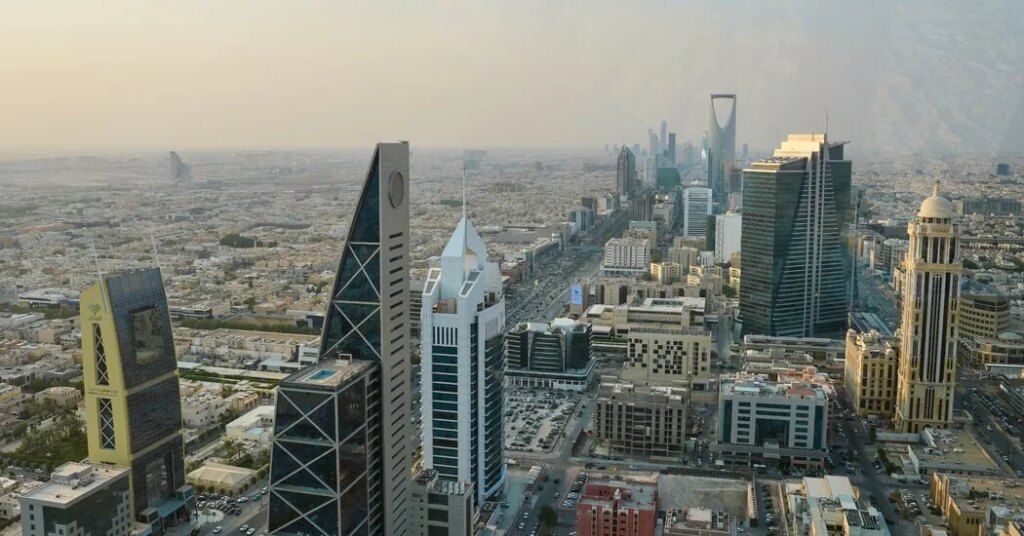
Saudi Arabia's economy contracted 3.8% from a year earlier in the three months ended in September, the Saudi government said on Sunday, as the war in Iran entered its ninth month. A 20.4% fall in oil activity was the largest single drag on the kingdom's output, according to the government's figures.
The International Monetary Fund expects growth across the Gulf Cooperation Council, a bloc of Arab states, to fall 5% in 2026. Kuwait, Bahrain and Qatar are expected to post double-digit contractions, which the IMF links to their near-total reliance on the Strait of Hormuz to ship energy products.
Strikes have damaged Riyadh Air's hub airport, forcing the carrier to bus international passengers to and from an alternate airport four and a half hours away, and hit the headquarters of state oil company Saudi Aramco as well as a critical pipeline. The Saudi government postponed its marquee investment conference to next year.
The ADIPEC energy conference began in Abu Dhabi on Monday. Exxon Mobil chief executive Darren Woods decided not to attend because of security concerns in the region, according to a person familiar with his thinking who was not authorized to speak to the media. Organizers said in a statement that high-level participation was very strong but did not comment on the reasons for his withdrawal.
Pipelines that let Saudi Arabia and the United Arab Emirates bypass the Strait of Hormuz have helped keep oil flowing, as has a US military operation to shield vessels in the strait, the report said. Traffic at Dubai International Airport remains below last year's levels as some international carriers continue to suspend operations to the region.
Aurelian Mali, vice president for Moody's Ratings in Dubai, said in an email that tourism, including aviation and hospitality, and real estate had been hit by the confidence shock and remain exposed to prolonged uncertainty about the possibility of re-escalation. He said protracted uncertainty and permanently elevated risk perceptions could damage some countries' non-oil economic models.
Oman is the only Gulf economy the IMF expects to expand in 2026, with growth forecast above 4% compared with 2.4% in 2025, helped by higher oil prices and its ability to ship without major disruptions. The UAE, which holds almost $3 trillion in sovereign assets, has vowed to bring its dependence on the Strait of Hormuz to zero by scaling up investment in alternative ports and pipelines.