Key facts
- European militaries are seeking cheaper missiles and interceptors due to rapid consumption in conflicts.
- The Netherlands ordered 700 Ruta Block 2 cruise missiles from Destinus for Ukraine for €250 million ($288 million).
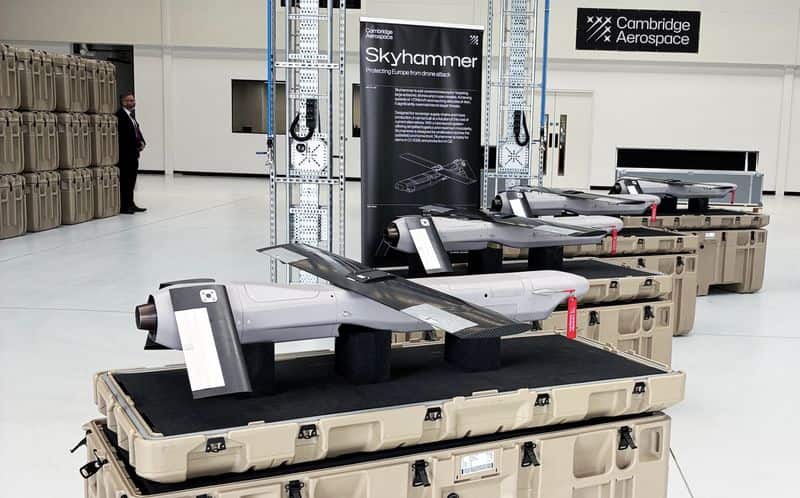
- Cambridge Aerospace received contracts for Skyhammer interceptors from the UK Ministry of Defence.
- Startups are developing low-cost missile systems to meet demand for mass production.
- The cost of intercepting drones needs to decrease significantly to be sustainable.
- Cambridge Aerospace aims to produce 2,500 interceptors monthly by early next year.
European militaries are increasingly seeking more affordable missiles and interceptors, driven by the rapid consumption of high-end weaponry observed in conflicts in Ukraine and the Middle East. The prolonged daily drone and missile attacks on Ukraine by Russia have underscored a critical lesson: modern warfare can deplete weapon stocks faster than many nations can replenish them.
Analysts note that Europe's defense sector historically focused on producing sophisticated weapons in small batches rather than preparing for wartime-scale manufacturing. This has led to a current race among governments to secure lower-cost systems that can be deployed in larger numbers, complementing existing advanced weaponry. Industry executives emphasize that the primary challenge is no longer missile design but scaling up manufacturing capacity.
New defense startups are emerging with plans to develop cheaper missiles and interceptors designed for mass production. For instance, the Netherlands recently ordered 700 Ruta Block 2 cruise missiles from European startup Destinus for Ukraine in a €250 million ($288 million) deal. Similarly, Cambridge Aerospace has secured initial contracts for its Skyhammer interceptor from the UK's Ministry of Defence.
The arithmetic of modern warfare is shifting, with Ukraine employing a layered defense strategy to conserve advanced interceptors for high-value threats by using machine guns, interceptor drones, and electronic warfare against cheaper, numerous Russian drones. Experts highlight that using expensive traditional interceptors against mass drone attacks, as the U.S. has done in the Middle East, is financially unsustainable. The goal is to reduce the cost of a successful interception from millions of euros to around €1 million to €2 million.
While major defense contractors like Lockheed Martin are developing lower-cost options, these are still expected to be more expensive than startup targets and may not enter production for several years. Emerging low-cost systems are primarily designed to counter drones and cruise missiles, serving as a complement to, rather than a replacement for, high-end air defense systems.
Investors are backing these emerging missile makers to scale production. Cambridge Aerospace raised $300 million to expand its manufacturing, and Destinus is seeking further funding ahead of a potential IPO. The main hurdle for Europe, according to Destinus founder Mikhail Kokorich, is not the technology itself but the industrial capacity to produce, qualify, and replenish systems at the scale required for modern conflicts. Companies are investing in securing components and integrating commercial technologies, while others are leveraging joint ventures and manufacturing partnerships to boost output. Cambridge Aerospace aims for 2,500 interceptors per month by early next year, and Frankenburg targets 100 missiles daily.