Key facts
- A court in Egypt has issued a landmark ruling recognizing the rapist as the father of a child born from a rape.
A landmark Egyptian court ruling has recognized the rapist as the father of a child born from a rape, granting the child official status and access to public services. This decision, supported by an Al-Azhar edict, is hoped to set a precedent for thousands of children in similar situations.
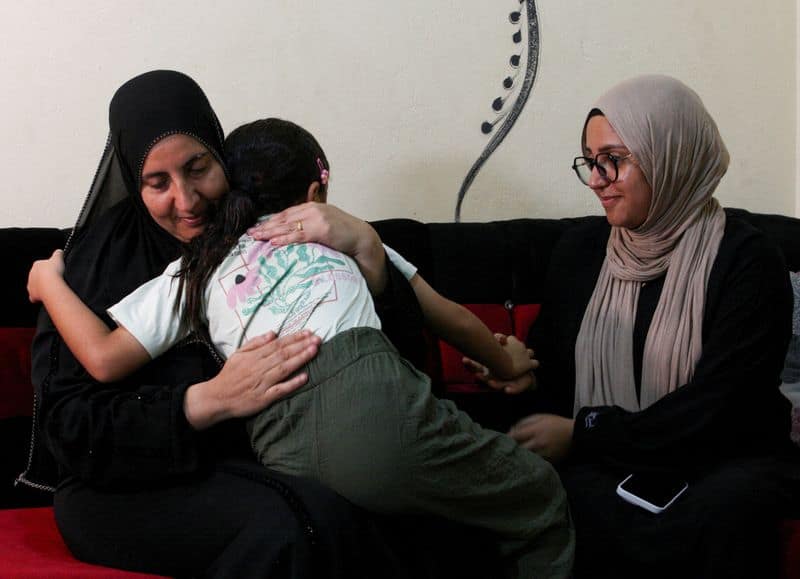
This ruling is significant as it challenges traditional legal interpretations in Egypt regarding paternity for children born outside of marriage, particularly in cases of sexual assault. It offers a potential pathway for thousands of children to gain official recognition and access essential public services, while also encouraging survivors of sexual violence to seek legal recourse.
Amal Abdel Hameed, a 27-year-old woman from Egypt's Nile Delta, is hopeful her daughter will be able to officially enroll in school after a recent landmark court ruling. The child, born nearly eight years ago as a result of a rape, had been denied a birth certificate and access to public services under Egypt's personal status law, which requires paternity to be established through marriage.
The appeals court ruling, issued last month and based partly on DNA evidence and the rapist's conviction, recognized the perpetrator as the child's father. Lawyers and advocates believe this is the first such ruling by an Egyptian court and hope it will establish a precedent for thousands of other children in similar circumstances.
Abdel Hameed stated that she only achieved her rights by speaking out publicly on television and social media, a rare act in Egypt where discussions of sexual assault are uncommon. She described her eight-year struggle for her daughter's rights as feeling like a nightmare.
The judicial decision was preceded by an edict from Al-Azhar, a leading Islamic scholarly institution, which stated that DNA testing and a rape conviction could be used to establish paternity in such cases. Abdel Hameed's lawyer, El-Sayed Badra, noted that while he has a judicial ruling and a fatwa, there is not yet an explicit legal provision, suggesting that parliamentary discussions on reforming the personal status law are ongoing.
The State Information Service indicated that any amendments to the draft personal status law would depend on parliamentary outcomes, emphasizing the state's priority to protect children from bearing consequences of crimes. Azza Soliman, from the Center for Egyptian Women's Legal Assistance, believes the edict will encourage other rape survivors to pursue legal recognition for their children's lineage.
Pick the topics you care about. Get only what matters, on your cadence.