Key facts
- India's food-safety regulator abandoned a push for colorful nutritional warnings on packaged foods.
- The regulator proposed a black-and-white table of sugar, fat, and salt content instead of interpretive labels.
- Industry executives argued that warning labels were simplistic, confusing, and ineffective.
- Public health activists have petitioned India's Supreme Court to scrutinize the regulator's decision.
- Multinational food producers often create different product versions for various markets.
- Nestle will begin selling sugar-free Cerelac baby food in India after activist complaints.
India's food-safety regulator has abandoned a push for prominent, colorful nutritional warnings on the front of packaged foods, opting instead for a black-and-white table of sugar, fat, and salt content. This decision follows intense lobbying by major global food companies, including Coca-Cola and Nestle, who argued that such labels are simplistic, confusing, and ineffective.
The Food Safety and Standards Authority of India (FSSAI) stated that interpretive labels do not account for the unique flavors of Indian cuisine and proposed a less intrusive format. This move has drawn criticism from public health activists, who have petitioned India's Supreme Court to review the decision. Experts believe greater transparency in food labeling is crucial for fostering healthier eating habits, especially as India faces a projected rise in obesity and overweight individuals.
During a March meeting with regulators, a senior Coca-Cola India executive argued that warning labels would not significantly improve diets and were unnecessary, given that Indian doctors already educate patients on healthy eating. However, Coca-Cola and Nestle have voluntarily implemented similar traffic-light-style labels in various European markets, citing their clarity and transparency.
Industry groups like the Ind Food & Beverage Association (IFBA), representing companies such as PepsiCo, have expressed a desire for more regulatory clarity, suggesting that current proposals could unfairly label products like coconut water as "high sugar." Regulators have previously considered options like color-coded warnings and star ratings since 2017, but only basic nutritional information on the back of packaging is currently mandated.
The Supreme Court had previously directed the FSSAI to consider warning labels, even suggesting an examination of Israel's red-and-green messaging system. However, after the industry meeting, the FSSAI informed the court that matching international standards was "difficult," a stance that earned a rebuke from judges concerned about India's commitment to citizen health.
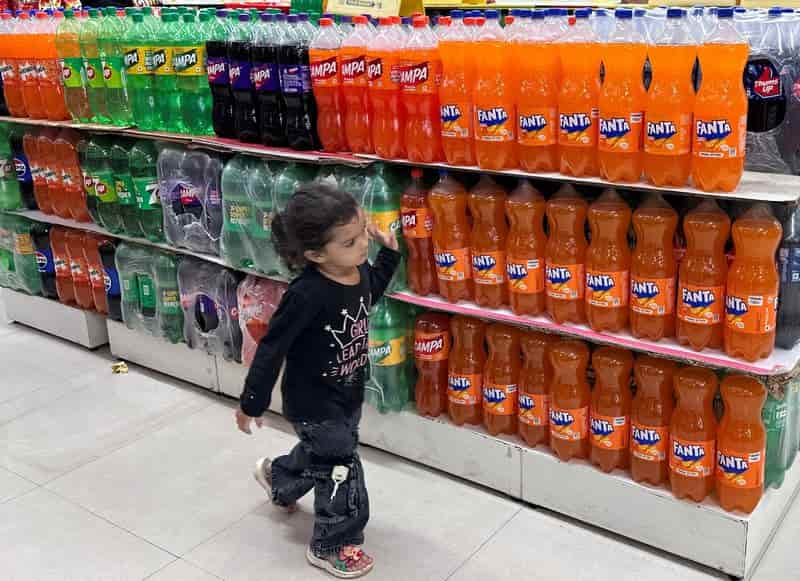
Multinational producers often tailor product recipes to local tastes, regulations, and affordability. For instance, Indian versions of Fanta and Nestle's KitKat have been criticized for containing less cocoa and different sweeteners compared to their European or Australian counterparts. Nestle's Maggi noodles in India are made with palm oil, unlike many British versions that use sunflower oil, despite some British packets being manufactured in India and carrying high-salt warnings.
Influencers like Revant Himatsingka, known as Food Pharmer, have gained significant followings by comparing product ingredients and criticizing marketing practices, such as PepsiCo's "energy drink" label for its Sting beverage. This has led to legal challenges, with PepsiCo successfully obtaining a take-down order for a video criticizing the drink's sugar and artificial sweetener content. Regulators have since ordered companies to drop "energy drink" labels within 90 days.
Despite industry resistance, some companies are beginning to adapt to changing consumer tastes. Nestle announced in 2024 that it would introduce sugar-free Cerelac baby food in India, addressing long-standing complaints that only the sugared version had been available for decades.