Key facts
- Families in Colombia are waiting years, sometimes decades, for the identification of relatives who disappeared during the country's internal conflict.
- The Search Unit for People Reported as Disappeared (UBPD) is tasked with finding and identifying approximately 137,000 missing persons.
- Challenges include a high volume of requests, technical complexity of cases, and insufficient operational staffing and resources.
- The Institute of Legal Medicine (IML) is responsible for DNA testing, but faces backlogs and issues with sample quality.
- The UBPD has recovered nearly 5,100 remains and identified 587 since its creation in 2017.
- The agency is implementing a 'Reverse Search' program to find families of unclaimed remains.
Roselly Gil has been waiting for over two decades for confirmation of what happened to her brother, Jesus Arbey Gil, a Colombian soldier who disappeared in 2003. Despite a recent exhumation of remains believed to be his, positive identification remains elusive, illustrating the profound suffering of families across Colombia.
The Search Unit for People Reported as Disappeared (UBPD) faces the monumental task of locating and identifying approximately 137,000 individuals who went missing during the country's six-decade internal conflict. Many of the remains are decomposed or partial, stored in inadequate conditions, or mislabeled, complicating identification efforts.
The Institute of Legal Medicine (IML), responsible for DNA testing, cites challenges such as a high volume of requests, technical complexities, and the need for strengthened operational capacity. In Gil's case, the remains exhumed lacked sufficient genetic material for comparison, and subsequent steps have also faced delays and confusion regarding sample provision.
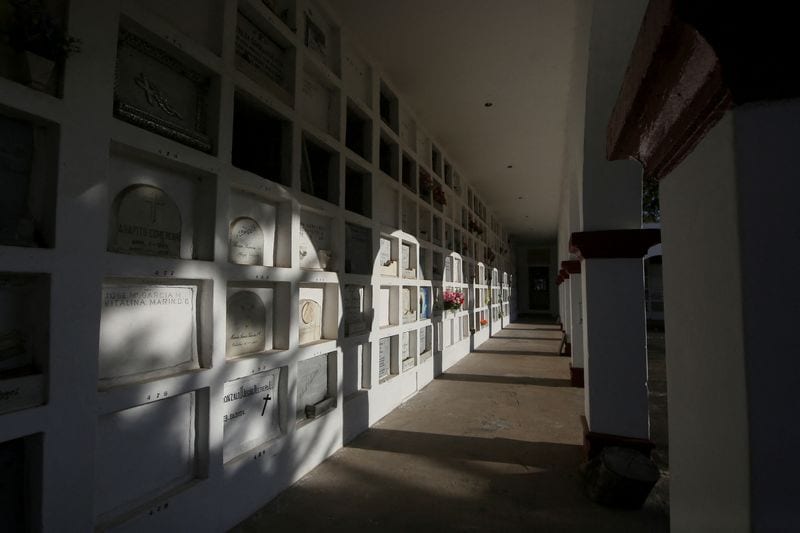
Thousands of disappeared individuals were buried in clandestine graves, but many others are likely interred in cemeteries as unidentified persons. The UBPD, which collaborates with ex-rebels and former soldiers, uses DNA and dental records for identification, often requiring samples from close relatives.
Despite efforts to bridge the gap between recovered and identified bodies, the UBPD states that comprehensive strengthening of institutions involved in search, identification, and handover is necessary. The unit is underfunded, receiving significantly less operational funding than proposed. The IML's regional labs also face substantial backlogs, with average turnaround times for genetic analysis at 90 days, leaving families like Gil's in prolonged uncertainty.