Key facts
- Female Kurdish fighters known as the YPJ are seeking to retain a combat role after Syria's government overhaul.
- The YPJ fought alongside the U.S.-backed Syrian Democratic Forces (SDF) against Islamic State.
- The SDF was recently dissolved, with its members integrated into state institutions.
- The YPJ's proposal for an independent brigade or battalion within the defense ministry was rejected.
- The YPJ is currently in discussions with Syria's interior ministry for an alternative role.
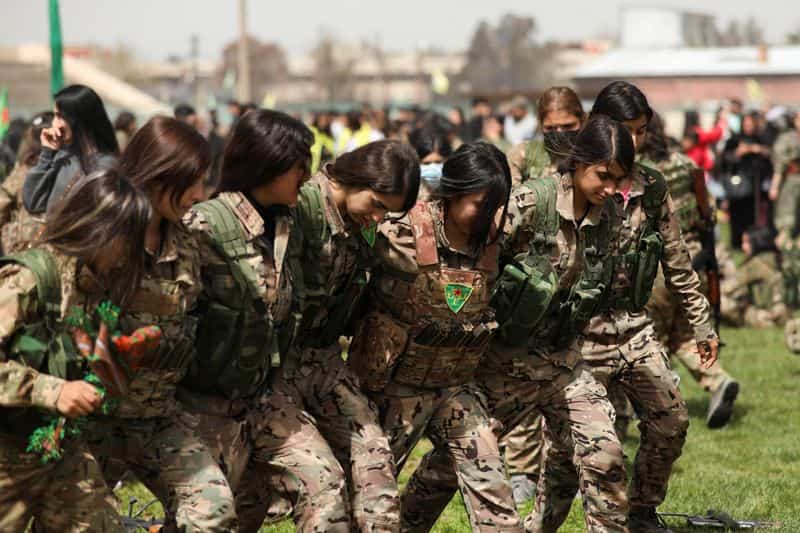
Female Kurdish fighters, known as the Women's Protection Units (YPJ), who gained international recognition for their role in combating Islamic State, are in negotiations with Syria's new authorities to secure a continued combat role. Following the downfall of former president Bashar al-Assad and the emergence of a new government led by Islamist rebels, the YPJ's future has become uncertain as the new administration seeks to integrate autonomous armed groups into state institutions.
The Syrian Democratic Forces (SDF), with which the YPJ fought, was formally dissolved last week. Its commander, Mazloum Abdi, was appointed an advisor to President Ahmed al-Sharaa, and other SDF members joined the defense ministry. However, the YPJ's commander, Nowruz Ahmed, stated that her fighters were told they had no place in the new defense ministry, as there are no women currently serving in that body. Ahmed proposed forming an independent brigade or battalion, emphasizing the fighters' experience and expertise, but this was rejected.
The YPJ is now engaged in discussions with Syria's interior ministry to find an alternative path to maintain an organized fighting force. While the interior ministry has female personnel in its tourism police, a proposal for YPJ fighters to join this unit was reportedly rejected by the YPJ. Ahmed indicated that the YPJ proposed merging its more than 1,500 fighters into the interior ministry's special operations forces, a move that would more closely align with their capabilities and increase female representation. The YPJ expects a response in the coming days, though the defense and interior ministries did not immediately comment. An interior ministry spokesperson confirmed that YPJ fighters would be welcomed but did not specify their role, noting that units would be deployed across Syria.
These negotiations occur amidst lingering mistrust among Kurds towards the new Syrian authorities, stemming from past violence against minorities and President al-Sharaa's previous association with Al Qaeda's Syria branch. For many Kurdish women, the YPJ represents a symbol of hard-won political and social gains, and they are insistent on maintaining their distinct status.