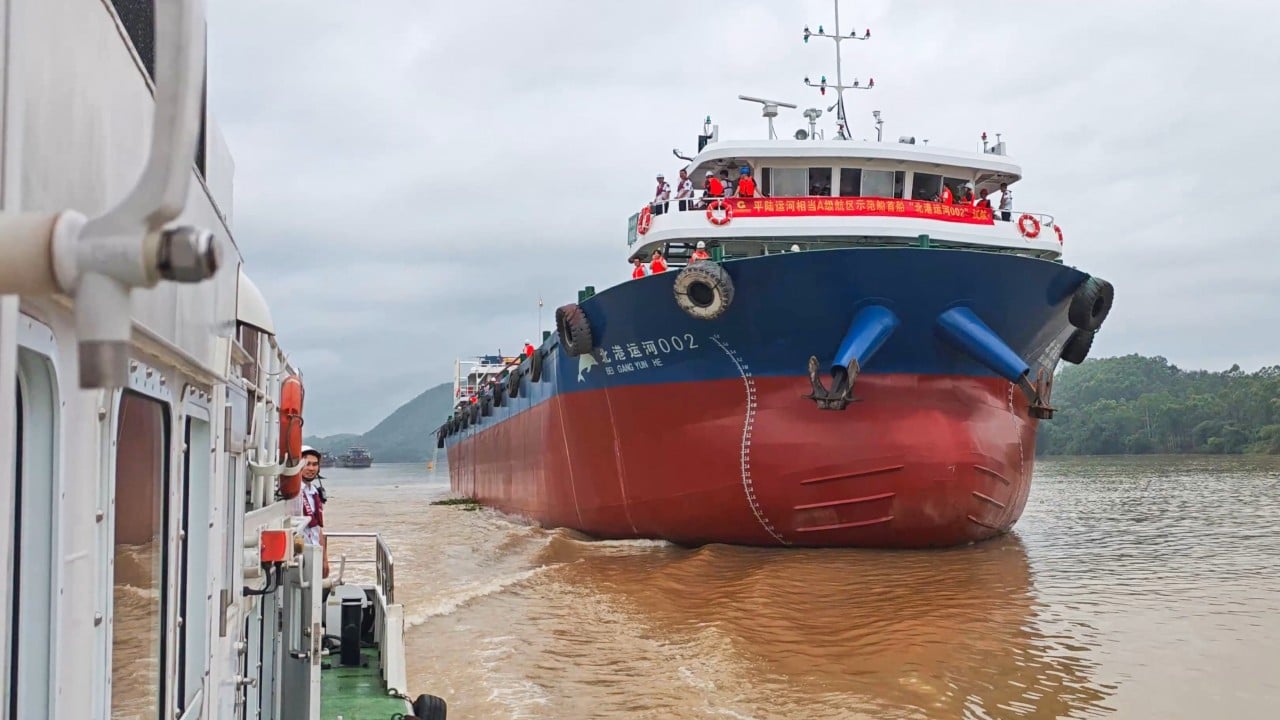
China is undertaking trials of autonomous navigation and smart shipping technologies on its new Pinglu Canal, a significant infrastructure project costing approximately US$10 billion. The canal, located in the Guangxi Zhuang autonomous region, is designed to connect China's landlocked southwestern areas to Southeast Asia via the Gulf of Tonkin, aiming to boost trade and connectivity.
Intelligent barges, powered by liquefied natural gas, are being tested on the artificial waterway. These vessels are equipped with advanced sensor, radar, and communication systems to enable real-time data sharing and automated mooring. State broadcaster CCTV reported that these trials are proceeding smoothly, according to Guangxi's marine and shipping authority.
The canal's massive main lock, measuring 300 meters long, 34 meters wide, and 8 meters deep, is designed to accommodate six ships simultaneously, maximizing shipping capacity and reducing logistics costs and transit times. More vessels, including those capable of navigating both the canal and the high seas, are expected to be delivered by August.
The Pinglu Canal is scheduled for a test run in September, marking a significant step towards opening a new major trade corridor for China.