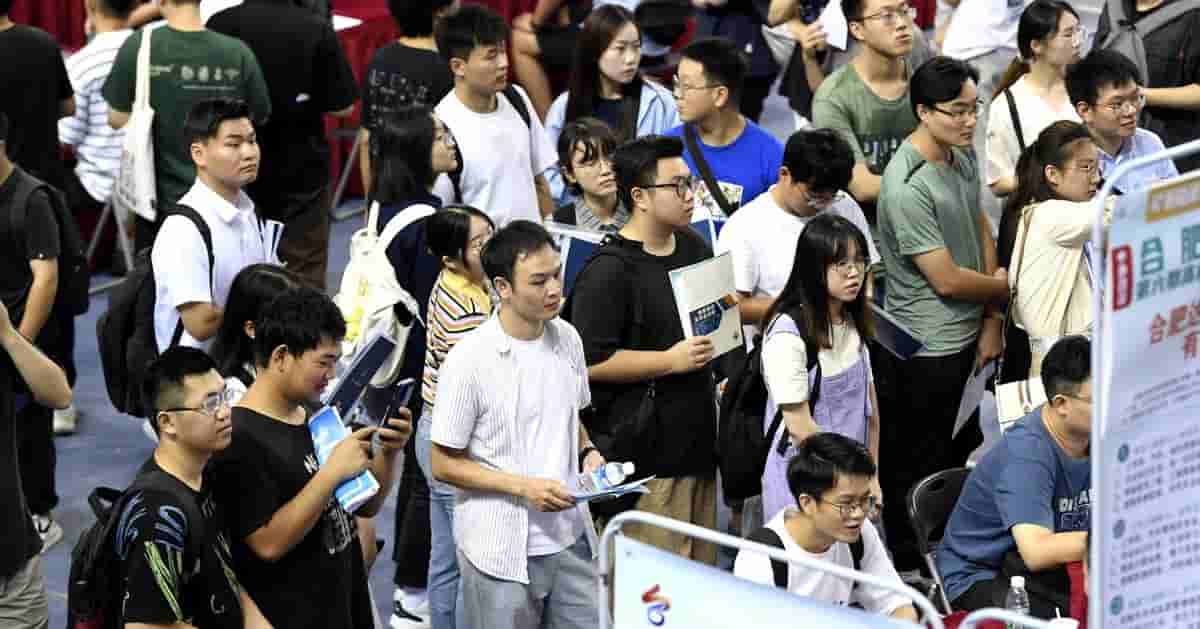
China is grappling with a challenging job market for its record 12.7 million university graduates this year, a situation exacerbated by the growing influence of artificial intelligence. The supply of graduate jobs has not kept pace with increasing college attendance rates, leading to intense competition and a dwindling number of traditional roles, according to reports.
AI's impact, initially felt in sectors like manufacturing and food delivery, is now extending to white-collar professions. Graduates are finding it difficult to secure positions, with some applying for hundreds of jobs without success. The situation is particularly acute for those with humanities, arts, and languages degrees, as Chinese universities rapidly overhaul their curricula to align with Beijing's strategic focus on high-tech industries.
Between 2021 and 2025, Chinese universities culled 12,200 undergraduate programs, predominantly in arts and humanities, while introducing 10,200 in emerging fields. This rapid shift, driven by central government directives, is described as a "long-overdue reckoning" to ensure degree relevance in a rapidly changing economy. The overall economic slowdown in China, with a GDP growth target adjusted to its lowest since 1991, further complicates the employment landscape for young people.