Key facts
- The PBOC injected 541 billion yuan ($81.3 billion) through overnight reverse repurchase agreements at 1.25%.
- Analysts cited by Reuters said the change lowers the floor of China's rate framework by 15 basis points.
- ANZ's Zhaopeng Xing said the move was equivalent to a targeted 15-basis-point cut for financial institutions.
- Citi analysts said they did not expect an LPR cut to follow in November and saw 2027 as the more likely window for cuts.
- Credit concerns around state-owned developer Zhuhai Huafa Group have unsettled the bond market, per the report.
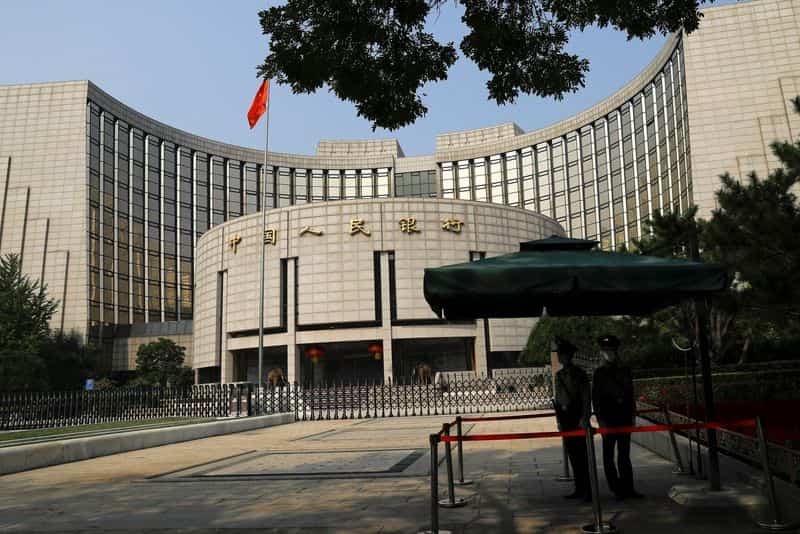
The People's Bank of China said on Monday it had made overnight reverse repurchase agreements its main policy rate, injecting 541 billion yuan ($81.3 billion) into the banking system at a rate of 1.25%, according to a statement, Reuters reported.
The central bank said on October 30 it would conduct overnight reverse repos every day and move seven-day operations from a single fixed rate to multiple rates, after saying in October it was considering the change to improve monetary policy transmission and support economic growth.
Ming Ming, chief economist at CITIC Securities, said the 1.25% pricing confirmed the existing benchmark for funding costs. Analysts cited by Reuters said the shift lowered the floor of China's interest-rate framework by 15 basis points, reducing borrowing costs for financial institutions, and would help lower yields across the bond curve even though it was not a conventional policy rate cut.
Zhaopeng Xing, senior China strategist at ANZ, said the move was equivalent to a targeted 15-basis-point rate cut for financial institutions and lifted their net interest margins by about 5 basis points, aimed at stabilizing the financial sector's profitability and its capacity to absorb risks. He said it was unlikely to have a material impact on the stock market.
Citi analysts described the transition as a mark-to-market adjustment rather than a de facto rate cut and said they did not expect an LPR cut to follow in November, seeing 2027 as the more likely window for rate cuts.
The shift comes as credit concerns around state-owned developer Zhuhai Huafa Group have unsettled the bond market, according to the report.