All NewsEducationTVBrokers
Equities & FundsCrypto & Digital AssetsAI & TechnologyBusiness & CorporateUS Politics & PolicyGeopolitics & Global RiskMacro, Rates & FXCommodities & EnergyEuropean Politics & MarketsAsia-PacificReal Estate & Property
All NewsHome
← Back to Commodities & Energy

Booming weight-loss drug demand in Brazil fuels thriving black market and health fears

Created at 31 Aug · 10:09 AM1 source↑ Market-relevant
IN SHORT

Brazil is experiencing a surge in demand for weight-loss drugs like Mounjaro and Wegovy, leading to a thriving black market for smuggled and unapproved versions. Health officials are concerned about potential public health crises due to these unregulated products.

Key Numbers

2,500+vials of weight-loss medication seized
3,600+complications linked to weight-loss drugs reported
83deaths under investigation linked to weight-loss drugs
51%of Brazil's weight-loss drug sales from unofficial sources
$7 billionestimated weight-loss drug sales in Brazil this year
5.5%GLP-1 usage rate in Brazil
3.7%global average GLP-1 usage rate
609illegal GLP-1 units seized in 2024
60,787illegal GLP-1 units seized in 2025
$300Brazil's minimum monthly wage
$75cost of Paraguayan weight-loss drug every six weeks
$290cost of four-week Mounjaro supply in Brazil
$340cost of high-dose Wegovy box online
$100cost of four-week Ozivy supply
17 kgweight lost by a nurse using smuggled drugs

Who's Involved

Taiane Torres da Silva
Brazilian consumer purchasing unvetted weight-loss drugs
Dinavisa
Paraguay's health regulator
Laboratorios Indufar Cisa
Paraguayan manufacturer of T.G. weight-loss drug
Anvisa
Brazil's health regulator
Andreia Kohout
Pharmaceutical director of the Brazilian Anti-Counterfeiting Association
Eli Lilly
Manufacturer of Mounjaro, supporting efforts against illegal market
Novo Nordisk
Manufacturer of Wegovy, addressing market competition and patient support
Euromonitor International
Market research firm providing GLP-1 usage data
Dr. Leonardo Sebba
Obesity doctor in Brazil observing patient complications
Leandro Safatle
Anvisa Director-President
Pamela Erculano Silva
Nurse who lost weight using smuggled drugs
Booming weight-loss drug demand in Brazil fuels thriving black market and health fears

↳ Why This Matters

The booming demand for weight-loss drugs in Brazil is creating a dangerous black market, leading to significant health risks and potential public health crises due to smuggled and unapproved medications. This situation highlights the challenges of regulating pharmaceutical access in a market with high demand, limited affordability, and weak enforcement, impacting both patient safety and the pharma

Key facts

  • Brazilian customs agents seized over 2,500 vials of weight-loss drug ingredients smuggled from Paraguay.
  • Health officials are concerned about a potential public health crisis due to a booming black market for weight-loss medications.
  • Over 3,600 complications and 83 deaths are under investigation in Brazil, linked to weight-loss drugs.
  • An estimated 51% of Brazil's weight-loss drug sales are expected to come from smuggled or custom-mixed products.
  • Brazil's GLP-1 usage rate is 5.5%, higher than the global average.
  • Authorities are approving cheaper, authorized alternatives to steer consumers away from illegal imports.

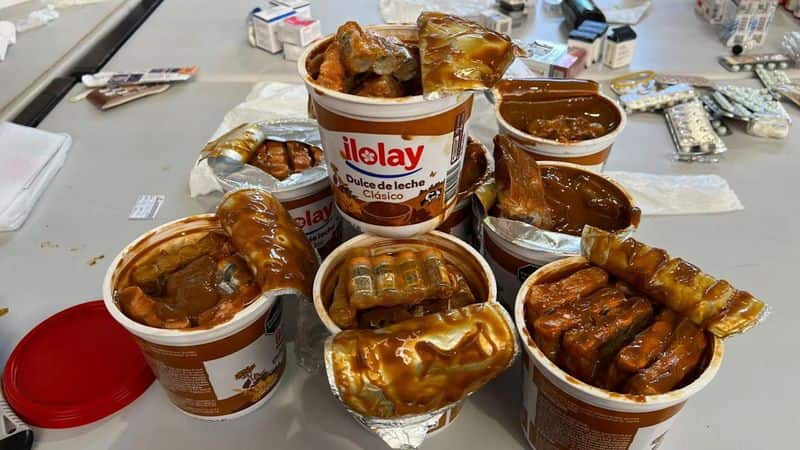
Brazilian authorities are confronting a burgeoning black market for weight-loss drugs, fueled by high demand and limited purchasing power. Customs agents have intercepted large quantities of smuggled medications, including tirzepatide (Mounjaro) and semaglutide (Wegovy), hidden in various unconventional ways, such as mixed within dulce de leche or concealed in vehicle parts.

Health officials express grave concerns about a potential public health crisis, citing over 3,600 reported complications and 83 deaths under investigation linked to these drugs. It is estimated that 51% of Brazil's $7 billion weight-loss drug market this year will stem from custom-mixed or smuggled products, often sourced from Paraguay where patent laws are more lenient. Consumers, driven by a beauty-conscious culture, are willing to risk using unvetted medications, with some purchasing Paraguayan drugs like T.G. despite lacking official approval.

Manufacturers like Eli Lilly and Novo Nordisk acknowledge the issue, stating they support efforts to combat the illegal market and are working to improve the affordability of their regulated treatments. The proliferation of these drugs has cemented Brazil's status as a global beauty hub. Brazil's GLP-1 usage rate stands at 5.5%, surpassing the global average, and seizures of illegal drugs have surged dramatically.

Experts warn of significant health risks associated with unregulated weight-loss treatments, including poor storage, heat exposure, acute pancreatitis, hypoglycemia, and digestive issues that can lead to aspiration and pneumonia. The widespread availability of these drugs through unofficial channels, from pharmacies to street markets, has led to severe complications for some users, with one doctor describing the situation as "drug trafficking."

In response, Brazilian authorities are approving cheaper, authorized weight-loss alternatives, hoping to divert demand from the illegal market. Anvisa has approved domestic alternatives like Ozivy, priced significantly lower than smuggled options, aiming to provide a safer and more accessible choice for consumers.

Frequently asked questions

The most sought-after weight-loss drugs include Eli Lilly's Mounjaro (tirzepatide) and Novo Nordisk's Wegovy (semaglutide).

High demand, a beauty-conscious culture, limited purchasing power, and lax patent laws in neighboring Paraguay drive consumers toward cheaper, smuggled, or custom-mixed versions of these medications.

Risks include complications from poor storage, heat exposure, acute pancreatitis, hypoglycemia, aspiration, pneumonia, and severe intestinal issues, with over 3,600 complications and 83 deaths under investigation.

Authorities are increasing seizures of illegal drugs and approving cheaper, authorized alternatives to compete with the black market and provide safer options.

What Happens Next

01Brazilian authorities will continue to monitor and approve cheaper, authorized weight-loss alternatives.
02Efforts to combat the illegal market for weight-loss drugs are expected to continue.
CME Headlines
  • RBOB Gasoline futures reach multi-month highs on inventory draw.
    28 Aug · 10:40 PM
  • RBOB Gasoline futures reach multi-month highs on inventory draw.
    28 Aug · 10:40 PM
  • Live Cattle futures slide for 4th straight week as Lean Hogs rebound.
    28 Aug · 10:24 PM

How It Developed

Brazilian customs agents discovered hundreds of tirzepatide vials mixed in dulce de leche on a bus from Paraguay.
The seizure was part of a larger shipment exceeding 2,500 vials of weight-loss medications.
Smuggled slimming drugs, including GLP-1 receptor agonists, are being found in various hidden locations along the Paraguayan border.
Brazil is a significant market for weight-loss medications, with a beauty-conscious culture and limited purchasing power driving demand for cheaper alternatives.
Health officials worry about unintended consequences, including over 3,600 reported complications and 83 deaths under investigation linked to weight-loss drugs.
An estimated 51% of Brazil's $7 billion weight-loss drug sales this year are expected to come from custom-mixed or smuggled products.
Consumers are willing to take risks for weight loss, with some purchasing unvetted Paraguayan drugs.
Paraguay's health regulator acknowledges irresponsible medicine transport by some citizens.

Sources

T1
Booming weight-loss drug demand in Brazil fuels thriving black market and health fearsReuters

Related Stories

Asian Refiners Seek Argentinian Crude Amid Middle East Supply Disruptions
31 Aug · 9:06 AM
Indonesia's Wildfires Intensify Amid Super El Niño Conditions
31 Aug · 4:17 AM
China's robot lawn mowers flock to Europe as US import curbs bite
31 Aug · 8:41 AM
China's top airlines post heavy first-half losses on soaring fuel costs
31 Aug · 2:56 AM
Lithium Miners Profit as Battery Storage Demand Surges
31 Aug · 10:21 AM