All NewsEducationTVBrokers
Equities & FundsCrypto & Digital AssetsAI & TechnologyBusiness & CorporateUS Politics & PolicyGeopolitics & Global RiskMacro, Rates & FXCommodities & EnergyEuropean Politics & MarketsAsia-PacificReal Estate & Property
All NewsHome
← Back to Macro, Rates & FX

Bond yields climb as Middle East conflict escalates and Japan signals rate hikes

Created at 2 Sep · 4:39 AM1 source↑ Market-relevant
IN SHORT

Bond yields are reaching new highs amid renewed conflict between the U.S. and Iran, which has pushed oil prices above $95. This, coupled with fiscal concerns and potential shifts in Japanese investment, is pressuring fixed-income assets. The Bank of Japan signaled continued rate hikes, while the Reserve Bank of New Zealand delivered a dovish rate increase.

Key Numbers

$95Brent crude oil price
4.8122%U.S. 10-year Treasury yield
25-basis-pointNew Zealand rate hike
$0.58375New Zealand dollar exchange rate
1.7%MSCI Asia-Pacific ex-Japan index decline
3.5%KOSPI index decline
2.7%Nikkei 225 index decline
0.4%European pan-region futures decline
0.5%German DAX futures decline
0.5%FTSE futures decline

Who's Involved

Gregor Stuart Hunter
Author of the report on European and global markets
U.S.
Resumed attacks on Iran
Iran
Resumed attacks on U.S. assets
Pentagon
Reported wave of strikes against IRGC targets
Tehran
Stated it struck U.S. assets in Jordan and Iraq
Bank of Japan
Signaled continued interest rate hikes
Kazuo Ueda
Bank of Japan Governor vowing to continue raising rates
Hajime Takata
Bank of Japan board member calling for faster rate hikes
Reserve Bank of New Zealand
Implemented a 25-basis-point rate hike
Bond yields climb as Middle East conflict escalates and Japan signals rate hikes

↳ Why This Matters

The escalating Middle East conflict and hawkish signals from the Bank of Japan are increasing pressure on global bond markets, potentially leading to higher borrowing costs for governments and impacting investment flows worldwide. This environment of rising yields and tightening financial conditions is also weighing on equity markets.

Key facts

  • Bond yields are rising due to renewed U.S.-Iran conflict and fiscal concerns.
  • Brent crude oil surpassed $95 per barrel.
  • The U.S. 10-year Treasury yield hit a three-year high of 4.8122%.
  • Japanese government bond yields reached 30-year highs.
  • Bank of Japan officials signaled continued interest rate hikes.
  • The New Zealand dollar declined following a rate hike and dovish commentary.

Bond yields are climbing as geopolitical tensions escalate in the Middle East and Japan signals a shift towards higher interest rates. Brent crude oil surpassed $95 a barrel following renewed attacks between the U.S. and Iran, while the U.S. 10-year Treasury yield reached a three-year high. This surge in yields, combined with fiscal concerns and the potential for Japanese investors to repatriate funds, is creating headwinds for fixed-income markets.

The Bank of Japan, ahead of its September 17-18 meeting, indicated a continuation of its rate-hiking path, with Governor Kazuo Ueda and hawkish board member Hajime Takata both advocating for a faster pace of increases. This contrasts with the Reserve Bank of New Zealand, which, despite a widely expected 25-basis-point rate hike, issued a dovish statement that caused the New Zealand dollar to slump by 1% against the U.S. dollar.

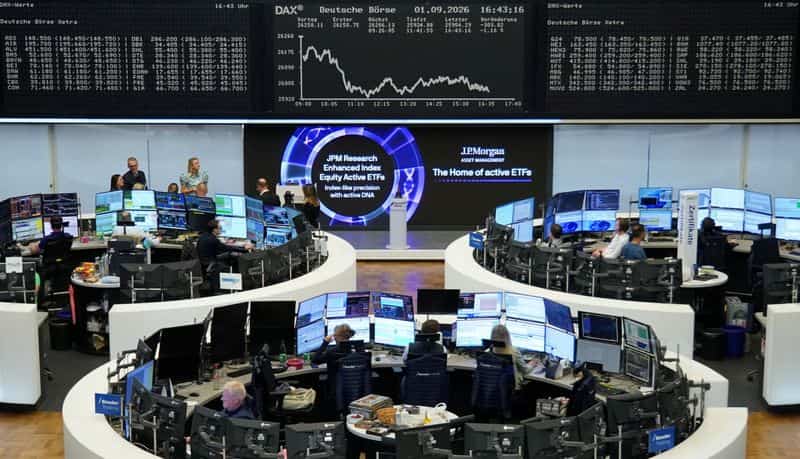
Financial markets have reacted negatively to tightening financial conditions. Asia-Pacific equities outside Japan saw a significant decline, with MSCI's broadest index falling 1.7%, South Korea's KOSPI dropping over 3.5%, and Japan's Nikkei 225 down 2.7%. European futures also pointed to a lower open, with pan-region, German DAX, and FTSE futures all trading down.

Frequently asked questions

Bond yields are rising due to renewed conflict between the U.S. and Iran, which has pushed oil prices higher and added to inflation concerns. Fiscal worries and potential shifts in Japanese investment also contribute to the pressure.

The Bank of Japan is signaling its intention to continue raising interest rates, with Governor Kazuo Ueda and board member Hajime Takata advocating for a faster pace of hikes.

The New Zealand dollar fell 1% after the RBNZ's rate hike was accompanied by a dovish statement, suggesting a less aggressive future monetary policy path.

MSCI's broadest index of Asia-Pacific shares outside Japan fell 1.7%, with South Korea's KOSPI declining over 3.5% and Japan's Nikkei 225 down 2.7%.

What Happens Next

01Company earnings reports from CD Projekt Red, Broadcom, Snowflake, and Hewlett Packard Enterprise.
02France to release its Budget Balance for July.
CME Headlines
  • Dec 10-Year T-Note futures hit contract lows as yields reach 4.80%.
    1 Sep · 9:15 PM
  • Dec 10-Year T-Note futures hit contract lows as yields reach 4.80%.
    1 Sep · 9:15 PM
  • Global yields hit multi-year highs.
    1 Sep · 3:25 PM

How It Developed

U.S. and Iran resumed attacks on each other.
Pentagon reported strikes against Islamic Revolutionary Guard Corps targets.
Tehran stated it struck U.S. assets in Jordan and Iraq.
U.S. 10-year Treasury yield reached a three-year high of 4.8122%.
year Japanese government bond yield surged to a three-decade high.
Bank of Japan Governor Kazuo Ueda vowed to continue raising rates.
Board member Hajime Takata called for faster interest rate hikes.
New Zealand dollar fell 1% after a 25-basis-point rate hike and dovish statement from the RBNZ.

Sources

T1
Morning Bid: Who will police the bond vigilantes?Reuters

Related Stories

Global bond rout accelerates as yields hit multi-year highs
1 Sep · 9:09 PM
Asian stocks tumble as US-Iran tensions lift oil, bond yields
2 Sep · 12:08 AM
Global Bond Sell-Off Intensifies as Yields Hit Multi-Decade Highs
1 Sep · 11:11 AM
Dollar Rises as Middle East Hostilities Lift Oil, Fueling Inflation Fears
2 Sep · 12:08 AM
Global bond yields climb, sparking inflation and borrowing concerns
2 Sep · 1:26 AM