Key facts
- Beijing is releasing over a billion parasitic wasps to combat the invasive fall webworm.
- The fall webworm caterpillars have covered trees in Beijing with webs.
- The wasps, Chouioia cunea, attack the pupal stage of the fall webworm.
- Warm winters have contributed to the increased survival rate of the moths.
- Residents are encouraged to report sightings and participate in caterpillar-catching efforts.
Authorities in Beijing are employing a multi-pronged strategy, including the release of over a billion parasitic wasps and the organization of caterpillar-catching contests, to manage the spread of the invasive North American fall webworm. The caterpillars, the larval stage of the Hyphantria cunea moth, have extensively covered trees in the Chinese capital and surrounding areas with greyish-white webs this summer, consuming foliage.
This year's outbreak is particularly severe, with nearly 700 million Chouioia cunea wasps, a species less than a millimeter long, already released against the pest, and an additional 400 million scheduled for release. These wasps are a biological control agent, targeting the pupal stage of the fall webworm by laying their eggs inside the cocoons. The insect is known as the American white moth in China, where it has been present for decades and can feed on over 80 types of trees and crops, with a preference for ash, mulberry, and plane trees.
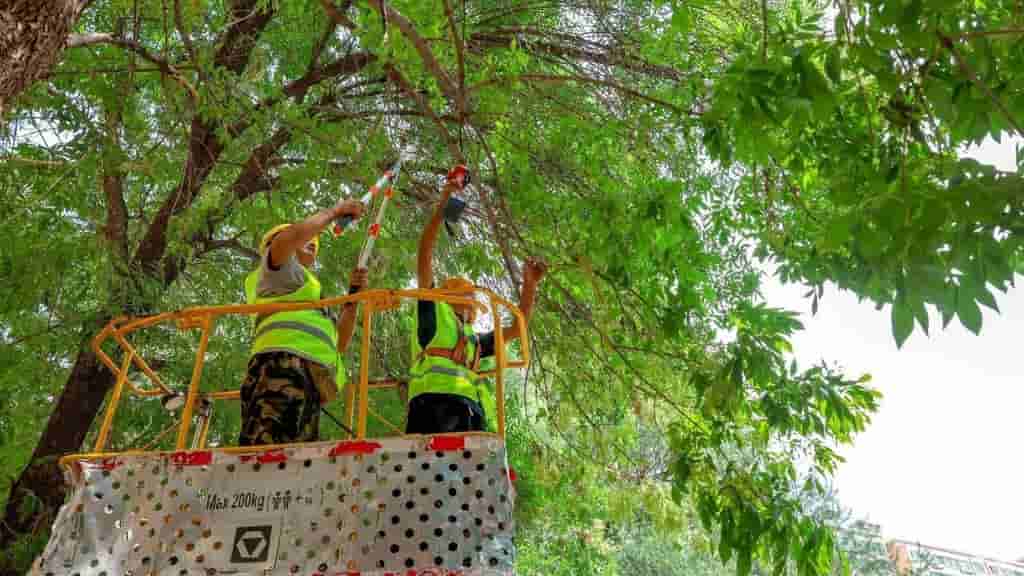
Officials have reassured the public that the caterpillars are not harmful to humans, do not bite, and do not spread disease, although individuals with allergies are advised to maintain distance. The increased moth survival rates are attributed to successive warm winters, with the current cycle peaking after 2021. A compressed spraying window due to a rainy season and the moth's overlapping generations have also contributed to the current infestation. The integrated pest control campaign also includes manual removal of silk nests, wrapping tree trunks to trap larvae, pheromone and light traps, and targeted low-toxicity spraying. For tall trees, an insecticide injection method is being used, providing a four-month effect.
The city's forestry protection center acknowledged that effective pest control relies on coordinated efforts across all land management entities, as a single unmanaged area can lead to repopulation. Residents are encouraged to report sightings via the 12345 city hotline. Explanations circulating on social media highlight the safety and ecological benefits of using wasps over widespread chemical spraying, referring to the wasps as "little pest-fighting soldiers."